Library

Hungary: MFRR highly alarmed by Pegasus surveillance revelations

Hungary: MFRR highly alarmed by Pegasus surveillance revelations

The Media Freedom Rapid Response (MFRR) is highly alarmed by the revelations by a consortium led by French NGO Forbidden Stories about the surveillance of journalists, human rights defenders, lawyers and others through the Pegasus spyware program developed by Israeli company NSO Group. The leak, which revealed the involvement of the Hungarian government among others, raises significant implications for journalists’ security and the protection of their sources as well as raising concerns through the chilling effect such applications have on journalists beyond those immediately affected and ultimately, on everyone’s right to information.

We call on the Hungarian government and other implicated governments to immediately stop using the spyware and to provide transparency about its application so far. We also call on the NSO Group to take its corporate social responsibility more seriously and stop selling Pegasus to regimes with poor human rights and media freedom records, provide more transparency that will enable proper oversight and establish more stringent due diligence processes.

Forbidden Stories obtained leaked records of phone data, suggesting that various governments worldwide selected media workers, lawyers and activists as possible targets for invasive surveillance with the Pegasus spyware. The spyware has the potential to transform the targets’ phones into surveillance devices, allowing access to all data on the phone and enabling control over audio and video to make recordings surreptitiously. Inclusion of a phone number on the leaked list does not necessarily entail that the linked device was successfully hacked, but forensic analysis on dozens of phones so far effectively shows evidence of Pegasus activity in more than half of the cases. NSO Group has repeatedly said that its spyware, which they sold to some of the world’s most repressive regimes, is meant for use only against terrorists and serious criminals. Unsurprisingly, despite claims by NSO Group that they will cut off clients if they misuse the spyware, it appears that Pegasus has been used well beyond this stated intended target group by those clients, to potentially include anyone perceived as an opponent or threat to the regime.

In the European Union, forensic analysis of several devices has shown that the Hungarian government has deployed the spyware program against investigative journalists and the circle of one of the country’s last remaining independent media owners. At least five journalists figure in the leaked records and at least ten lawyers and an opposition politician. They include Szabolcs Panyi, a well-known reporter at investigative outlet Direkt36, who has been publicly attacked in the past by Prime Minister Viktor Orbán’s spokesperson Zoltán Kovács, who has accused him of “Orbánophobia”. Also analysis of his colleague András Szabó’s phone showed positive results for the use of Pegasus. Other Hungarian media workers selected for potential targeting include Dávid Dercényi, who edits a newspaper put out by the authority of an opposition-run district in Budapest; a photographer who worked as a fixer for visiting foreign journalists; and, a well-known investigative journalist. Furthermore, it appears also the circle of investor Zoltán Varga, who owns several independent media outlets and has been pressured in the past, was surveilled using the Pegasus software.

In a response quoted in The Guardian, the Hungarian government said that “state bodies authorised to use covert instruments are regularly monitored by governmental and non-governmental institutions.” The country has a very permissive legal framework for surveillance. In 2020, the justice minister approved 1,285 surveillance requests (not necessarily using Pegasus spyware).

The most recent revelations about Pegasus serve to highlight two things. On the one hand, they underscore the urgent need for meaningful reforms that will ensure powerful commercial technology is not abused by governments at the expense of civil liberties. They also show the essential role watchdog journalism plays in safeguarding the human rights that underpin democracy, by exposing violations and holding the perpetrators to account.

Signed by:

  • Article 19
  • European Centre for Press and Media Freedom (ECPMF)
  • European Federation of Journalists (EFJ)
  • Free Press Unlimited (FPU)
  • International Press Institute (IPI)
  • Osservatorio Balcani e Caucaso Transeuropa (OBCT)
Library

Cyprus: TV station attacked by crowd protesting Covid measures…

Cyprus: TV station attacked by crowd protesting Covid measures and vaccination

A large crowd of demonstrators against new Covid-19 measures and mandatory vaccination attacked the Cypriot TV station Sigma TV on 18 July. The mob vandalised the station’s headquarters in Nicosia, throwing crackers, breaking windows and damaging cars outside the building. The European Federation of Journalists (EFJ) joined its affiliate, the Union of Cyprus Journalists, in condemning this brutal attack and calling on the authorities to conduct thorough investigations.

On Sunday evening, demonstrations against mandatory vaccination took place outside the Presidential Palace in the capital of Cyprus, Nicosia. Groups of protestors clashed with police and at around 9:30 PM local time, parts of the demonstration broke into the DIAS media group building that houses Sigma TV. The mob attacked staff, set cars in the parking lot on fire and brutally trashed the offices. Photos on the SigmaLive website show the extent of the damage.

The police confirmed that around 2,500 protesters took to the network. According to Sigma, “hooded thugs” attacked dozens of their colleagues working at the time. The police had entered the building to protect the workers.

Due to the rise in Covid-19 infections and the low rate of vaccination among young people in Cyprus, new measures were adopted, including mandatory vaccination and a so-called “SafePass” policy. In place since the 9th of July, the SafePass regulation obliges citizens aged 12 or older to possess and present either a vaccination certificate, proof of a Covid-19 contraction in the last six months or a negative PCR or rapid test with a 72-hour validity period. This SafePass is needed for entering the workplace, supermarkets, restaurants and other businesses.

The president of the Union of Cyprus Journalists, George Frangos, condemned the “abominable, insubordinate and dangerous” attacks which pose a threat to democracy, freedom of expression and freedom of the press.

“We call on the Prosecution Authorities of the state to act immediately and effectively so that those responsible for these illegal and anti-democratic acts are brought to justice and punished by example,” stated the Executive Committee of the Union of Cyprus Journalists.

According to media reports, five people are to appear before the court in connection to the attacks on Monday and the police are looking for ten more people while identifying more suspects from CCTV footage.

Ricardo Gutiérrez, EFJ General Secretary, reacted: “We welcome the ongoing investigations into these intolerable attacks, which we strongly condemn. This level of violence and disregard for media professionals is unprecedented in Cyprus and is further evidence of the need for greater protection for journalists.”

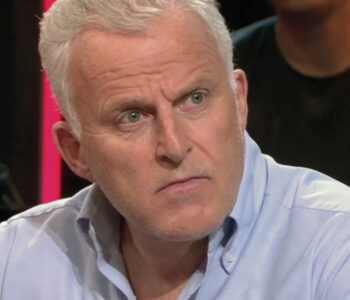
Peter R. de Vries (Photo: DWDD) Library

Death of Dutch journalist Peter de Vries a sad…

Death of Dutch journalist Peter de Vries a sad day for Europe

IPI expresses sorrow at loss of courageous crime reporter

The IPI global network for press freedom today expressed deep sorrow over the death of Dutch crime journalist Peter R. de Vries and renewed calls for all those responsible for his murder to be held accountable.

de Vries, 64, had been fighting for his life in hospital after being shot five times including once in the head in the center of Amsterdam at around 7.45pm on July 6. He passed away surrounded by loved ones, according to a statement by his family.

“The death of Peter R. de Vries is yet another heartbreaking moment for Europe’s entire journalistic community”, IPI Deputy Director Scott Griffen said. “Our thoughts go out to his family and friends, with whom we stand in full solidarity and support. Peter was a respected and fearless crime reporter who spent his career exposing criminal acts and fighting to ensure those responsible faced justice. He was a committed servant of the truth, who was determined to ensure that even the oldest crime could not go cold. It is vital that Dutch authorities now show the same exhaustless energy in investigating, prosecuting and convicting all those behind his own murder.

“Tragically, this is the second time this year that a crime journalist has been gunned down in broad daylight in the European Union. This killing illustrates a sad reality: that even journalists working in a country with one of the highest levels of press freedom in the world are not safe. All EU governments must do more to stem the tide of attacks on journalists that we’ve seen over the last few years. Ultimately, ending impunity for those who dare carry out these crimes is one of the most effective ways to do so.

“Sadly however, those behind the murder of Greek crime journalist Giorgios Karaivaz in April remain at large. While some of the gunmen and middlemen in the assassinations of Slovak journalist Jan Kuciak and Maltese investigative reporter Daphne Caruana Galizia have been convicted, those who ultimately ordered their deaths continue to evade justice. Those behind this heinous attack on Peter cannot be allowed to do likewise.”

In a statement, his family said: “Peter fought to the end but was unable to win the battle. He died surrounded by the people who love him. Peter lived by his conviction: ‘On bended knee is no way to be free.’”.

Peter R. de Vries (Photo: DWDD) Library

Dutch journalist Peter R. de Vries dies after shooting

Dutch journalist Peter R. de Vries dies after shooting

Update (15/07/2021) Peter R. de Vries passed away on 15 July 2021, RTL announced on Twitter. 

Dutch journalist Peter R. de Vries is fighting for his life in hospital after being shot five times in Lange Leidsedwars street in Amsterdam yesterday evening at around 7.30. The police has arrested three suspects. The European and International Federations of Journalists (EFJ/IFJ) condemned the murder attempt as another tragic blow to press freedom in Europe.

On Tuesday evening, Peter R. de Vries was a guest on daily television programme RTL Boulevard. After leaving the building, he was shot several times at close range, including in the head, in a side street of the studio. Amsterdam’s mayor Femke Halsema told a press conference that the investigative journalist was “fighting for his life.” The police have arrested three suspects.

Peter R. de Vries (64) is a well-known Dutch investigative journalist who covered high-profile criminal investigation. He worked for De Telegraaf, Panorama magazine, Algemeen Dagblad and ran his own crime programme on television. He won an international Emmy Award in 2008 for his work investigating the 2006 disappearance of teenager Natalee Holloway in Aruba.

According to media reports, De Vries has been threatened in the past and was granted police protection. In 2019, he said on Twitter  that he would be on a death list. He has been acting as a counselor to a state witness testifying in the case against Ridouan Taghi, suspected of murder and drug trafficking.

The General Secretary of the Dutch Journalists’ Association (NVJ) Thomas Bruning said: “This hits journalism right in the heart. Of course, it remains to be seen what De Vries’ activities are related to, but the attack took place outside RTL Boulevard. De Vries is a fierce crimefighter, persistent and courageous. We can only hope he survives.”

EFJ President Mogens Blicher Bjerregard said: “I send my thoughts to Peter and expect an immediate investigation bringing the masterminds of this awful attack to justice. Enabling and protecting the crucial work of (investigative) journalists to deal with crime and other essential issues is key for any democracy.”

The EFJ had recently alerted over the escalation of violence against media professionals with an increase in attacks since last year and repeatedly called on the Dutch authorities to do the utmost to protect journalists and investigate all attacks.

IFJ President Younes MJahed said: “We are shocked by this attack against a journalist who has reported extensively on matters of public concerns and has taken huge risks to tell the truth. This is an attack on press freedom and we urge authorities to swiftly investigate this case. Our thoughts are with Peter, his family and friends.”
Library

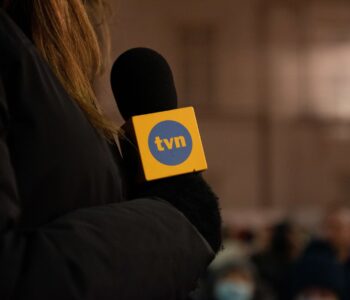
Poland: Independent media under attack again as PiS moves…

Poland: Independent media under attack again as PiS moves against TVN24

Draft bill plans to limit non-European ownership of Polish media

The International Press Institute (IPI) today expressed grave concern about draft legislative proposals by lawmakers from the ruling Law and Justice (PiS) party which would ban non-European ownership of Polish media and warned that the changes are targeted directly at U.S.-owned critical broadcaster TVN24, the country’s most watched news channel.

IPI said the draft media bill was the latest element in an increasingly systematic effort by the ruling party to erode critical journalism, stressing the plans should be met with forceful opposition by both the U.S. government and the European Union.

The draft bill, which was submitted to Parliament on July 7 by a group of PiS lawmakers, would amend Article 35 of the Broadcasting Act to bar companies which are majority-owned by entities from outside the European Economic Area (EEA) from owning more than a more than 49% stake in Polish media.

TVN24 and its parent company TVN have been 100% owned by U.S.-based Discovery, Inc. since 2015 through a subsidiary registered in the Netherlands, to meet current requirements under Polish law. If approved, the new regulation would strengthen those restrictions to ban Discovery from owning TVN through its Dutch subsidiary.

This means Discovery would have six months to adjust and could be faced with selling 51% of its stakes in TVN, which is valued at around $1 billion. If it did not, TVN’s channels such as TVN24 could be stripped of their media licenses by the National Broadcasting Council (KRRiT).

The draft legislation comes as TVN24 awaits a decision by KRRiT on the renewal of its current 10-year media license, which expires in September. Despite applying for the permit 18 months ago, the five-member panel of the broadcast regulator remains divided on the case, creating pressure on the broadcaster on two fronts.

“If this bill is passed, Discovery would either be forced to sell off its shares in TVN24 to another company – very likely one more amenable to PiS – or stripped of its media license and be eliminated from the market”, IPI’s Deputy Director Scott Griffen said. “This bill is an outrageous effort by the Polish government to silence a major television news broadcaster because of its critical content. It is a direct attack by an EU member state on media pluralism and an unmistakable sign that Poland is pursuing a Hungary-style form of media takeover.

“Not content with having independent regional media bought up by the state-controlled oil company, PiS is now moving to the next stage of its so-called ‘repolonisation’ project by going after TVN24. This tactic of pressuring or forcing foreign companies to sell up and leave the domestic market is not about principle. It is an effort to concentrate media control in the hands of PiS. It is also a hallmark of the media capture model honed by the Orbán government. When foreign or independent owners are pushed out, companies linked to the ruling party step in, buy up the company and then flip its editorial line, silencing critical voices and destroying watchdog journalism.

“The case of Klubrádió in Hungary has made it clear how a mixture of regulatory and legal tools can be effective in blocking the license renewal of a leading broadcaster and forcing it off air. We cannot watch in slow motion as the same thing happens to TVN24 in Poland. The EU must be ready to launch immediate infringement proceedings against Warsaw if the media regulator ends up blocking the license in a discriminatory manner. The U.S. government should increase its efforts to make it clear to its Polish ally that any attempt to interfere with independent media would seriously damage relations. The Biden administration must follow up its rhetoric about standing up for democratic values and a free press with concrete actions.”

Pressure on critical broadcaster

A key player in the Polish broadcast news market for nearly 20 years, TVN24 has long been a thorn in the side of the ruling PiS party, particularly on coverage of issues such as LGTBQ rights and abortion reforms. It has also revealed irregularities and alleged corruption and broken news of scandals in Law and Justice. This has made it a key target for the party when it swept to power in 2015. Immediately, leading PiS officials launched attacks on TVN and accused it being biased and siding with the opposition.

After the U.S. media conglomerate Discovery, Inc. bought TVN and its all-news channel TVN24 in 2015, the station then became a key target of PiS’s plans to bring the country’s media back under Polish control. This drive for so-called “repolonisation” of media has been framed by the government as an issue of national sovereignty. In reality, the efforts are aimed at cementing greater control over the media landscape.

In recent years, PiS has floated the idea of passing legislative changes to limit the amount of foreign capital in the domestic market, which would have affected Discovery. In response, the then U.S. ambassador under former President Donald Trump came to the defence and diplomatic pressure played a part in forcing the Ministry to shelve the plans.

The current bill appears to be targeted directly at TVN24. Currently, Polish law says that foreign companies outside the EEA can only be granted a broadcasting license for media if they own less than 49 per cent of the shares. However, there is a clause which means this rule can be waived if the headquarters of the direct shareholder of the media outlet is located within the EEA. TVN and TVN24 are owned by Discovery via its subsidiary Polish Television Holding BV, which is registered in the Netherlands, an EU member state, meaning it abides by Polish regulations.

In the past, this has been sufficient for KRRiT, the broadcast media regulator, which has extended licences for other TVN channels since 2016. However, recently the head of KRRiT, Witold Kolodziejski, has said that TVN24 is in breach of foreign ownership rules and called for the laws to be strengthened. Kolodziejski is a former member of the PiS party. The new draft amendment would remove the clause in Article 35 of the Broadcasting Act which includes the waiver for foreign companies with subsidiaries, meaning Discovery would be affected.

The direct attack on Discovery’s ownership has ruffled U.S. feathers. In response, the chargé d’affaires at the U.S. embassy in Warsaw, Bix Aliu, has expressed serious concern, tweeting: “TVN has been an essential part of the Polish media landscape for over 20 years. Unfettered press is crucial for democracy.” Polish media reported that the comment came after behind-the-scenes efforts by the chargé d’affaires to meet with KRRiT were rebuffed.

Since the bill was proposed last week, leading PiS figures have come out in support. In media interviews, PiS officials have framed it as bringing legislation into line with other EU member states and closing a loophole in the current law. In a written justification, PiS MPs wrote that the bill was “aimed at clarifying regulations” and enabling KRRiT to “effectively counteract” foreign companies controlling radio and television broadcasters.

Others have been more candid. One of the MPs who submitted the bill, Marek Suski, told Rzeczpospolita that Discovery would “probably have to sell some of its shares” in TVN if the legislation is passed. Asked if state-owned firms could then seek to buy the station, Suski said he “cannot rule it out”. In separate remarks, Suski said that “if this law is successfully passed and some of these shares can be bought by Polish businessmen, we will have some influence on what is happening on this station.”

Last week, Kołodziejski, confirmed at a parliamentary committee that the regulator has been analysing whether TVN should be counted as a non-EEA entity. KRRiT’s five-member council is currently divided over the case. At least a 4:1 majority is needed to approve the renewal or denial of the new 10-year license. This renewal process has been ongoing for a year and a half. KRRiT’s spokesperson has justified the delay by saying the regulator needed more information about the merger between Discovery and WarnerMedia.

The draft text of the bill was swiftly submitted to the Sejm with no advance warning for PiS’s coalition partners. One of them, Agreement (Porozumienie), has raised concern about the bill and noted that the party had not been consulted. The party’s spokesman Jan Strzeżek said on Twitter that he would “not want to wake up in a Poland where there is only one TV station. Media pluralism cannot be legally limited”.

Vera Jourova, vice president of the EU Commission and its commissioner for values and transparency, said: “The new draft Polish law on broadcasting concessions is yet another worrying signal for media freedom and pluralism in the country. We follow closely the situation related to TVN24 whose license has not been renewed yet.”

In response, Discovery has said it would “defend the business against growing regulatory overreach, anti-consumer behaviour and other market uncertainty that would undercut Poland’s business environment”. TVN has more than a dozen television channels in Poland, as well as an online video platform. If the license is not renewed by September 26, TVN24 would have legal options to fight the decision. However, this would mean it would celebrate its 20th anniversary of operations in Poland in a fight for survival.

ALBANIA-FLAG Library

Albania: Concern after government ally elected to head key…

Albania: Concern after government ally elected to head key media regulator

The Media Freedom Rapid Response (MFRR) today expresses deep concern about the future impartiality and independence of Albania’s Audiovisual Media Authority (AMA) following the election of a close associate of the ruling Socialist Party to head the media regulator.

On 7 July, the government and its allies voted without the presence of opposition lawmakers in parliament to appoint Armela Krasniqi as the chairwoman of the AMA, the country’s influential TV and radio regulator.

Our organisations have serious concerns over the impartiality of the new chairwoman, who is a close associate of Prime Minister Edi Rama and previously worked as his director of communications between 2013 and 2017. Krasniqi has worked for the Socialist Party most of her life and currently heads the state news agency, which has faced accusations of political bias.

Under Albanian media law, the AMA is required to be a politically independent authority. Impartial leadership of such regulatory bodies is vital for upholding public trust in a country’s media landscape and strengthening professional standards. Media freedom is deeply connected to regulatory responsibility, as powers to sanction alleged breaches of media law and decide on the allocation of broadcast licenses must be applied fairly.

The appointment of a partisan figure with long-standing links to the ruling party, in the absence of opposition votes in parliament, therefore risks seriously undermining the credibility and legitimacy of the AMA, as well as wider trust in the Albanian media ecosystem.

Confidence in the regulator’s political independence is even more important given the government’s controversial “anti-defamation package” of amendments, which if passed, would hand the AMA greater powers to impose disproportionate sanctions and fines on media outlets. Our organisations remain strongly opposed to these plans.

Rather than seek consensus over the leadership of the AMA, however, the Socialist Party has rushed ahead with the vote despite urgent calls from both the European Union and the Organization for Security and Co-operation in Europe (OSCE) to postpone the selection until the new parliament is convened in September.

The decision to appoint a politically-connected figure contradicts the recommendations set out by the Venice Commission for strengthening the AMA’s independence. Instead of adopting these recommendations and creating greater safeguards, the government has taken a step backwards and exacerbated the issue further. This should be of concern to the EU as it assesses Albania’s accession to the bloc.

Going forward, we urge the government to move ahead with implementation of the recommendations set out by the Venice Commission regarding the AMA and the so-called “anti-defamation package”, which remains on the parliamentary agenda. Our organisations retain serious concerns about the effect this will have on media freedom in Albania if passed in its current form. Greater communication is required from the government about the status of the proposed amendments. Until such clarity is provided, the package will continue to have a chilling effect on the media.

It is also vital that when the second stage of the appointment process for the AMA’s board members recommences in September, all political parties act in the public interest by prioritising professional expertise and independence over partisan loyalty when electing candidates. Our organisations will continue to monitor the situation closely.

Signed by:

  • Article 19
  • European Centre for Press and Media Freedom (ECPMF)
  • European Federation of Journalists (EFJ)
  • Free Press Unlimited (FPU)
  • International Press Institute (IPI)
  • Osservatorio Balcani e Caucaso Transeuropa (OBCT)
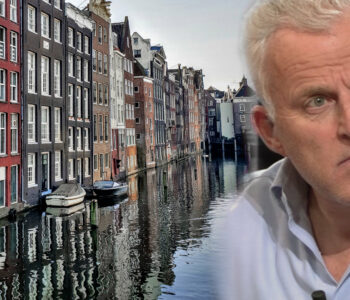
Peter R de Vries (composition + photo: DWDD) Library

Netherlands: Shocking attack on veteran crime reporter requires swift…

Netherlands: Shocking attack on veteran crime reporter requires swift action

The European Centre for Press and Media Freedom (ECPMF) as part of the Media Freedom Rapid Response (MFRR) is appalled by the attack on veteran Dutch crime reporter Peter R. de Vries.

We call on the Dutch authorities to swiftly investigate and establish whether de Vries was targeted for his work as a journalist. The perpetrator(s) and mastermind(s) behind this horrific crime must be brought to justice without delay.

The European Centre for Press and Media Freedom (ECPMF) as part of the Media Freedom Rapid Response (MFRR) is appalled by the attack on veteran Dutch crime reporter Peter R. de Vries.

We call on the Dutch authorities to swiftly investigate and establish whether de Vries was targeted for his work as a journalist. The perpetrator(s) and mastermind(s) behind this horrific crime must be brought to justice without delay.

De Vries is well-known for his investigative reporting on the Dutch underworld and has repeatedly received serious threats as a consequence of his work. On Tuesday evening, de Vries was gunned down on the street in Amsterdam by an unidentified attacker after appearing as a guest on TV show RTL Boulevard. He was taken to hospital in critical condition. As reported on national broadcaster NOS, five shots were fired and de Vries was shot in the head. 

Regardless of the motive, the attack on de Vries is a tragic event for Europe’s journalistic community. Without safety for journalists, there can be no free press. 

“We are shocked by the attempted murder of investigative crime reporter Peter de Vries in the Netherlands. The manner in which he was attacked reminds us of the murders of Ján Kuciak, Daphne Caruana Galizia and Giorgos Karaivaz. We have to face the fact that investigative journalists exposing the actions of organised crime are in constant danger. The state must protect them”,

says Lutz Kinkel, Managing Director of ECPMF.

“The King and the Prime Minister of the Netherlands rightly called this an attack on journalism, press freedom and the rule of law. Now we ask them to follow through with conducting a thorough investigation of the case. The Netherlands are a role model regarding press freedom. But the horrible attack on de Vries also makes clear that the protection of journalists must be improved.”

Peter R. de Vries (Photo: DWDD) Library

Dutch crime journalist fighting for life after being shot…

Dutch crime journalist fighting for life after being shot five times

The International Press Institute (IPI) today expressed horror at the shooting and serious wounding of Dutch journalist Peter R. de Vries in Amsterdam and urged authorities to do all they can to ensure that all those responsible for both carrying out and possibly ordering the hit do not escape impunity.

A veteran investigative journalist focusing who has long reported on the Dutch criminal underworld, de Vries was seriously wounded after being shot five times including once in the head in a broad daylight attack in downtown Amsterdam at 7.30pm on Tuesday.

The journalist was rushed to hospital and is currently fighting for his life. Three arrests have so far been made including the suspected gunman, though no motive has yet been suggested by police.

“The shooting of courageous crime journalist Peter R. de Vries is a direct attack on the country’s journalistic community, on the freedom of the press and on Dutch society and democracy as a whole”, IPI Deputy Director Scott Griffen said. “We express our full support and solidarity with Peter, his family and his colleague and we hope he pulls through and makes a full recovery.

“While no movie has yet been confirmed by police, all signs point to this being a targeted and calculated attack aimed at silencing de Vries’s journalistic work. To see yet another journalist who has spent their career fighting for justice and exposing criminal acts gunned down is shocking and disturbing, and another heart-breaking day for media freedom in the European Union.

“The reaction so far from the authorities in the Netherlands – immediate arrests, strong condemnation from the Prime Minster and engagement with the national security and terrorism agency – has been commendable. Yet while the swift arrests are welcome, as previous cases of such attacks on journalists within the EU have shown, arrests and prosecutions do not guarantee convictions. Authorities must take the utmost care to ensure all those who carried out and possible ordered this assassination attempt must be swiftly brought to justice.”


de Vries, 64, was gunned down at close distance on Lange Leidsedwars minutes after he left the studio of daily television programme RTL Boulevard, where he had just appeared as a guest. Witnesses at the scene heard five gunshots and found the journalist in a pool of blood.

During his career, de Vries had worked on numerous high-profile investigations into the criminal and drug underworld of the Netherlands. Previously had had reported for newspapers De Telegraaf and Algemeen Dagblad, where he investigated and helped police solve cold cases. For the last two decades he had also hosted his own televised crime show

The well-known reporter, who is also the director of a law office, had received numerous death threats in the past due to his work and had previously been under police protection. He has regularly appeared as a spokesman for victims or as a witness and two years ago, he posted on Twitter that he was on a “death list”.

On Wednesday, Amsterdam’s police chief confirmed that one of the suspects arrested was “probably” the suspected shooter. Two individuals were arrested while driving a car on the motorway and another in Amsterdam, following information from witnesses at the scene. No further information has been provided on the suspected motive of the attack.

Police have cordoned off the area of the shooting and are currently analysing forensic evidence and CCTV footage from the scene.

Peter R. de Vries (Photo: DWDD) Library

Dutch journalist in critical condition after being shot five…

Dutch journalist in critical condition after being shot five times

Dutch journalist Peter R. de Vries is fighting for his life in hospital after being shot five times in Lange Leidsedwars street in Amsterdam yesterday evening at around 7.30. The police has arrested three suspects. The European and International Federations of Journalists (EFJ/IFJ) condemned the murder attempt as another tragic blow to press freedom in Europe.

On Tuesday evening, Peter R. de Vries was a guest on daily television programme RTL Boulevard. After leaving the building, he was shot several times at close range, including in the head, in a side street of the studio. Amsterdam’s mayor Femke Halsema told a press conference that the investigative journalist was “fighting for his life.” The police have arrested three suspects.

Peter R. de Vries (64) is a well-known Dutch investigative journalist who covered high-profile criminal investigation. He worked for De Telegraaf, Panorama magazine, Algemeen Dagblad and ran his own crime programme on television. He won an international Emmy Award in 2008 for his work investigating the 2006 disappearance of teenager Natalee Holloway in Aruba.

According to media reports, De Vries has been threatened in the past and was granted police protection. In 2019, he said on Twitter  that he would be on a death list. He has been acting as a counselor to a state witness testifying in the case against Ridouan Taghi, suspected of murder and drug trafficking.

The General Secretary of the Dutch Journalists’ Association (NVJ) Thomas Bruning said: “This hits journalism right in the heart. Of course, it remains to be seen what De Vries’ activities are related to, but the attack took place outside RTL Boulevard. De Vries is a fierce crimefighter, persistent and courageous. We can only hope he survives.”

EFJ President Mogens Blicher Bjerregard said: “I send my thoughts to Peter and expect an immediate investigation bringing the masterminds of this awful attack to justice. Enabling and protecting the crucial work of (investigative) journalists to deal with crime and other essential issues is key for any democracy.”

The EFJ had recently alerted over the escalation of violence against media professionals with an increase in attacks since last year and repeatedly called on the Dutch authorities to do the utmost to protect journalists and investigate all attacks.

IFJ President Younes MJahed said: “We are shocked by this attack against a journalist who has reported extensively on matters of public concerns and has taken huge risks to tell the truth. This is an attack on press freedom and we urge authorities to swiftly investigate this case. Our thoughts are with Peter, his family and friends.”
Library

Independent media under attack in Poland: the case of…

Independent media under attack in Poland: the case of TVN24

In the latest example of pressure on independent media in Poland, U.S.-owned broadcaster TVN24 could lose its broadcasting licence following legislative proposals by lawmakers from the ruling Law and Justice (PiS) party to ban non-European ownership of Polish media.

By IPI contributor Annabelle Chapman

Like its parent company TVN, TVN24 has been 100% owned by U.S.-based Discovery, Inc. since 2015 via its subsidiary Polish Television Holding BV, which is registered in the Netherlands, an EU member state, which means that it abides by Polish regulations.

In the first half of 2021, Fakty, the evening news program broadcast on the TVN and TVN24 BiS news channels, was the most-watched news program in Poland with 2.76 million viewers on average and an audience share of 21.72 per cent.

This put it slightly ahead of Wiadomości, public television broadcaster TVP’s main evening news program, which had an audience share of 20.46 per cent. TVN24’s news coverage has offered viewers an alternative to that broadcast by TVP, which was taken over by the ruling Law and Justice party shortly after winning the elections in 2015.

TVN’s critical news coverage has prompted pressure from the authorities more than once. In December 2017, Poland’s National Broadcasting Council (KRRiT) announced a 1.5-million-zloty (356,000 euros) fine for TVN over its allegedly unbalanced coverage of protests outside the Polish parliament in December 2016. The fine was rescinded in January 2018, following criticism in Poland and abroad, including a statement by the U.S. Department of State warning that it “appears to undermine media freedom in Poland”.

In a separate incident in November 2018, TVN said it was facing intimidation after Poland’s Internal Security Agency (ABW) entered the home of a TVN cameraman and called him to a hearing, accused of propagating Nazi propaganda in a report he filmed on a Polish neo-Nazi group. The hearing was later cancelled, after a strong reaction from the U.S. ambassador to Poland at the time, Georgette Mosbacher, who, in a letter to Polish Prime Minister Mateusz Morawiecki, expressed her “deep concern” over the government’s treatment of TVN.

This time, the incident concerns the right of TVN – whose license ends in September – to continue broadcasting in Poland, with a draft bill submitted to parliament by PiS lawmakers on July 7 proposing to bar companies which are majority-owned by entities from outside the European Economic Area (EEA) from owning more than a more than 49 per cent stake in Polish media. If adopted, Discovery could be forced to sell 51 per cent of its stakes in TVN to comply with the new regulations.

Like in previous incidents concerning TVN, it has been defended by the U.S. On July 8, the chargé d’affaires at the U.S. embassy in Warsaw, Bix Aliu, tweeted: “TVN has been an essential part of the Polish media landscape for over 20 years. Unfettered press is crucial for democracy.”

Latest step in repolonization

The recent pressure on TVN24 is part of a longer-term current in the PiS-led ruling camp’s approach to the foreign-owned media referred to as “repolonization”, which involves reducing foreign ownership of media companies in Poland (the term has also been used by PiS politicians in relation to banks). This is based on the claim, put forward by some politicians in the ruling camp, that foreign-owned media outlets, especially German-owned ones, are deliberately critical of the current government.

Government representatives had alluded to plans to “repolonize” foreign-owned media in the past, but the subject receded from the agenda as the party focused on winning a series elections between 2018 and 2020, before resurfacing during the presidential election campaign last summer. In an interview with the Polish Press Agency published on July 14, 2020, PiS’s chairman, Jaroslaw Kaczynski, said that “media in Poland should be Polish”.

This attitude underlay the acquisition of one of the country’s largest media companies, Polska Press, from German company Verlagssgruppe Passau by state-controlled oil refiner and petrol retailer PKN Orlen, which has led to a purge of editorial management at regional newspapers it owns this year.

In this context, critics warn that the draft bill on foreign media ownership submitted to parliament this month is the latest step in this process and that TVN will be the next casualty.

Marek Suski, who led the group of PiS lawmakers behind the bill, has presented it as an attempt to defend national interests. “We protect Polish interests, even though we are friends with the United States,” he said this month at a meeting of readers of Gazeta Polska, a right-wing weekly.

However, the draft bill has faced criticism from the economically liberal Agreement party, one of PiS’s two junior coalition partners. Its leader, Jaroslaw Gowin, has indicated that Agreement will not back the draft in its current form. Instead, the party will file an amendment that would limit majority ownership of the media in Poland to entities within the Organization for Economic Cooperation and Development (OECD), which includes the U.S., “so that media operating in Poland cannot fall into the hands of capital from countries that are guided by anti-democratic values,” he said.

Gowin’s stance could force the bill’s authors to rethink its content – not just for the sake of relations with the U.S, but also to preserve the integrity of the PiS-led majority in parliament, which has already been threatened by earlier tensions within the ruling coalition. Speaking on TV Republika, a right-wing television channel, on July 14, Suski himself has indicated that it has made him pessimistic about the draft bill’s future.

This article is part of IPI’s reporting series “Media freedom in Europe in the shadow of Covid”, which comprises news and analysis from IPI’s network of correspondents throughout the EU. Articles do not necessarily reflect the views of IPI or MFRR. This reporting series is supported by funding from the Friedrich Naumann Foundation for Freedom and by the European Commission (DG Connect) as part of the Media Freedom Rapid Response, a Europe-wide mechanism which tracks, monitors and responds to violations of press and media freedom in EU Member States and Candidate Countries.

MFRR 3 consortium logos