TOK FM Library

Poland: International support for TOK FM amidst regulatory pressure

Poland: International support for TOK FM amidst regulatory pressure

The renewal of Polish radio station TOK FM’s broadcasting licence is still pending after a six-month delay, casting doubt on a possible non-renewal. We, the undersigned media freedom and journalist organisations, join TOK FM, the largest independent news and talk radio station in Poland, in their plea for the licence renewal to be made by the National Broadcasting Council (KRRiT), in a timely and independent manner and based on strict professional criteria. 

TOK FM, which is the fourth-most popular radio in Poland, is nearing the end of its broadcasting licence. The licence expires on 3 November 2023. According to Polish law, a decision on its renewal must be taken within two months, but the Polish broadcasting regulator KRRiT is already six months overdue in its reply and is therefore in breach of the administrative law. For this reason, TOK FM is worried its licence might not be renewed.


In the last few months, TOK FM has been subjected to several “monitoring procedures” unrelated to the licence renewal process: KRRiT has requested the station to submit several days worth of recorded programs, raising concerns that the council is looking for extracts that could appear as “hate speech” that could be used against the station. 


These fears have been exacerbated by a fine of PLN 80,000 (€17,680) that KRRiT has recently imposed on TOK FM for strong criticism about a controversial history textbook for schools containing anti-LGBT and other far-right views, expressed by one of the radio’s journalists and his guest during a morning show. According to the chair of the broadcast media regulator, Maciej Świrski, TOK FM incited “hate speech” by using language violating Article 18(1) of the Polish Broadcasting Act, allegedly “promoting illegal activities, views and attitudes contrary to morality and social good, and containing content inciting hatred and discriminatory content.”


The maximum fine that can be imposed by KRRiT is half of the media’s annual licensing fee. In TOK FM’s case, PLN 80,000 amounts to 90% of the maximum imposable fine. Kamila Ceran, the station’s editor-in-chief, confirmed that the appeal was lodged with the Audiovisual Council, which is obliged to forward the appeal to the court within 30 days. 


While Poland’s media landscape remains vibrant and pluralistic overall, in recent years independent media critical of PiS have faced a multi-pronged campaign of regulatory, financial and legislative pressure aimed at undermining their influence. Recent regulatory decisions by KRRiT, which is controlled by figures appointed by PiS, have drawn increased international attention and criticism of its chairperson.


Our organisations call on the National Broadcasting Council to take an impartial decision as soon as possible regarding  the renewal of the broadcasting licence of TOK FM, and reiterate previous calls on the Polish government to stop its pressure against free and independent media.

Signed by:

  • ARTICLE 19 Europe
  • European Centre for Press and Media Freedom (ECPMF)
  • European Federation of Journalists (EFJ)
  • Free Press Unlimited (FPU)
  • International Press Institute (IPI)
  • OBC Transeuropa (OBCT)

This statement was coordinated by the Media Freedom Rapid Response (MFRR), a Europe-wide mechanism which tracks, monitors and responds to violations of press and media freedom in EU Member States and candidate countries. 

MFRR 3 consortium logos
Serbian Prime Minister Ana Brnabic Library

Serbia: Fresh attacks and smears on media raise threat…

Serbia: Fresh attacks and smears on media raise threat level

Break in at broadcaster N1 and latest high-level political smears underscore deep concerns over journalists’ safety.

The International Press Institute (IPI) today renews their serious concerns about the safety of journalists in Serbia, where independent media houses and their reporters face an intensifying and toxic climate of smear campaigns and political pressure directed by the government and public officials.


On 30 May, the private premises of the broadcaster N1 in the capital Belgrade was breached by around 30 protesters, who obstructed its work and demanded its editorial staff leave the building to face the “wrath of the people”. N1 and its journalists were accused of manipulating coverage of recent anti-government protests and the pandemic, and of working on behalf of foreign intelligence services.


While police were called and plainclothes officers were sent to take up positions outside the N1 building, they were not given orders to react and failed to remove the trespassers from the broadcaster’s private property. None of the protesters had their identification checked, according to media reports, and no arrests were made.

IPI and our global network are shocked by the lack of an adequate response by the police to this incident. While peaceful protest must be respected, trespassing of the premises of a media house clearly warranted appropriate action from law enforcement authorities. This raises serious questions about the ability of the police to protect journalists and must be immediately addressed by the Standing Working Group on the Safety of Journalists.

The security incident came days after the Serbian Prime Minister Ana Brnabić and Serbian Progressive Party MP Nebojša Bakarec spoke in the parliament and separately accused N1 and Nova S of spreading hatred and violence and creating a “sick atmosphere in society” which leads to the tragedies such as two recent mass shootings. The Prime Minister accused so-called “tycoon media” of poisoning the nation and “sowing hatred minute by minute, hour by hour.”


These comments were the latest in an escalating smear campaign against broadcasters and news outlets owned by United Media, a media house staunchly critical of the Serbian government and President Aleksandar Vučić. It is often viewed as the last major bastion of journalism operating independently from the ruling Serbian Progressive Party (SNS) and its network of business allies.


In recent weeks, United Media titles including N1, Nova S and Danas have been accused by multiple public officials of acting against the interest of the state, spreading disinformation, organizing anti-government rallies and being “fascist media”. These verbal attacks have been amplified by tabloid media and broadcasters supportive of the government.


IPI is alarmed by the dangerous escalation in rhetoric against critical media and journalists, which poses real life threats to the safety of journalists. Moving forward, IPI urges all government and public officials in Serbia to refrain from using hostile rhetoric and to lead by example in reducing tensions.


IPI notes that this situation again underscores the findings of both a coalition of international press freedom groups and the European Parliament, that no tangible progress has been made by Serbian authorities as part of their EU accession obligations to improve the landscape for media freedom. Independent journalism in Serbia continues to face a moment of crisis.


IPI renews support for the work of all professional and independent media in Serbia and calls for increased international attention to the plight of media freedom and pluralism in the country.

This statement was coordinated by IPI as part of the Media Freedom Rapid Response (MFRR), a Europe-wide mechanism which tracks, monitors and responds to violations of press and media freedom in EU Member State and candidate countries.

MFRR 3 consortium logos
Library

Slovenia: Media freedom groups welcome court ruling on RTV…

Slovenia: Media freedom groups welcome court ruling on RTV SLO reform

The undersigned members of the Media Freedom Rapid Response (MFRR) today welcome the decision of the Slovenian Constitutional Court to approve the passing of amendments to the law on Radiotelevizija Slovenija (RTV SLO) and give our support to current efforts to depoliticise the public broadcaster.

Our organisations believe this ruling offers the necessary conditions for RTV SLO to finally unwind the capture of the broadcaster under the previous government, rebuild its editorial independence and carry out its public service mission free from political interference and institutional destabilisation.


On 29 May 2023, the Constitutional Court lifted a temporary suspension which had blocked implementation of amendments to the Act on RTV Slovenia, which had previously been passed by the new coalition government in July 2022 and then approved via a referendum in November.


The reform restructures the management of RTV SLO from the two current governing councils into a single, 17-member decision-making body. Appointments to this new Council of RTV will now be made by representatives of civil society and RTV SLO employees, rather than the National Assembly. This body will then appoint a four-member board to run the broadcaster.


As our organisations outlined in November 2022, these changes represent a principled revision of outdated legislation, which if properly implemented should enable the depoliticisation of the broadcaster and limit the ability of any government to use its parliamentary majority to interfere in RTV SLO’s management.


Such institutional safeguards could not come soon enough. The broadcaster has been driven into a period of crisis and is now beset by a staffing crisis, serious financial challenges, internal divisions and plummeting public trust. Historical issues were exacerbated during the previous government, which sought to exert greater control over news programming and appointed political allies to management, with damaging consequences for media freedom.


While rebuilding the trust and viewership lost in recent years and increasing professionalism will be no easy tasks, the enforcement of the new law offers a turning point in the modern history of RTV SLO and creates the legal framework in which to do so. The new management, when appointed, will take on a heavy responsibility to oversee positive change and rebuild credibility.


Priority must be given to finding a sustainable financial model for funding the broadcaster’s work, rehiring the next generation of journalists, and establishing the smooth functioning of the editorial teams and newsrooms. The demands of those RTV SLO union staff who continue their strike demanding editorial autonomy and better working conditions must be settled.


A period of stability is required to allow such a transition and rebuilding program to take place. We urge the acting Director General to work in a constructive manner with the new council as it begins the process to appoint new management. We further urge all parties to respect the court’s decision and create an enabling political climate for the stabilisation of RTV SLO.


Following protests outside the broadcaster’s headquarters in Ljubljana earlier this week during which RTV SLO staff were verbally abused and obstructed, we also call on the current management to review security protocols to guarantee the safety of all journalists and media workers.


Our organisations renew our support for free, independent and professional public service broadcasting in Slovenia and stand beside all those who continue to work towards this democratic value.

Signed by:

  • International Press Institute (IPI)
  • Free Press Unlimited (FPU)
  • European Federation of Journalists (EFJ)
  • ARTICLE 19 Europe
  • OBC Transeuropa (OBCT)

This statement was coordinated by the Media Freedom Rapid Response (MFRR), a Europe-wide mechanism which tracks, monitors and responds to violations of press and media freedom in EU Member States and candidate countries. 

MFRR 3 consortium logos
Kosovo protests Library

Kosovo: Concern over attacks on journalists and media workers

Kosovo: Concern over attacks on journalists and media workers

The current political developments in Kosovo have once again stirred up an atmosphere that hinders the ability of journalists to carry out their responsibilities with credibility and without obstacles.

Together with our partners in the SafeJournalists Network, we express our deep concern over a series of attacks on journalists and media personnel in the northern municipalities of Kosovo from May 26th to May 31st, 2023.


During the period from May 26th to May 31st, 2023, Association of Journalists of Kosovo(AJK) AJK and SafeJournalists Network recorded a total of 20 incidents of assaults and attacks against journalists and media personnel in various municipalities of Kosovo. These incidents highlight the alarming rise in violence and intimidation targeting journalists, hindering their ability to carry out their vital work in a safe and unbiased manner. The list of all 20 recorded cases is available here.


Xhemajl Rexha, Chairperson of AJK, highlights the constant appeals to local and international security bodies, urging them to provide a secure perimeter where journalists can carry out their work without hindrance or fear of attack. Unfortunately, these appeals have not been heeded so far. 


The SafeJournalists Network and  Media Freedom Rapid Response (MFRR)  find  this situation extremely worrying, as journalists tend to be the primary targets during protests and riots in northern Kosovo. Testimonies from our colleagues, along with the documented attacks, provide further evidence of the dangerous working conditions in Zvecan, particularly the lack of adequate protective equipment.


The situation raises concerns and apprehension regarding the possibility of future, potentially more severe occurrences. The SafeJournalists Network, representing over 8,200 media professionals and the undersigned organisations, calls upon the international presence in Kosovo, responsible for ensuring stability, to prioritise the protection and welfare of journalists. We urge them to promote a secure environment that enables journalists to fulfil their professional duties without fear of violence or intimidation. Furthermore, we call upon all state and local officials to ensure equal treatment of all journalists in Kosovo.


The SafeJournalists Network will inform relevant national and international stakeholders about these cases of attacks on journalists from May 26th to May 31st, 2023. We emphasise that each attack on journalists is an attack on public interest, democracy, and the rights of all citizens.

Signed by:

  • ARTICLE 19 Europe
  • Association of Journalists of Kosovo
  • Association of Journalists of Macedonia
  • BH Journalists Association
  • Croatian Journalists’ Association
  • European Federation of Journalists (EFJ)
  • European Centre for Press and Media Freedom (ECPMF)
  • Free Press Unlimited (FPU)
  • Independent Journalists Association of Serbia
  • International Press Institute (IPI)
  • OBC Transeuropa (OBCT)
  • Trade Union of Media of Montenegro

This statement was coordinated by the Media Freedom Rapid Response (MFRR), a Europe-wide mechanism which tracks, monitors and responds to violations of press and media freedom in EU Member States and candidate countries. 

MFRR 3 consortium logos
The team of journalists at KRIK. Credit: Oliver Bunic (NIN) Library

Serbia: Legal harassment of investigative media outlet KRIK must…

Serbia: Legal harassment of investigative media outlet KRIK must stop

The legal harassment against Serbian investigative media outlet KRIK continues as the portal was convicted for reporting on a Strategic Lawsuit Against Public Participation (SLAPP) case it was facing, at the same time as a new abusive lawsuit has been filed against it.

We, international press freedom and journalists’ organisations, stand in solidarity with KRIK’s newsroom, which is currently fighting 12 legal proceedings, and raise the alarm about the use of SLAPPs in Serbia, considered as a growing threat to independent journalism.


In recent months, KRIK has been facing multiple lawsuits as a result of public interest investigations exposing crime, corruption and other abuses of power committed by powerful people in Serbia, often affiliated with the ruling party.


The latest alarming development came from the Belgrade High Court on 3 May. In a first instance decision, the court condemned KRIK for naming in an article the individuals who sued them – police commander Goran Zivkovic and two of his colleagues from the Witness Protection Unit. In the article published in December 2021, the media outlet detailed the avalanche of lawsuits it is currently fighting: namely who brought the cases, on what grounds and their impact on the whole editorial team. As a result, KRIK must pay 374,200 dinars (almost 3,200 €) in compensation for “emotional pain” and for trial expenses. The court also ruled that part of KRIK’s web article must be deleted. KRIK has appealed.


In a reaction to the verdict, KRIK’s editor Stevan Dojčinović said SLAPPs are the outlet’s biggest challenge: “this latest ruling makes it clear that SLAPPs have become the regime’s main tool for shutting down the few remaining independent media outlets. Things have gone so far that we are no longer even allowed to complain in public about the fact that our newsroom is flooded with lawsuits – we are found guilty even for that.”


On 11 May 2023, KRIK reported that the media outlet is facing a new lawsuit in response to an article published on 11 April 2023. The lawsuit was filed by Nikola Petrović against KRIK’s editor and investigative reporters Bojana Jovanović and Dragana Pećo. He demanded the removal of the article and is seeking 200,000 dinars (1,700€) in compensation for “mental suffering”. Nikola Petrović has filed two other lawsuits against KRIK: one ended in favour of KRIK and the other is still pending.


This case is the last in a series of 12 lawsuits initiated in most cases by people from the government or businessmen close to them. The amount of damages claimed is completely disproportionate and exceeds by three times the organisation’s annual budget. While the financial burden is huge, the negative impact on the day-to-day operations is equally significant. The time spent on preparing the defence, presenting the evidence, analysing hundreds of pages of legal documents is effectively taking journalists away from their core work: investigating and informing citizens. 


SLAPPs threaten the future of independent journalism – aiming to intimidate, drain resources and isolate reporters so they abandon their hard-hitting investigations. We, the undersigned organisations, renew our support to the KRIK journalists and call on the Serbian judicial authorities to finally acknowledge SLAPPs as a means to silence voices and suppress information of public interest. Serbia continues to provide one of the most fertile grounds in Europe for suing journalists in retaliation for their work. By failing to recognise the threats posed by SLAPPs, the latest court decision sends a worrying signal to all Serbian journalists who investigate sensitive political and economic issues. We hope that the appeal process will consider the serious impact of SLAPPs against journalists, and will finally uphold the public interest and international standards on freedom of expression.

Signed by:

  • Blueprint for Free Speech
  • Civic Initiatives
  • Civil Rights Defenders
  • Coalition For Women In Journalism (CFWIJ)
  • European Federation of Journalists (EFJ)
  • Free Press Unlimited (FPU)
  • Index on Censorship
  • Institute for Mass Media Cyprus
  • International Press Institute (IPI)
  • Justice for Journalists Foundation
  • OBC Transeuropa (OBCT)
  • Organized Crime and Corruption Reporting Project (OCCRP)
  • PEN International 
  • Reporters Sans Frontières / Reporters Without Borders (RSF)
  • SafeJournalists Network
  • South East Europe Media Organisation (SEEMO)
  • Solomon

This statement was coordinated by the Media Freedom Rapid Response (MFRR), a Europe-wide mechanism which tracks, monitors and responds to violations of press and media freedom in EU Member States and candidate countries.
MFRR 3 consortium logos
Library

Slovakia: Profound disappointment as suspected mastermind in Ján Kuciak…

Slovakia: Profound disappointment as suspected mastermind in Ján Kuciak murder acquitted again

Following today’s acquittal of the suspected mastermind in the killing of Slovak journalist Ján Kuciak, we, the undersigned international media freedom and journalist organisations, express our profound disappointment, renew our calls for justice and convey our steadfast solidarity with the families of Ján Kuciak and his fiancée Martina Kušnírová.

This acquittal of businessman Marian Kočner, which was announced earlier today following a retrial at the Specialized Criminal Court, represents another devastating blow to the fight for full justice for Ján and Martina’s killing. The judges voted 2:1 to find Kočner not guilty of ordering the 2018 assassination.

The judges did convict Alena Zsuzsová, a close associate of Kočner, of ordering the hit and sentenced her to 25 years in prison. She was also convicted of ordering the murder of two Slovak prosecutors. Both her and Kočner’s verdicts, which come after the Supreme Court revoked the initial acquittals in June 2021, can be appealed.

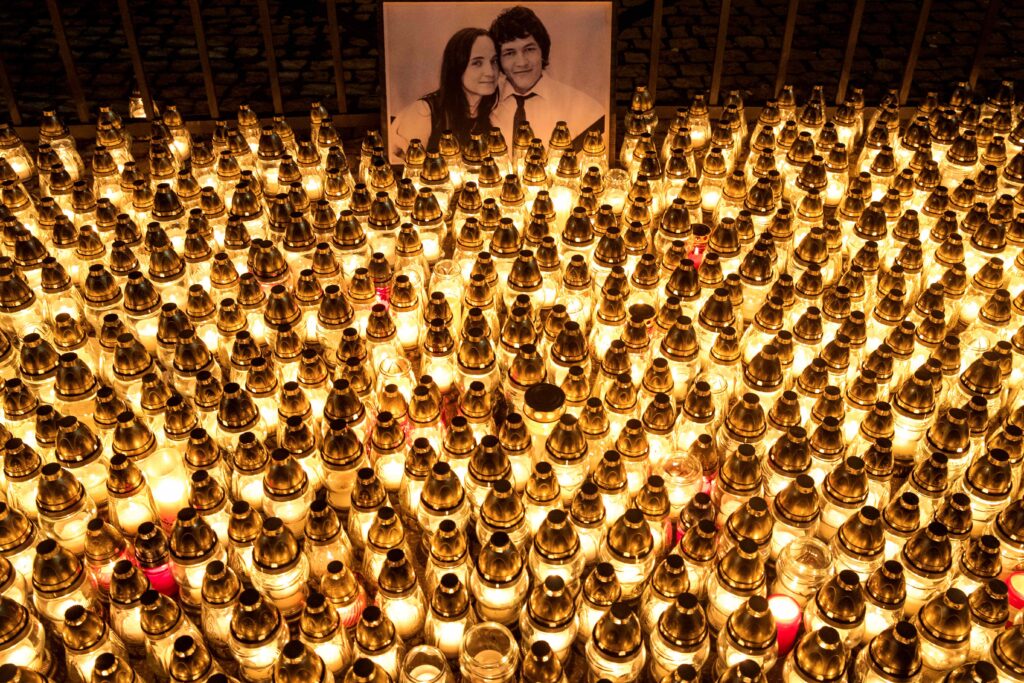
Kuciak and Kušnírová were shot dead in their home outside Bratislava on 21 February 2018. Judges again ruled that prosecutors had not presented the concrete evidence necessary to rule beyond reasonable doubt that Kočner – a businessman with links to Slovakia’s political, judicial and security elite – had ordered the journalist’s death. Both he and Zsuzsová are currently serving lengthy sentences for other crimes.

Our first thoughts go to Ján and Martina’s families, who have endured years of painful court hearings and who have yet again been denied full justice and accountability. We share their intense frustration regarding Kočner’s verdict and stand in full solidarity with the couple’s family, loved ones and colleagues at this difficult time.

This repeated failure to secure the conviction of the suspected mastermind is another damaging setback in the fight against impunity for the murder of journalists in Slovakia, and in Europe. This case follows an all-too-common pattern in which the hitmen and facilitators involved in such crimes are put behind bars while the suspected masterminds who ordered the murder evade justice.

Another acquittal for the most serious crime against journalism in Slovakia’s modern history also has worrying implications for the fragile media freedom progress made within the country in recent years. As we process this disappointing setback, we remain as committed as ever to securing full justice for Ján and Martina and will support the families during the appeal to the Supreme Court.

Those who order the killing of a journalist cannot be allowed to act with impunity. The fight for justice will continue.

Signed by:

ARTICLE 19 Europe

Committee to Protect Journalists (CPJ)

European Centre for Press and Media Freedom (ECPMF)

European Federation of Journalists (EFJ)

Free Press Unlimited (FPU)

International Press Institute (IPI)

OBC Transeuropa (OBCT)

Reporters Without Borders (RSF)

This statement was coordinated by the Media Freedom Rapid Response (MFRR), a Europe-wide mechanism which tracks, monitors and responds to violations of press and media freedom in EU Member States and candidate countries.
MFRR 3 consortium logos
Library

Poland: TOK FM fine sparks renewed concerns about regulatory…

Poland: TOK FM fine sparks renewed concerns about regulatory capture

The International Press Institute (IPI) raises alarm over the controversial fine imposed on the independent radio TOK FM by the chair of Poland’s broadcast media regulator and warns of increasing regulatory pressure on the station ahead of a looming licencing decision.

On 28 April 2023, it was announced that the chairperson of Poland’s National Broadcasting Council (KRRiT), Maciej Świrski, had levied a fine of PLN 80,000 (€17,680) on TOK FM for allegedly violating broadcast law and “inciting hatred” during a morning radio interview.

The financial penalty stemmed from an interview broadcasted in June 2022 in which the host Piotr Maślak spoke with a guest about a history textbook introduced into Polish schools. The book had been commissioned by the Ministry of Education and written by a professor who used to be a politician for the governing Law and Justice (PiS) party.

Speaking critically about the textbook, Maślak stated that in his opinion some elements and language could be compared to Nazi propaganda within the Hitler Youth. His statement was followed by the presentation of specific quotes from the book which he described as problematic.

The fine by KRRiT came more than 10 months after the show was broadcasted. In his justification, the chairman claimed the language used on TOK FM had violated Article 18(1) of the Polish Broadcasting Act by “promoting illegal activities, views and attitudes contrary to morality and social good, and containing content inciting hatred and discriminatory content.”

The fine comes as TOK FM, which is owned by Polish media house Agora and is the fourth-most-popular radio station in Poland, awaits a decision on the renewal of its broadcast licence from KRRiT. The current ten-year licence is due to expire in November 2023. The radio station and Agora stood by the journalist and described the fine as “absurd”.


Deepening concern

“This fine against TOK FM is another example in the growing list of problematic regulatory decisions taken by the head of Poland’s National Broadcasting Council in response to legitimate journalistic content on issues sensitive for the government,” IPI Deputy Director Scott Griffen said. “The opinion expressed by the journalist during the show clearly does not meet the threshold for the serious violations alleged. On the contrary, IPI is concerned that this decision by the KRRiT chairman represents a disproportionate and discriminatory application of the Broadcast Act which penalizes a media outlet for exerting its right to free opinion on a matter of public interest.

“IPI and our global network call for this fine to be rescinded immediately. A decision regarding TOK FM’s pending licence renewal should be made by KRRiT in a timely and independent manner and based on strict professional criteria. We further call on the KRRiT chairman to immediately cease imposing fines and ordering investigations against media carrying out legitimate journalistic work.”

“Worryingly, this is a pattern IPI has documented before: one in which the current KRRiT chairman, an ally of PiS, imposes meritless fines on media critical of the government. Many of these investigations appear to have been launched in response to calls for probes by PiS politicians or in retaliation for reporting on sensitive issues.”

Griffen added: “Crucially, this regulatory decision also has implications beyond the financial cost to the media outlet. It comes as TOK FM awaits a decision on the renewal of its ten-year broadcast licence. With its future on the airwaves in the balance, we are concerned that this fine represents a black mark against its name which some members of the KRRiT could now potentially use to argue for the non-renewal of the licence.”

This is not the first time such regulatory pressure has been applied to critical media organizations. The unjustified withholding of the licence renewal of TVN24 until the last moment by government-friendly figures within KRRiT in 2021 was a key example. While that licence was ultimately granted after a months-long standoff, this kind of pressure creates an unstable climate for media to operate in or make sound financial planning.


Regulatory capture

Griffen noted that the non-renewal of broadcast licences for independent media by captured regulatory bodies has been one of the key mechanisms used by illiberal governments to stifle press freedom and erode media pluralism in Europe in recent years. Hungary’s Media Council, which is controlled by appointees of the Fidesz party, is the prime example here, he said.

“IPI is concerned that  KRRiT, which has long been dominated by figures appointed by PiS and its allies, has increasingly become an instrument for applying politically-motivated pressure to media critical of the ruling party”, Griffen added. “While KRRiT retains some level of pluralism compared to Hungary’s captured Media Council, we believe the politicization of the body poses a threat to media freedom in Poland.

“Increased scrutiny must be given by EU institutions to KRRiT and the implications of its decisions on free media. Threats to KRRiT’s independence should be clearly highlighted in future EU Rule of Law reports. At the same time, safeguards must be implemented to increase the regulatory authority’s institutional independence moving forward.

“KRRiT, as well as the separate National Media Council, are therefore key examples of the need for a strong European Media Freedom Act (EMFA). The fine imposed by KRRiT on TOK FM is also an example of a case in which scrutiny by the EMFA’s proposed European Board for Media Services would, in our view, be justified.”

In March, IPI warned about signs of increasing pressure on critical and independent media ahead of the general election in Poland in autumn 2023, with regulatory pressure by KRRiT highlighted as a key concern.

While Poland’s media landscape remains vibrant and pluralistic overall, in recent years independent media critical of PiS have faced a multi-pronged campaign of regulatory, financial and legislative pressure aimed at undermining their influence.

This statement by IPI is part of the Media Freedom Rapid Response (MFRR), a Europe-wide mechanism which tracks, monitors and responds to violations of press and media freedom in EU Member States and candidate countries. The project is co-funded by the European Commission.
MFRR 3 consortium logos
The scene of Giorgos Karaivaz’s murder Library

Greece: MFRR partners welcome first arrests over 2021 assassination…

Greece: MFRR partners welcome first arrests over 2021 assassination of journalist Giorgos Karaivaz

The undersigned partners in the Media Freedom Rapid Response (MFRR) welcome the arrests announced last Friday of two suspects in connection with the 2021 assassination of crime reporter Giorgos Karaivaz in Greece. The two men, brothers aged 40 and 48, are now in custody and awaiting a hearing today, May 3rd.

The undersigned partners in the Media Freedom Rapid Response (MFRR) welcome the arrests announced last Friday of two suspects in connection with the 2021 assassination of crime reporter Giorgos Karaivaz in Greece. The two men, brothers aged 40 and 48, are now in custody and awaiting a hearing today, May 3rd.


The exact alleged role of the suspects, both Greek nationals, in the murder has not yet been confirmed by prosecutors. News of the arrests was announced on social media by the Minister of Citizen Protection, rather than by law enforcement authorities. According to the Hellenic Police, two other suspects are still wanted in connection with the killing, but the motive remains unconfirmed.


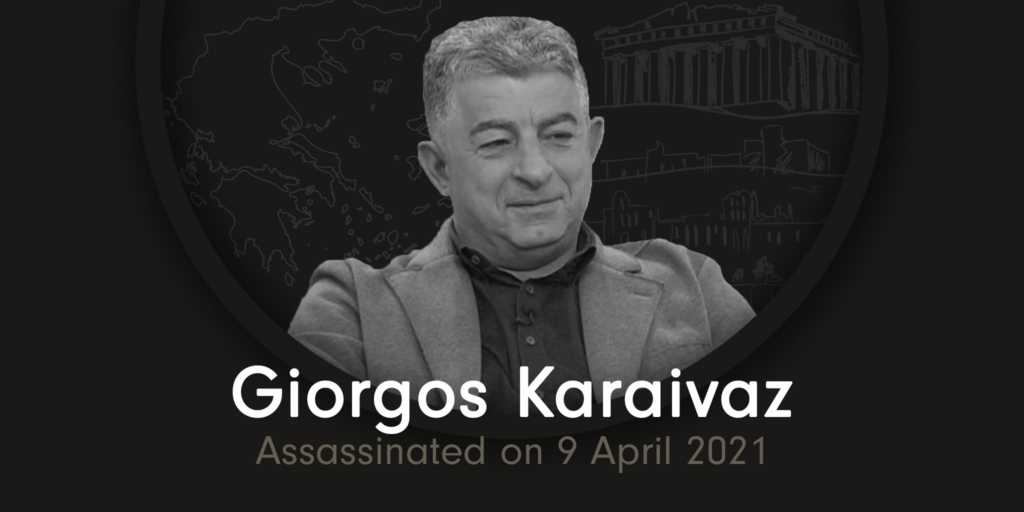
Karaivaz, an experienced crime reporter, was gunned down by two men on a scooter outside his home in Athens on 9 April 2021. Following the killing, police said the “professional” style of the assassination indicated the involvement of organised crime. Last month, the case formally became an instance of impunity for murder, considering there had been no significant progress in investigating or prosecuting the crime for two years.


Last week’s arrests represent the first big step forward and have revived hope that at least some of those responsible for the despicable murder could finally be held accountable. However, to secure full justice for Karaivaz and his family, all those involved in the killing, from the gunman and getaway driver up to the middlemen and mastermind(s), must be prosecuted and put behind bars.


As our organisations mark World Press Freedom Day today, we continue to follow the case closely and do all we can to secure justice for Karaivaz and help strengthen media freedom and independent journalism in Greece, which remain in a poor condition.

Signed by:

  • European Centre for Press and Media Freedom (ECPMF) 
  • International Press Institute (IPI) 
  • OBC Transeuropa (OBCT) 
  • Free Press Unlimited (FPU) 
  • ARTICLE 19 Europe

This statement was coordinated by the Media Freedom Rapid Response (MFRR), a Europe-wide mechanism which tracks, monitors and responds to violations of press and media freedom in EU Member States and candidate countries. 
MFRR 3 consortium logos
Library

Bulgaria: Investigative journalists hit by smears and lawsuits after…

Bulgaria: Investigative journalists hit by smears and lawsuits after corruption revelations

Ahead of World Press Freedom Day on May 3, the undersigned partners of the Media Freedom Rapid Response (MFRR) today raise the alarm about a latest wave of legal pressure exerted against two of Bulgaria’s leading investigative media platforms, BIRD.bg and Bivol.bg, over their recent revelations about alleged crime and corruption.

In recent weeks, journalists from both media have faced attacks and pressure on multiple fronts: a barrage of vexatious defamation lawsuits filed by the associate of a suspected organised crime boss, the deliberate revelation of journalistic source by the Sofia prosecutor’s office, and a discreditation campaign by Bulgaria’s Attorney General Ivan Geshev.


The pressure stems from multiple articles, published separately by the two platforms throughout 2022 and 2023, involving alleged corruption at the border between Bulgaria, Turkey and Greece involving food imports, and separate reports about the alleged bribery of police in the cover-up of a high-profile murder.


Both media’s investigations centre on suspected organised crime boss Christophoros Amanatidis, who allegedly monopolized control over the food imports and truck parking at the EU’s biggest external border crossing, depriving the Bulgarian state of tax revenue. An additional article revealed how Amanatidis also allegedly bribed police to cover up the murder of wanted crypto fraudster Ruja Ignatova in November 2018.


In response, an associate of Amanatidis, Razmig Chakaryan, filed two lawsuits against BIRD journalist Dimitar Stoyanov and three against BIRD editor-in-chief Atanas Tchobanov. A sixth lawsuit was filed against Nikolay Marchenko from Bivol.bg. All six lawsuits are understood to have been filed at the Sofia District Court and each demanded BGN 10,000 (5,130 euros) for alleged defamation and “moral damage”. All lawsuits were brought against the individual journalists, rather than their media outlets.


These lawsuits against BIRD and Bivol are the latest in a wave of SLAPPs targeting watchdog journalism in recent years. BIRD and its journalists are currently facing 10 lawsuits, while Bivol and its reporters are facing four. Both media are partners of the Organized Crime and Corruption Reporting Project (OCCRP).


In a further development, on 7 April 2023 the Sofia City Prosecutor’s Office published a transcript and screenshots of private chat conversations between Stoyanov and one of his sources, who is currently detained on drug-related charges. This was linked to a story that BIRD published on 17 February, which reported that a document found in the safe of a murdered police chief revealed that Amanatidis had bribed the head of the homicide department at the Bulgarian National Police and others to leak sensitive information to him and cover up his criminal activities.


Publication of the conversation came after a press conference held by the Prosecutor’s Office on 16 March 2023, during which Attorney General Ivan Geshev described reporting by journalists as part of an alleged plot to incriminate him and the high-ranking magistrates and police officers. While Geshev did not identify the journalists directly, a screen behind him projected the names of Tchobanov and Stoyanov.


Our organisations are deeply concerned by these interconnected attacks on investigative journalists in Bulgaria. While the full details about the lawsuits has not yet been confirmed, our assessment and that of local media associations is that they clearly represent retaliatory and vexatious legal actions intended to pressure legitimate watchdog reporting. These lawsuits display many of the characteristics of Strategic lawsuits against public participation (SLAPPs). Our organisations stand ready to provide advice and legal support to all three journalists to help fight these lawsuits.


Moreover, the decision by the Sofia City Prosecutor’s Office to publish screenshots of a journalist’s private communications with a source is an unprecedented and deeply alarming violation of source confidentiality. Even if the chats are part of an ongoing criminal probe, the Prosecutor’s Office has a clear responsibility, in line with Bulgarian and European law, not to arbitrarily reveal the journalists’ source, let alone publicly publish screenshots of their conversation. In the course of their investigations, it is standard practice for journalists to communicate with multiple sources if the information they can provide is of public interest.


Attempts by the Attorney General to try and discredit the work of Stoyanov and Tchobanov, both respected investigative journalists, are also highly problematic and should be ceased immediately. We are concerned that the allegations launched against both journalists appear to be aimed at muddying the serious revelations published by the media outlet. In the context of Bulgaria’s already weak landscape for press freedom, these pressures have a clear intimidatory effect on media freedom.


Concerningly, this case is yet another example of the many threats that journalists probing crime and corruption in Bulgaria regularly face in carrying out their public service mission. Ahead of World Press Freedom Day on May 3, our organisations express our solidarity with BIRD.bg and Bivol.bg and their journalists. We have reported these cases to the Council of Europe’s platform for the safety of journalists and Mapping Media Freedom, and will alert relevant European bodies about this case. We will continue to monitor the situation closely and will respond to additional attempts to pressure or silence investigative journalism in Bulgaria.

Signed by:

  • ARTICLE 19 Europe
  • Balkan Free Media Initiative (BFMI)
  • International Press Institute (IPI)
  • European Centre for Press and Media Freedom (ECPMF)
  • Free Press Unlimited (FPU)
  • OBC Transeuropa (OBCT)

This statement was coordinated by the Media Freedom Rapid Response (MFRR), a Europe-wide mechanism which tracks, monitors and responds to violations of press and media freedom in EU Member States and candidate countries.

MFRR 3 consortium logos
Library

Media Freedom Groups troubled with the CULT report on…

Media Freedom Groups troubled with the CULT report on the EMFA proposal

Apr 28, 2023

Dear Sabine Verheyen,


We, the undersigned journalists, press freedom, civil society, trade unions, and digital rights groups, are writing to you with regard to the proposed amendments to the draft  European Media Freedom Act (EMFA) you have written as the Rapporteur on behalf of the Committee on Culture and Education (CULT). 


We thank the rapporteur for the timely drafting and appreciate several amendments in the report, such as the strengthening of the independence of the European Board for Media Services. 


However, we are very concerned about many changes that dilute the impact of the proposal , as well as the harmonization effort that drives the EMFA.  Moreover, the removal of the explicit reference and guarantee of journalists and editors’ editorial independence throughout the proposal, and the changing of the media pluralism test from mandatory to optional in national rules raise our concern regarding the EMFA’s capacity to adequately protect media pluralism and media freedom in the EU.


Our main critical points are the following:  

  • The removal of almost all references to editorial independence in the proposal and the insertion of media owners’ right to assume a leading editorial role (Art 6.2);
  • The insertion of VLOPs into the media plurality assessment and the exchange of a mandatory nature for a voluntary one (Art 21); and
  • The failure to strengthen media ownership transparency rules (Art 6.1).


Editorial independence is an essential pillar of media freedom that helps guarantee the integrity of a media’s journalism and protection against the undue influence of vested interests from political or business groups. The latest scandal surrounding Mathias Döpfner, the CEO of Axel Springer, seeking to interfere in editorial policy of Germany’s largest newspaper underlines the vulnerability of our media to vested interests and the necessity to maintain protections on editorial independence across Europe.


The inclusion of Very Large Online Platforms under the media plurality test under Art 21 should also be removed as it prejudges the methodology to be developed for protecting news media pluralism in Europe. News media plurality cannot be looked at in isolation and VLOPs as with other actors such as advertising companies have a significant impact on the media economy and this is recognised already in the Digital Markets Act (Regulation 2022/1925). However, to insert VLOPs into the EMFA which is primarily focused on a public interest test for news media is premature and ties the hands of the policy experts assigned to develop the media plurality test.


We kindly remind you that the media ownership transparency obligations on media under Article 6.1 should be strengthened as it is only through clear publicly available and verifiable information that the public can make informed decisions about the integrity of the media. This is also a request in the recently published independent research for the CULT Committee on the EMFA. Only this way will we achieve meaningful transparency.


We call on you, dear Sabine Verheyen, and on all CULT members as the lead committee, which has been a reliable and vocal campaigner for media freedoms across the European Union, to stick to your principles and help to improve this act as a regulation so much needed in the EU and beyond.


With kind regards,

Signed by:

  • Association of European Journalists (AEJ Belgium)
  • Civil Liberties Union for Europe (Liberties)
  • Eurocadres
  • European Centre for Press and Media Freedom (ECPMF)
  • European Federation of Journalists (EFJ)
  • Global Forum for Media Development (GFMD)
  • International Press Institute (IPI)
  • OBC Transeuropa (OBCT)
  • Ossigeno.info
  • South East Europe Media Organisation (SEEMO)
  • Society of Journalists, Warsaw
  • The Daphne Caruana Galizia Foundation

This statement was coordinated by the Media Freedom Rapid Response (MFRR), a Europe-wide mechanism which tracks, monitors and responds to violations of press and media freedom in EU Member States and candidate countries. 

MFRR 3 consortium logos