Slavko Curuvija Library

Serbia: MFRR welcomes renewed convictions for murder of Slavko…

Serbia: MFRR welcomes renewed convictions for murder of Slavko Ćuruvija

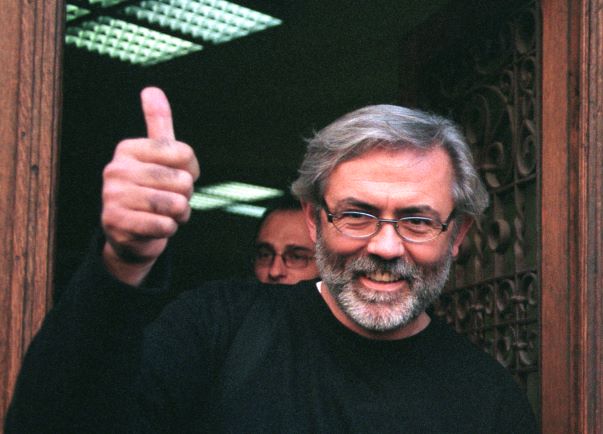
The undersigned partners of the Media Freedom Rapid Response (MFRR) today welcome the confirmed guilty verdicts handed down to four former officials in the Serbian state security services for the murder in 1999 of leading journalist and editor-in-chief Slavko Ćuruvija.

The decision by the Higher Court in Belgrade to reaffirm the convictions in the retrial is an important victory for the family and all those involved in the long fight for justice for his assassination and represents another important milestone in the fight against engrained impunity for the killing of journalists in Serbia, where journalists continue to face multiple threats, attacks and pressure.

Ćuruvija, an investigative reporter, owner of the Dnevni Telegraf newspaper and Evropljanin magazine, and a vocal opponent of authoritarian president Slobodan Milošević, was shot 14 times with an automatic pistol outside his house in Belgrade in April 1999. He was considered an enemy of the state for advocating in his journalism for the NATO bombing of Yugoslavia during the Kosovo War.

After a seven-year trial, four former spies working for the State Security Department were convicted for the killing and each sentenced to between 20 and 30 years in prison, in a landmark ruling in April 2019. In July last year, the Special Department for Organized Crime of the Court of Appeals overturned the first-instance verdict and ordered a retrial over the naming of an unidentified individual as the gunman, prolonging a 22-year fight for justice.

The retrial, which began in October 2020, suffered from multiple disruptions during the pandemic. However, the Trial Chamber of the Special Court finally reached its decision on 2 December 2021 and again sentenced those responsible to a total of 100 years behind bars. Former spy chiefs Radomir Marković and Milan Radonjić were sentenced to 30 years. Accomplice Ratko Romić was given 20 and Miroslav Kurak, who remains on the run, received 20 years. The verdict ruled that the Ćurvija was killed by an unidentified person.

While these renewed convictions are welcome, the fight for justice is not yet over. In the event of a further legal challenge, we hope the Court of Appeal will confirm final guilty verdicts for all four defendants. Full justice in this case will never be achieved, as the top state officials who may have ultimately ordered the killing are long gone. These renewed convictions nonetheless offer another damning indictment of the Milošević regime, which in its verdict the court found to have orchestrated the politically motivated killing through its security apparatus.

The fight against impunity for killings and attacks on journalists is an integral element of the efforts to improve media freedom in Serbia. As the MFRR stressed in our report following a recent mission to Serbia, impunity for the gravest crimes continues to cast a long shadow over the country’s climate for safety of the press. Serbia remains one of the most dangerous countries in Europe to be a journalist. In the last few weeks, our organisations have observed with concern several attacks and threats against journalists in Serbia, including a death threat against investigative outlet KRIK and the beating of photojournalist Andrija Vukelic by supporters of the ruling Serbian Progressive Party.

This verdict in the case of Slavko Ćuruvija should therefore both act as a catalyst for authorities to redouble efforts to end impunity for the other unsolved killings of journalists since the break-up of former Yugoslavia – including Milan Pantić and Dada Vujasinovic – but also to work to establish an environment in which no other journalists face attacks because of their work.

Our organisations salute the work of the special prosecutor, the Commission for the Investigation of Murders of Journalists in Serbia and the Slavko Ćuruvija Foundation, who have fought for so long to achieve justice in this case. In the event of an appeal, representatives from our organisations will seek to travel to Serbia to observe the trial in person.

Signed by:

  • European Centre for Press and Media Freedom (ECPMF)
  • European Federation of Journalists (EFJ)
  • International Press Institute (IPI)
  • OBC Transeuropa (OBCT)

This statement was coordinated by the Media Freedom Rapid Response (MFRR), a Europe-wide mechanism which tracks, monitors and responds to violations of press and media freedom in EU Member States and Candidate Countries.

Serbian penal code Library

Serbia: Penal Code amendments require open and comprehensive debate

Serbia: Penal Code amendments require open and comprehensive debate

The Media Freedom Rapid Response (MFRR), the Independent Journalists’ Association of Serbia (IJAS) and the Lawyers’ Committee for Human Rights in Serbia (YUCOM) express concern over the limited time and space available to openly debate various amendments of the Penal Code proposed by the Ministry of Justice of Serbia.

While well intentioned, the amendments are problematic from a freedom of expression perspective. Our civil society organisations call for a broader and open consultation that comprehensively integrates the implications of the amendments on the exercise of human rights in Serbia.

We recognise that journalists in Serbia face numerous threats to their physical safety and are often the target of harassment as a result of their work. Most of the latter take place online, especially on social media platforms, and are impacting on the activities of journalists and the independent media in Serbia.

While the lack of or an inconsistent approach to investigation of these forms of attacks should be addressed, the solutions proposed in the Penal Code amendments need further and open discussion aimed at preventing negative implications on the freedom of expression of journalists and other individuals participating in public debate in Serbia.

The proposed amendments are extremely broad, based on problematic concepts, including penalising expression of opinions and criminal sanctions for “insult” and similar concepts, which can ultimately lead to sanctions against journalists.

The MFRR supports the call of civil society in Serbia to the Ministry of Justice to further extend the public consultations and enable in depth discussion on the different measures and mechanisms that can effectively improve journalists’ safety while complying with international freedom of expression standards.

The Ministry of Justice opened a first 20 day consultation in October and extended a second period of consultations in November, which will close today, after the request of civil society. However, this timeframe and the apparent drive to expedite the consensus over the proposed amendments have impeded a comprehensive discussion of the underlying issues of both the safety of journalists and the changes in the Criminal Code.

The MFRR, IJAS and YUCOM urge the Ministry of Justice to take these concerns into consideration and enable more comprehensive and adequate consultations , ideally with a three month window, to enable wide discussion among all stakeholders. Finally, the signatories to this statement recommend that these amendments are examined and assessed as part of the regular process of the ongoing wider review of the Penal Code in Serbia.

Signed by:

  • ARTICLE 19
  • European Centre for Press and Media Freedom (ECPMF)
  • European Federation of Journalists (EFJ)
  • Free Press Unlimited (FPU)
  • International Press Institute (IPI)
  • OBC Transeuropa (OBCT)
  • Independent Journalists’ Association of Serbia (IJAS)
  • Lawyers’ Committee for Human Rights in Serbia (YUCOM)

This statement was coordinated by the Media Freedom Rapid Response (MFRR), a Europe-wide mechanism which tracks, monitors and responds to violations of press and media freedom in EU Member States and Candidate Countries.

Library

Two decades of impunity for murder of Serbian journalist…

Two decades of impunity for murder of Serbian journalist Milan Pantić

To mark the twentieth anniversary of the killing of Serbian journalist Milan Pantić, the International Press Institute (IPI) today expressed support for those continuing the fight for justice and expressed frustration at the lack of progress in bringing indictments against those suspected to have been involved.

While other cases involving the murders of journalists in Serbia during the dissolution of Yugoslavia have made important if stalled progress on achieving justice in recent years, the case of Pantić has remained mired in impunity two decades later.

Pantić, a correspondent at the daily newspaper Vecernje Novosti, was killed after being struck on the head with a blunt object outside his home in the city of Jagodina in central Serbia on June 11, 2001. The targeted attack is widely believed to have been carried out as retaliation for his reporting on corrupt privatization deals following the fall of the Milosevic regime.

Despite efforts by the Serbian commission for investigating the killings of journalists to add fresh impetus into the case, no one has been charged or prosecuted and those responsible continue to evade justice. The Prosecutor’s Office for Organized Crime has declined to reopen the case despite repeated requests by civil society and media freedom groups.

“IPI shares the deep frustration of those in Serbia regarding the unacceptable lack of progress in solving the murder of Milan Pantić”, IPI Deputy Director Scott Griffen said. “While large amounts of information, testimony and evidence have been collected about the motive, background, and alleged perpetrators, little progress has been made in actually bringing those who planned and carried out the assassination to justice.

“Allowing this case to go cold would not only leave a gaping wound in the life of Pantić’s loved ones but it would also undermine the legitimate progress made in other journalist murder cases in Serbia. Law enforcement and special investigators must reignite their efforts to bring indictments and political authorities must ensure any factors blocking progress are removed.

“The convictions and combined prison sentences of 100 years handed down to those accused of murdering leading editor-in-chief Slavko Ćuruvija in 1999 are proof that historic cases of impunity can – and must – be resolved all these years later.  We hope that ongoing retrial will result in the same guilty verdicts. Our hope is that on future anniversaries of this tragic killing, the family of Milan Pantić can one day feel the same sense of justice. Time does not heal impunity. As long as cases like those of Milan Pantić remain unsolved, journalists in Serbia will remain at risk.”


Writing about the lack of progress on the anniversary, Veran Matić, chairman of the Commission for investigating the killings of journalists and an IPI World Press Freedom Hero, said: “If things remain unchanged, I don’t see what else we could do as a governmental Commission, having in mind we are soon entering the third decade since the killing of Milan Pantić.

“The presented, logically supported findings are convincing proof that we are close to the goal. Who, why and for what purpose is preventing the initiation of court proceedings and resolution of one of the greatest traumas of our journalism? The answer is being awaited by his family, the media and journalistic community, Serbian society and the international community. The deceased Milan deserves this answer the most, as all he did was doing his job professionally hoping to contribute to the public interest.”


Flawed investigations

Pantić was one of three journalists suspected to have been murdered in retaliation for their work in Serbia during the tumultuous decade spanning the 1990s and early 2000s. Dada Vujasinović was killed in 1994 and Slavko Ćuruvija was gunned down five years later.

According to the Commission, which has followed the case since its establishment in 2013, Pantić was killed due to his journalistic investigations into allegedly corrupt privatization deals that followed the transition to democracy at the turn of the century. Experts point to his reporting on the privatization of a brewery and a cement factory and on the local drugs trade. The attack took place around 8am as he returned to his apartment block from a nearby store.  Pantić was struck three times on the head with an object suspected to be a baseball bat.

While reports suggest that more than 1,000 people were interrogated in the original investigation, the Commission believes the investigation by police working groups and judicial authorities was seriously flawed. It says fingerprints were not taken from the site, Pantić’s clothes were not preserved, and that important investigative actions were not carried out correctly or at all. While the suspected motive and individuals involved have been identified, currently the prosecutor says there is not enough evidence to bring charges. In 2015, the names of two people suspected to have been involved were leaked to the press, yet no indictments have been brought.

In 2018, the Commission, an official government body made up of journalists, associations, and representatives from the police and State Security Agency, called on authorities to assign a Special Prosecutor to take over the case. To this day it has not received a response.

Library

Serbia: Investigative outlet KRIK sued by state security agency…

Serbia: Investigative outlet KRIK sued by state security agency director

The Media Freedom Rapid Response (MFRR) is deeply concerned by the lawsuit targeted at a journalist and the editor-in-chief of the Network for Investigation of Crime and Corruption (KRIK) by the director of Serbia’s Security-Information Agency (BIA).

The MFRR urges the BIA director Bratislav Gasic to immediately withdraw the civil lawsuit against KRIK and to refrain from weaponising the law to intimidate media outlets investigating the nexus between crime, corruption and politics in Serbia.

The lawsuit stems from an article KRIK published on April 9 which reported details of wiretapped conversations played as evidence in the murder trial of criminal gang chief Zoran Jotic, during which Gasic’s name was mentioned.

The article by journalist Milica Vojinovic reported that during one of the recordings one accused gang members said that Jotic did not have to worry about his safety because Gasic was “on the cauldron”, i.e. on the payroll of the clan leader. KRIK asked Gasic to comment before publishing the story but the request went unanswered.

In response to the article – “Political connections of the Krusevac criminal group: ‘Jotka had Gasic on the cauldron’ – the BIA director denied the allegations and accused KRIK’s journalist of presenting “a malicious interpretation of the wiretapped conversation” which damaged his “reputation and honour”. The 500,000 dinars (€4,250) lawsuit called on the court to “let the media know that borders exist and must be respected.”

KRIK editor-in-chief, Stevan Dojčinović, has rightly defended the article and said KRIK is prepared to fight the case in court, stressing it simply conveyed information from evidence presented during the trial, which was held under normal reporting conditions. The article reported numerous other details from the intercepted phone conversations about alleged criminal associations with unnamed government ministers.

Journalists are free to publish anything which is said or given as evidence in a Serbian court. The information reported by KRIK was presented as evidence by the prosecution, it was reported accurately, and the BIA director was given the chance to respond, in line with standard journalistic practice.

Our organisations therefore consider this lawsuit to be groundless and hope it will be swiftly dismissed by the courts. It is an unacceptable attempt to pressure KRIK not to report information which is clearly in the public interest. This lawsuit also comes on the back of a concerted and baseless smear campaign against KRIKs journalists in recent months which has been fanned by certain politicians.

These kinds of vexatious demands for damages against investigative media outlets burden them with costly legal fees and lengthy court battles, distracting from their job of exposing wrongdoing and holding power to account. In Serbia, such lawsuits have all too often been instrumentalised by politicians or powerful individuals to try and stifle independent reporting, as our recent MFRR report outlined.

We call on Director Gasic to withdraw the lawsuit and for public officials and politicians in Serbia to stop using insult and defamation laws as a tool to intimidate critical journalism. Courts must fully comply with international freedom of expression standards when ruling on cases brought by public officials against media which involve claims involving harm in the form of mental anguish.

As our MFRR report notes, press and media freedom in Serbia are in serious need of improvement. An end to baseless lawsuits against journalists and independent media outlets by the country’s public officials would be a good place to start.

Signed by:

  • ARTICLE 19
  • European Centre for Press and Media Freedom (ECPMF)
  • European Federation of Journalists (EFJ)
  • International Press Institute (IPI)
  • OBC Transeuropa