Georgia: Ahead of verdict, press freedom groups renew call…

Georgia: Ahead of verdict, press freedom groups renew call for Mzia Amaglobeli’s release

Ahead of the expected verdict in the case of veteran Georgian journalist Mzia Amaglobeli on Friday August 1, the undersigned press freedom, journalists, and human rights organisations jointly renew our call on Georgian Dream authorities to dismiss the criminal charge against her and to facilitate her immediate release. 

31 July 2025

Amaglobeli has been unjustly held in pre-trial detention since her arrest in January, during which time her health and eyesight have dangerously deteriorated. She has been charged under the criminal code for attacking a police officer — a charge widely regarded as excessive and politically motivated — which carries a potential sentence of up to seven years in prison. At a hearing on July 14, Amaglobeli testified about the humiliating and dehumanizing treatment she endured during her arrest on January 11 and 12.  


Since her arrest, Amaglobeli and her media organisations have faced smear campaigns, degrading treatment, and economic retaliation. Georgian Dream authorities have also wrongly accused her of acting on behalf of foreign powers – in what appears to be an effort to undermine her credibility as a journalist. On July 17, authorities ordered the seizure of the bank accounts of Gazeti Batumelebi and Netgazeti—another step in the Georgian Dream party’s campaign to pressure these outlets.


Amaglobeli has become a symbol of the resilience of Georgian media. Her arrest and prosecution comes amid a wider crackdown on media freedom in Georgia. The ruling Georgian Dream party has restricted the space for independent journalism through repressive laws, arbitrary arrests, deliberate economic pressure, and impunity for crimes against journalists. 


Ahead of what is expected to be Amaglobeli’s final hearing on August 1, we reiterate our call for the criminal charge against her to be dropped and for her immediate release. Our organizations, some of which were in Georgia earlier this month to monitor the previous hearing, will be closely watching developments tomorrow and hope that this discriminatory and excessive persecution of a symbol of media freedom in Georgia will come to an end.

Signed by:

  • International Press Institute (IPI) 
  • European Federation of Journalists (EFJ)
  • European Centre for Press and media Freedom (ECPMF)
  • ARTICLE 19 Europe
  • Osservatorio Balcani Caucaso Transeuropa (OBCT)
  • Free Press Unlimited (FPU)
  • Justice for Journalists Foundation
  • Index on Censorship
  • Committee to Protect Journalists (CPJ)
  • Araminta
  • Media Diversity Institute Global
  • Media Development Investment Fund (MDIF)
  • IMS (International Media Support)
  • Reporters Without Borders (RSF)
  • The Daphne Caruana Galizia Foundation
  • The Press Freedom Center at the National Press Club

This statement was coordinated by the Media Freedom Rapid Response (MFRR), a Europe-wide mechanism which tracks, monitors and responds to violations of press and media freedom in EU Member States and Candidate Countries.

cyber security, digital, computers,

Hungary: Police arrest suspect behind DDoS cyberattacks on IPI…

Hungary: Police arrest suspect behind DDoS cyberattacks on IPI and independent media websites

The International Press Institute (IPI) today welcomes news of the arrest by Hungarian law enforcement of an individual in Budapest suspected of carrying out powerful cyberattacks against the website of IPI and multiple independent news outlets in Hungary in 2023 and 2024.

22.07.2025

On 21 July, the Hungarian National Investigation Bureau’s Cybercrime Investigation Unit announced that they had raided the home of a 23-year-old man suspected of carrying out the distributed denial-of-service (DDoS) attacks and confiscated numerous digital devices.


Police said the man, whose identity has not been revealed, is the cyberattacker known as Hano, who was identified as coordinating attacks on media websites in Hungary, as well as IPI. He was arrested and questioned on 9 July on suspicion of the crime of information system or data breach, according to authorities.


Formal charges have yet to be brought while police continue to assess digital evidence, and he has since been released from custody. Hungarian authorities added that evidence was found on the seized devices that clearly indicated the commission of the digital crimes.


“IPI welcomes the announcement of the arrest by Hungary’s Cybercrime Investigation Unit of the individual suspected to be the cyber attacker known as Hano,” said IPI Executive Director Scott Griffen. “We await further details on the investigation and planned charges. There are many questions here that must be answered to secure accountability. We urge authorities to clearly identify the motive behind these attacks as well as to fully and transparently investigate and determine whether any external coordination or funding was involved in these targeted attacks on independent media and civil society.”


IPI’s website was first hit by a DDoS attack on 1 September 2023, just days after we published a report detailing how at least 40 different media websites in Hungary had been hit by DDoS attacks, a form of cyberattack which crashes websites by overloading their servers with millions of simultaneous access requests. The majority of these attacks were directed against independent media platforms, including HVG, Telex, 444.hu, Magyar Hang, and Népszava, while pro-government media were left unscathed.


The attack kept IPI’s website offline for three days while our IT team fought to repel waves of attacks. An in-depth forensic analysis conducted in December 2023 by the Qurium, a non-profit based in Sweden, confirmed IPI’s initial assessment that the DDoS attack was carried out in retaliation for our work in support of independent media in Hungary.


Hungarian authorities said the man was identified by the Cybercrime Investigation Unit via digital traces and fake profiles. An analysis of access logs and examination of network traffic showed the perpetrator had used so-called “DDoS for hire” services and other online tools to carry out the attacks, which were executed under the name Hano – which he also used on service provider interfaces and in personal messages.


After it reported on the attack on IPI, the German newspaper taz was also hit by a similar attack a week later, mirroring a pattern of reprisals for media reporting on the DDoS attacks. Analysis of technical logs from the attacks on taz and IPI both show how the hacker used the nickname Hano – an acronym in Hungarian for a disorder which affects the human body. During many attacks, messages were left behind in the code, such as #HanoHatesU. The same message was left in the code of attacks on Hungarian media outlets, which continued in 2024.


Experts taz spoke to unofficially classified Hano as an Advanced Persistent Threat (APT) – defined by the German Cybersecurity Agency as a well-trained, usually state-sponsored attacker who targets a system over a long period of time.


The Hungarian police report specifically mentions the attacks on IPI, which led authorities in Budapest to contact Austrian authorities due to the cross-border scope of the investigation.


IPI reported the case to Austrian police at the time and sent information to the Hungarian Cybercrime Investigation Unit in April 2025. IPI will be contacting Hungarian and Austrian law enforcement agencies to request further information.


“Cyber attacks pose a growing threat to press freedom worldwide, severely harming the public’s right to news and information. It is essential that law enforcement authorities take these attacks seriously whenever they occur and ensure full accountability for all those involved.”

In the wake of the attacks, IPI worked with Cloudflare to provide free digital security tools to a number of Hungarian media to help them defend against future DDoS attacks. If you are a media outlet in need of support in repelling DDoS attacks, IPI can provide referrals for enhanced defences free of charge. Please contact IPI for more information.

This statement was coordinated by IPI as part of the Media Freedom Rapid Response (MFRR), a Europe-wide mechanism which tracks, monitors and responds to violations of press and media freedom in EU Member States and Candidate Countries.

EU Rule of Law Report: A welcome but insufficient…

EU Rule of Law Report: A welcome but insufficient response to deteriorating media freedom

Following the publication of the European Commission’s 2025 Rule of Law report, the Media Freedom Rapid Response (MFRR) today calls on the EU to act on the alarming findings to bolster its defence of media freedom and independent journalism across the bloc.

21.07.2025

As media freedom across the European Union and candidate countries continues its overall deterioration, the findings of the report must now act as the foundation for sustained action to safeguard EU values and push for strong implementation of the upcoming European Media Freedom Act (EMFA). 


General overview


Media Freedom Rapid Response (MFRR) is pleased to see the ongoing recognition of media freedom and media pluralism as central to upholding the rule of law within the European Union and enlargement countries. The Rule of Law report rightly emphasises that independent media serve as a crucial check on power and a vehicle for the free flow of information, both increasingly under threat. We welcome the findings that reveal a worrying decline in media conditions across Europe, with journalists experiencing rising physical violence, online harassment, and politically motivated smear campaigns. The economic vulnerability of the media sector, combined with the dominance of a few digital platforms and concentrated ownership structures, further increases the risk of political interference.


The report highlights the implementation of the European Media Freedom Act (EMFA) as a vital tool for enhancing media freedom and pluralism across Europe, aiming to strengthen journalist protection, ensure fair state advertising, and reinforce public media independence. With the deadline for implementation of August 8 approaching, most Member States are in the process of aligning their legislation with the EMFA, but many will fall short to respect the implementation deadline. The Commission notes advances in increasing the capacity and independence of national media regulators, reforms to improve transparency in media ownership, and the introduction of safeguards to combat abusive legal actions such as strategic lawsuits against public participation (SLAPPs). Positive steps are also reported in improving access to public information and journalist safety, although these efforts vary significantly across the EU, and are met with different challenges.


However, the report stops short of directly calling out systemic failures, particularly in states where media capture and political interference are entrenched. The diplomatic language when discussing serious concerns may undermine the urgency of the issues. Moreover, the report provides recommendations, but it does not describe accountability mechanisms. Hence, there is no clear path for enforcement or consequences for non-compliance, particularly regarding EMFA implementation.


With an increased level of digital threats to media viability and safety, the report would benefit from a more in-depth analysis of digital threats. The current overview fails to adequately address the challenges posed by surveillance, disinformation, algorithmic influence, and emerging technologies such as AI.


The MFRR aims to use this analysis to identify countries where the report may not fully capture the severity of challenges faced by public interest journalism, and to offer insights into areas requiring further action.


Country Focus


While the Serbia report acknowledges “serious” and “increasing” concerns regarding the independence of the Regulatory Authority for Electronic Media (REM) and the safety of journalists, it fails to give a realistic picture of the repression that has been underway since the fatal collapse of the railway station roof in the city of Novi Sad, that killed 16 people in November 2024 and prompted massive anti-corruption protests. In this unprecedented context, independent journalism is facing its greatest emergency, as the MFRR delegation found out during its mission in April 2025. Not only are journalists not protected by the public authorities, but they are directly confronted with attacks of all kinds coming from the highest level of government. Censorship of information, increasing pressure on media professionals, political stranglehold of the media landscape have become systemic and are not sufficiently highlighted as violations of the public’s right to know. With this report, the European Commission makes a weak assessment of the media freedom situation and misses an opportunity to warn the Serbian government of the consequences of such a deterioration of the rule of law, which must be urgently remedied.


Regarding Italy, the 2025 Rule of Law Report offers only a partial picture of the mounting challenges faced by media professionals in recent years. The European Commission rightly acknowledges the chilling effect of several legislative measures on judicial reporting.


The report stops short of addressing deeper concerns over the PBS funding system’s adequacy, sustainability, and predictability. The Commission praised RAI’s commitment to “accurate and pluralistic information”. Yet, the report overlooks significant challenges faced by RAI’s investigative teams, including a consistent pattern of legal harassment and recent internal pressure, evident in the reprimand of Sigrifo Ranucci, Report’s anchorman, and the announced reduction of the programme’s upcoming season. While acknowledging the unusual inactivity of the RAI Oversight Parliamentary Committee since Autumn 2024, the report omits the fact that this paralysis is due to a boycott by members of the ruling coalition, disabling parliamentary oversight for nearly a year.


The issue of conflicts of interest, addressed in the section on the justice system, is regrettably absent from the media section. Yet, conflicts of interest have long posed a structural challenge for the Italian media landscape. The persistent concentration of economic and political power in the hands of media owners continues to threaten editorial independence. This risk is exemplified by the Tosinvest group—led by Lega MP Antonio Angelucci—which owns major newspapers such as Libero, Il Tempo, and Il Giornale, and has been attempting to acquire one of Italy’s main news agencies, AGI.


Finally, as the report acknowledges the important work undertaken by the Specialised Coordination Centre dedicated to the safety of journalists in Italy, it fails to address the implications of the fragile findings of the Parliamentary Committee for the Security of the Republic (COPASIR) on the surveillance of Fanpage director Francesco Cancellato using spyware. The recommendation to bolster the protection of professional secrecy and journalistic sources shows that the Commission acknowledged the insufficient safeguards against the abusive surveillance of journalists and media workers. However, it failed to recognise the government’s active efforts to undermine transparency initiatives and to provide clarity on the case.


On Hungary, the report again adequately assesses the complete lack of progress in any element of media freedom or pluralism. It correctly concludes that pressure on journalists and other media professionals increased in the past year, specifically due to the actions of the Sovereignty Protection Office. However, yet again the full severity of the situation for media capture and media pluralism in Hungary is not sufficiently reflected in the language. Furthermore, while the government’s draft law ‘on transparency in public life’ is noted, it is included in the section on civil society and regrettably not again mentioned in the section of media, despite the potent threat the law would pose if ultimately passed. While the report sufficiently evaluates the situation for media freedom in Hungary, and the EU Commission has referred Hungary to the European Court of Justice over the Protection of National Sovereignty Law, overall the EU continues to fail to reply to these broadening attacks on democracy with the appropriately forceful response: the suspension of EU funds, which MFRR organisations have repeatedly called for.


Regarding Greece, the report correctly identifies a number of positive reforms developed by the Greek authorities in the last year, including on state advertising transparency and media registry bodies. However, MFRR organisations believe that the overall urgency of the situation in Greece, which still ranks among the lowest countries in the EU for media freedom, is not sufficiently reflected in the report. Language in the report suggests that reforms undertaken in recent years have already had a clear positive impact on the ground. However, it is the assessment of the MFRR in our monitoring that many of these changes have yet to have a marked impact on improving media freedom and the environment for independent journalism, and that Greece has a number of reforms to continue ahead of alignment with the EMFA. Meanwhile, the ongoing and complete lack of accountability over the direct and indirect involvement of state actors in the illegal surveillance of journalists in Greece in recent years in the ‘Predator Gate’ scandal is not sufficiently addressed and continues to represent a serious black mark over press freedom in the country. 


Of all countries in the EU, Slovakia has undergone the most severe decline in media freedom in the past year, as noted in the MFRR’s mission report of February 2025. However, the MFRR believes this alarming decline is not sufficiently reflected in the language of the report. Slovakia’s media landscape remains under intense pressure from a government determined to assert direct control over the public media and pressure the private media to curb its political output. While the report notes simply that there has been “no progress on the recommendation to enhance the autonomy of public service media”, the reality is that the government continues to actively tighten its control over the broadcaster after the merging of the TV and radio into a single entity, and recent appointment of a government ally to the post of director general of STVR. This serves as a test case for the EU’s commitment to safeguarding media freedom and democratic values from Hungary-style undemocratic attacks and provides a key case for the implementation of the EMFA. 


Describing the developments in Croatia, the Rule of Report acknowledges several positive initiatives undertaken by the Croatian government to safeguard media freedom, such as the adoption of protocols to investigate attacks on media professionals. The report also recognises that there were not enough steps taken to address media capture through media advertising, as well as that the protection of journalists and SLAPPs remain an issue. However, the Media Freedom Rapid Response (MFRR) organisations contend that the report does not adequately convey the critical state of media freedom in Croatia. The language used in the report implies that recent reforms have already yielded tangible improvements. Yet, based on MFRR’s monitoring, many of these changes have not significantly enhanced media freedom or the conditions for independent journalism. Croatia still has made no evident progress to implement the European Media Freedom Act (EMFA). Additionally, inconsistent application of protective protocols, especially at the local level, exacerbates concerns for journalists’ safety. For instance, the case of Melita Vrsaljko, who was attacked twice for her reporting, underscores the failures in applying these protocols. Furthermore, current administrative procedures in courts risk exposing journalists’ personal information to alleged perpetrators, and defamation remains a criminal offence without plans for decriminalisation. The recent amendment to Article 307a of the Criminal Code, which criminalises the unauthorised disclosure of information about criminal investigations, further restricts whistleblowers from collaborating with journalists on matters of public interest.


Over the past nine months, Romania has undergone four rounds of elections, which have arguably deepened the political capture of the media. The Rule of Law report’s chapter on Romania correctly highlights the rise in opaque political advertising, affecting both national and local media, both heavily reliant on state advertising. We welcome the report’s recognition of ongoing online and offline harassment of journalists. However, it is important to emphasise that threats to journalists’ safety have been particularly driven by far-right politicians during the presidential campaigns. The report acknowledges that the presidential elections exposed a failure to enforce standards on unmarked political content on television and online news websites. However, it falls short of addressing the shortcomings of social media platforms, particularly regarding account verification and the spread of disinformation. Nonetheless, the MFRR welcomes the report’s acknowledgment that the National Audiovisual Council (CNA) lacks the staff and technological resources necessary to carry out its mandate, as well as the noted stagnation in efforts to improve the independent governance and editorial autonomy of public service media. As highlighted in the report, media ownership transparency remains insufficient, particularly regarding online outlets, some of which are funded through opaque sources. Finally, we appreciate the recognition of progress on advancing a draft law to transpose the anti-SLAPP Directive, which has included public consultations.


Conclusion


With media freedoms rapidly declining across the EU member states and candidate countries, the Media Freedom Rapid Response (MFRR) welcomes the fact that the report addresses most of the issues facing media today in Europe and offers insights into how the situation can be improved. For many member states and candidate countries, the report makes a strong effort to recognise rising challenges to media freedom and rule of law. With few exceptions, the report captures declining freedoms and safety of journalists across Europe.


However, the MFRR review has noted that for certain member states, such as Italy, Croatia and Serbia, the report does not touch upon all concerns posed by media freedom groups and civil society in the countries. Besides lacking a deeper understanding of how digital threats affect media freedom in member states and candidate countries, the report also does not provide clear paths for lack of action to implement EU documents, most notably EMFA and the Anti-SLAPP Directive. 


The situation described in the EU Rule of Law report, as well as MFRR reports and initiatives, calls for a strong reaction to both prevent further decline in countries like Romania, Serbia, Czechia, Croatia, and to reverse the adverse effects of harmful policies in the obvious offenders like Hungary and Slovakia. These times call for concrete actions and measures. Hence, we invite the Commission to specify the repercussions for those who fail to implement these measures in order to really prevent attacks to media freedom, rule of law and EU democracy.

This rule of law analysis was coordinated by the Media Freedom Rapid Response (MFRR), a Europe-wide mechanism which tracks, monitors and responds to violations of press and media freedom in EU Member States and Candidate Countries.

SafeJournalists and MFRR: Closure of Al Jazeera Balkans is…

SafeJournalists and MFRR: Closure of Al Jazeera Balkans is a Major Blow to Media Freedom and Pluralism in the Region

The SafeJournalists Network and the Media Freedom Rapid Response (MFRR) platform express deep concern and solidarity with over 200 journalists and media workers affected by the sudden announcement of the closure of Al Jazeera Balkans after 14 years of continuous operation.

17.07.2025

This is not merely the end of a respected regional media outlet—it is a serious blow to media pluralism, freedom of expression, and the public’s right to be informed across the Western Balkans. For over a decade, Al Jazeera Balkans was a synonym for  professional, independent, and quality journalism, covering vital political, economic, and social issues from a regional perspective. Its closure is a loss for democracy, transparency, and critical discourse in a region where media independence is increasingly fragile.


The Network and MFRR is especially alarmed by the way in which the decision was communicated. More than 200 employees reportedly learned of the shutdown through media reports rather than through official internal channels. This lack of transparency and disregard for workers’ rights is unacceptable and signals the broader vulnerability of journalists in the region.


Although the company cited business-related reasons for the closure, this move raises significant concerns about the long-term sustainability of independent journalism, even in media outlets that were previously considered financially and editorially stable. The sudden elimination of such a powerful regional voice also raises questions about the commitment of owners and international stakeholders to uphold protection of journalistic rights, integrity and work in the interest of the public.


The closure of Al Jazeera Balkans follows a troubling pattern in the region. In Croatia, Bosnia and Herzegovina, Serbia, and elsewhere, media pluralism continues to decline. Recent ownership and management changes at N1 Television, as well as intensifying political pressures on independent media in Serbia, further endanger the space for credible journalism. The disappearance of yet another major news outlet would leave citizens without reliable sources of information and deepen the democratic deficit in the region.


We call on the management of Al Jazeera Balkans to engage in an open and fair process with its employees and to ensure that any layoffs are carried out in accordance with labour laws and with respect for the rights and dignity of all workers.


We also urge governments in the region, EU institutions, and international partners to take this development seriously. Protecting media pluralism and the working conditions of journalists requires urgent and concrete action, not just declarations. Legal safeguards must be put in place to prevent the sudden closure of media outlets without proper protections for staff, and to guarantee the financial and editorial independence of media operating in the public interest.


Finally, the SafeJournalists Network and MFRR express its full solidarity with the journalists and staff of Al Jazeera Balkans and stands ready to support them through legal, professional, and advocacy channels.


This is not just the story of one newsroom. It is a warning that independent journalism in the region is under increasing threat—and that without it, democracy itself is at risk.


Any attack on journalists—including economic and structural ones—is an attack on democracy, public interest, and fundamental human rights.

Signed by:

SafeJournalists Network

  • Association of Journalists of Kosovo
  • Association of Journalists of Macedonia
  • BH Journalists Association
  • Croatian Journalists’ Association
  • Independent Journalists’ Association of Serbia
  • Trade Union of Media of Montenegro

Media Freedom Rapid Response (MFRR)

  • European Federation of Journalists (EFJ)
  • European Centre for Press and Media Freedom (ECPMF)
  • Osservatorio Balcani Caucaso Transeuropa (OBCT)
  • Free Press Unlimited (FPU)
  • International Press Institute (IPI)
  • Article 19 Europe

This statement was coordinated by the SafeJournalists Network and the Media Freedom Rapid Response (MFRR), a Europe-wide mechanism which tracks, monitors and responds to violations of press and media freedom in EU Member States and Candidate Countries.

Serbia: New death threat referring to Charlie Hebdo against…

Serbia: New death threat referring to Charlie Hebdo against independent N1 television channel requires urgent police protection

The independent television channel N1’s editorial staff, regularly threatened for their critical reporting, recently faced a frightening shift from online violence to offline threats within the newsroom. Among them, a threatening letter reminding N1 of the 2015 terrorist attack at the French satirical magazine Charlie Hebdo that killed 12 journalists and media workers, was addressed to the staff.

15 June 2025

The European and International Federations of Journalists (EFJ-IFJ), joined their Serbian members in urging the Ministry of Interior for police protection of the independent television channel N1 whose security needs to be stepped up.


The evident escalation occurred after the President of Serbia Aleksandar Vučić dangerously labelled N1 and Nova S’s reporting as “pure terrorism”. Vučić’s rhetoric, including the attempts to prompt the Prosecutor’s Office into action, led to six new online death threats directed at N1. ”You will hang sooner or later on Terazije,” “you will soon be burned,” are just a few examples.


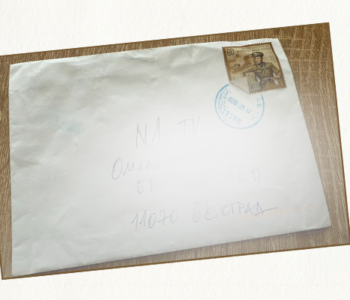
The anonymous letter sent to the newsroom on 11 July marked a new, frightening level of violence. While accusing N1 reporting of ‘inciting propaganda’ and running an ‘anti-Serbian chase’,  the author of the letter suggested that N1’s journalists could end up like those at Charlie Hebdo. “If you remember the satirical newspaper Charlie Hebdo played with and joked about Muslims in 2015,” read the letter.


N1 Director Igor Božič told the Third Prosecutor’s Office that the terrorist attack allusion was “one of the most brutal threats our editorial office has received,” causing immense fear among the journalists and their families.


In addition to the letter, journalist Zaklina Tatalović received an intimidating “gift” at the newsroom from activist Tomislav Lovreković, who previously intervened as a guest speaker for pro-government tabloid Informer. He entered N1 premises with a white rabbit, accompanied by the message “breed rabbits, not lions.” A video of the incident was broadcast by Informer, and shared on its social media. Recently, Tatalović was threatened with death in an anonymous email.


Since January, the EFJ has recorded on the Mapping Media Freedom platform over 15 threats targeting N1.


The EFJ-IFJ firmly request the Ministry of Interior that the N1 newsroom be afforded police protection, specifically through daily police patrols. This is particularly crucial for journalists who have recently been explicitly named in death threats, requiring heightened vigilance.


We also urge authorities to immediately identify and prosecute all individuals responsible for online and offline threats to prevent further violence. By using dangerous rhetoric against critical voices, Vučić inevitably put critical voices already facing threats for their reporting in even greater danger as demonstrated with N1.


We express our full support to N1.

Open letter requesting withdrawal of the SLAPP lawsuits against…

Open letter requesting withdrawal of the SLAPP lawsuits against N1 in Slovenia

01 August 2025

For the attention of:

Vesna Marinko, President of the Board

Damijan Perne, Managing Director


University Psychiatric Clinic of Ljubljana

Ljubljana, Chengdujska cesta 45, 

SI-1260 Ljubljana – Polje


Dear management of the University Psychiatric Clinic of Ljubljana,


The undersigned partner organisations of the Media Freedom Rapid Response (MFRR) are writing to express our shared concerns regarding the six civil defamation lawsuits filed by your institution, the University Psychiatric Clinic of Ljubljana, against the media outlet N1 and its journalists. 


The lawsuits, filed between April and July 2024 and made public in February 2025, seek 70.000 EUR for the first lawsuit, and 25.000 EUR in compensation for each of the five consecutive ones. This amounts to a total of 195.000 EUR. This legal action targets the N1 itself and its affiliates, and we believe it aims to intimidate and silence journalists Barbara M. Smajila and Katja Šeruga.


The lawsuits were filed after a series of investigative reports alleging the use of violence within the clinic’s facilities, a topic we consider to be of clear public interest. Our analysis has led us to conclude that the University is exploiting its position as a public institution with access to public funding to sue the media outlet and journalists in six separate cases as a form of pressure. The clinic claimed that almost all the facts published in the article were untrue, without specifying which parts were defamatory. Furthermore, the media outlet included your clinic’s responses in the article. Notably, the lawsuits target both the media outlet and individual journalists. 


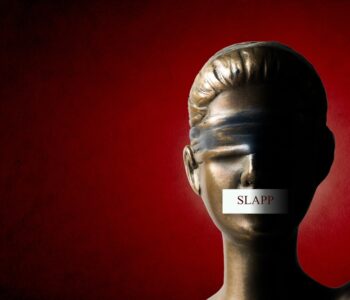
Based on these characteristics of the lawsuits, we consider them to be strategic lawsuits against public participation (SLAPPs), namely a form of legal harassment intended to discourage journalists from pursuing investigative reporting. 


We call on your management to withdraw these lawsuits from the court and to avoid hindering journalists that shed light on the alleged violations in the clinic’s facilities. Holding institutions accountable is a key component of a functioning democracy. This is particularly troubling in the current climate, where the integrity and independence of the media are increasingly under pressure. 


MFRR has been actively calling on the government of Slovenia to transpose the EU Anti-SLAPP directive, and to pass anti-SLAPP reforms which are aimed at protecting media from lawsuits such as this one. Namely, the implementation of the Council of Europe Recommendation CM/Rec(2024)2 against SLAPPs should ensure that such lawsuits are dismissed by the judges as early as possible. 


We call on the University Psychiatric Clinic of Ljubljana to immediately withdraw all lawsuits from the Ljubljana Basic Court. We will be closely monitoring these cases. We express solidarity with N1 and its journalists, reaffirming our commitment to defending press freedom and public interest journalism.

Signed by:

  • European Centre for Press and Media Freedom (ECPMF)
  • European Federation of Journalists (EFJ)
  • Free Press Unlimited (FPU)
  • International Press Institute (IPI)
  • Osservatorio Balcani Caucaso Transeuropa (OBCT)
  • ARTICLE 19 Europe

This statement was coordinated by the Media Freedom Rapid Response (MFRR), a Europe-wide mechanism which tracks, monitors and responds to violations of press and media freedom in EU Member States and Candidate Countries.

Serbia: Media freedom continues to decline at alarming speed,…

Serbia: Media freedom continues to decline at alarming speed, EU must take action

The undersigned journalists and media freedom organisations are profoundly appalled by the new attacks against journalists across Serbia, many of which are perpetrated by state representatives and law enforcement authorities. The situation of emergency of media freedom in Serbia – as assessed by the Media Freedom Rapid Response (MFRR) during its April solidarity mission – has not only persisted but significantly deteriorated at alarming speed, despite our repeated warnings and recommendations

11.07.2025

As of 11 July, the Mapping Media Freedom platform, has documented a total of 95 cases of press freedom violations against 184 journalists, media outlets, and journalists associations in the last six months. This is an unprecedented figure compared to previous years.


The entire media system is affected: individual journalists have been physically assaulted, publicly smeared, threatened, dismissed, or pressured to resign. At the same time, the ongoing process to elect new members of the Council of the Regulatory Body for Electronic Media (REM) has flagged significant concerns regarding the impartiality of the process and the risk of political capture skewing how the media sector is regulated. In this context, the undersigned journalists and media freedom organisations sound the alarm: the time for warning is over, international action is urgently needed.


As regards the latest European Commission’s Rule of Law report on Serbia, it falls considerably short of capturing the severity of the situation. The undersigned organisations urge that persistent intimidation and violence can no longer be observed as business as usual.


Violence during protests coverage by law enforcement officers


The role of the police is a growing concern, as law enforcement authorities have shifted from inaction to direct confrontation with protesters and journalists, routinely resorting to excessive force, including physical assaults and arbitrary arrests.


Over the past weeks, at least 11 media workers covering ongoing student-led protests have been physically assaulted despite being identified as press. During the large protest of 28 June, which was defined by disproportionate use of force by the police against protesters, numerous journalists were injured by the police, who used batons, riot shields, and tear gas. As most incidents are not investigated, most perpetrators are never brought to justice. To address this climate of impunity, we urge state authorities to conduct swift, independent, and thorough investigations into each of these assaults.


While the EU has called for the protection of fundamental rights, including the right to free assembly and the right to free expression, as it relates to the protests and policing, it has so far failed to specifically address the alarming rise in violence against journalists.


Regarding the EC’s 2025 Rule of Law Report on Serbia, the undersigned organisations express alarm at the very limited attention given to the safety of journalists, which, in the light of escalating threats, warrants far greater scrutiny and prioritization. The current approach risks downplaying the gravity of the situation.


President Aleksandar Vučić’s dangerous rhetoric against the independent press


Since the 1 November tragedy, Vučić has repeatedly targeted the independent press. By labelling N1 and Nova S reporting as “pure terrorism,” and attempting to prompt the Prosecutor’s Office into action, the President’s behaviour puts independent voices, already at risk due to their critical reporting, at further risk. This followed both channels being removed from the satellite television service EON SAT (Total TV), which had recently been sold to Telekom Srbija, which is partly owned by the Serbian state. While the President denied the removal, he stated that both channels could be shut down within “five minutes.” As a result of Vučić’s statements about the channels, N1 was the target of further online death threats.


The undersigned organisations further condemn the recent smear campaign launched by the newly formed pro-government Association of Journalists of Serbia (ANS) against the EFJ affiliate and MFRR partner, the Independent Journalists’ Association of Serbia (NUNS). That a journalist organisation can be weaponised to direct such abuse undermines the tireless efforts of media representatives in supporting independent journalists and their reporting of the protests.


Purge in several media outlets of journalists defending the profession


Against this backdrop, the dismissal of journalists and media workers in a number of publications and outlets who have been reportedly targeted with threats, acts of censorship, and warnings of dismissal for their defence of their profession or for voicing support for the ongoing protests is of significant concern. We are worried that political motives may have informed the dismissal decisions at publications such as Euronews Serbia, ELLE Serbia, Večernje Novosti, and Politika. Calls for appropriate compensation for those dismissed and inquiries into the publications’ handling of these dismissals were requested via the CoE platform for the Safety of Journalists. The situation at the public broadcaster RTS continues to be a matter of concern. Contracts were not renewed for at least temporary workers at the public broadcaster who, along with numerous other employees, signed an open letter advocating for objective reporting.


REM election process fails to follow EU-required reform


The appointment process to the Council of the Regulatory Body for Electronic Media (REM), Serbia’s most important media regulator, was again conducted in a flawed manner, defined by many as lacking the necessary transparency and independence. Twice this year, independent candidates and nominating organisations withdrew from the process due to widespread complaints of procedural irregularities that have benefited those affiliated with the Government. This not only violates Article 10 of the Law on Electronic Media but also demonstrates once again how Serbian authorities continue to ignore EU-mandated reforms of the REM Council.


Therefore, these new alarming developments require a strong reaction from the European Commission to address attacks on public interest journalism and freedoms in Serbia. The Commission should reaffirm its rule of law requirements through clear demands, statements, and concrete action to de-escalate this situation of emergency before press freedom falls entirely under repression.


The European Commission should ensure that achieving tangible progress on human rights is at the center of any decisions to disburse EU funding under IPA III and the Growth and Reform Facility. Further EU funding should also be directed to promoting civil society and independent media. The EU should insist on the meaningful involvement of civil society and journalists’ organisations in the monitoring and tracking of Serbia’s delivery on these commitments.


Finally, we would like to express once again our solidarity with journalists and media workers across Serbia who, despite an increasingly challenging work environment, continue to inform the public.

Signed by:

  • European Federation of Journalists (EFJ)
  • European Centre for Press and Media Freedom (ECPMF)
  • Osservatorio Balcani Caucaso Transeuropa (OBCT)
  • Free Press Unlimited (FPU) 
  • International Press Institute (IPI) 
  • ARTICLE 19 Europe
  • Association of European Journalists (AEJ)
  • International Federation of Journalists (IFJ)
  • Reporters Without Borders (RSF)
  • Index on Censorship
  • PEN International

This statement was coordinated by the Media Freedom Rapid Response (MFRR), a Europe-wide mechanism which tracks, monitors and responds to violations of press and media freedom in EU Member States and Candidate Countries.

cyber security, digital, computers,

Civil Society Open Letter in Response to Recent Spyware…

Civil Society Open Letter in Response to Recent Spyware Abuse Cases in the EU

On behalf of the Spyware Coordination Group, a coalition of civil society and journalist organisations advocating for transparency, accountability, and the protection of fundamental rights in relation to spyware technologies, we call on European Union (EU) Institutions to take concrete action to respond to the growing threat posed by spyware, to enhance the security and resilience of our digital infrastructure and European cyberspace and address the proliferation of commercial spyware capabilities in the European Internal Market.

26.06.2025

Spyware use and development still unchecked in the EU

Earlier this year, media reports revealed that several Italian journalists and human rights activists had been targeted with Graphite—a spyware developed by Paragon Solutions. According to reports, the victims had become aware of the targeting following an official notification of the intrusion by WhatsApp. This led the Italian authorities to launch an official investigation. In its March and June reports, the Citizen Lab confirmed these allegations and provided further evidence that the Graphite spyware may have been acquired and deployed in several Member States, including Italy, Denmark and Cyprus, likely affecting a higher number of victims than the 90 targets officially notified by WhatsApp. Concerningly, the reports also highlight a pattern of targeting human rights groups, government critics, and journalists, underlining the need for coordinated EU action to address these violations and protect fundamental rights in line with international and regional standards.


Several Member States, including Spain, Italy, Cyprus, have reportedly emerged as key hubs for the spyware industry, with a high concentration of vendors operating from these countries. The absence of a regulatory framework at the EU level, combined with the fragmentation of national legislation and varying degrees of regulatory oversight among Member States, has facilitated the establishment of certain jurisdictions as preferred entry points for the spyware industry within the EU Internal Market, as recognised by the European Parliament’s Recommendations of 15 June 2023 and the Commission’s White Paper on export controls published in 2024. This development raises significant concerns regarding the trade and proliferation of commercial spyware within the EU, as well as its potential human rights implications.


Urgent need of EU action

Given the risk posed by spyware to fundamental rights, including the right to privacy, rule of law, public debate, media freedom and pluralism, and the integrity of civic spaces, we respectfully urge EU Institutions to prioritise immediate policy and regulatory actions to address the challenges of commercial spyware. We are particularly concerned that spyware technologies, which disproportionately interfere with fundamental rights and for which no safeguards are adequate to prevent and redress harms to human rights, are simply too invasive to ever be compliant with International Human Rights Law (IHRL), as underscored by the European Data Protection Supervisor and the United Nations Special Rapporteur on the Promotion and Protection of Human Rights and Fundamental Freedoms while Countering Terrorism. Hence, European action should include the swift introduction of red lines in order to be aligned with the EU Charter of Fundamental Rights.


The Pall Mall Process should be complemented by action at the EU level

The Pall Mall Process, an “iterative multi-stakeholder initiative” launched in 2024 by France and the UK, claims to tackle the threat posed by the proliferation and “irresponsible use” of commercial cyber capabilities. As part of this process, 25 countries, of which 18 are EU Member States have recently adopted a non-binding Code of practice for States through which signatories have committed to collaborate to “prevent irresponsible activity across the global cyber intrusion market and mitigate the threats presented by the proliferation and irresponsible use of” spyware. A similar declaration of intent was led by the U.S. in their Joint Statement on Efforts to Counter the Proliferation and Misuse of Commercial Spyware – endorsed by 23 States, including 10 Member States. While these objectives may outline good intentions and provide a voluntary multi-stakeholder forum in which to discuss the issue of spyware, the approach adopted within the Pall Mall process risks legitimising certain surveillance technologies and uses that are inherently incompatible with international human rights law. Although multilateral action to curb the spyware market is necessary, these initiatives are inadequate to fully prevent the proliferation and use of spyware.


Going beyond these initiatives, and echoing the Parliament’s recommendations, we urge the EU Institutions to take a coordinated and transparent regulatory action – particularly in areas that fall squarely within the competence of the EU, such as fundamental rights and rule of law, EU single market regulation, export controls and cybersecurity – during this term, ensuring the protection of the rule of law, and fundamental rights enshrined in the EU Charter and European Convention on Human Rights.


The absence of a coordinated EU response is creating critical gaps in relation to the trade of these tools and the management of cybersecurity vulnerabilities that incentivise the proliferation of commercial spyware and their unlawful use by Governments. The EU can provide the necessary political momentum, regulatory coherence, and oversight to turn national pledges made by Member States through the Pall Mall Code of Practice into an effective, union-wide response that upholds democratic values and fundamental rights.


To address these pressing concerns and safeguard fundamental rights, we call for the following immediate actions:

● the publication of the long-overdue Commission communication to clarify the boundaries between EU law, in particular the data protection, privacy and rule of law acquis, and national security.
● the Commission’s formal engagement in the Pall Mall process and participation in all international and regional efforts to address the threat posed by commercial spyware.
● the full implementation of the PEGA Committee’s recommendations, including those pertaining to areas falling under EU competence such as internal market regulation, cybersecurity vulnerability management, export controls, EU cybersecurity and resilience and ensuring that Member States provide effective remedies for victims.
● continued commitment from the EU Parliament to advance the work of the PEGA Committee within the relevant Committees and leverage all available resources to further policy development in this area.


We stand ready to engage in a constructive dialogue with you and offer our expertise to support the development of policies that will effectively combat spyware use and strengthen the EU digital infrastructure. We are confident that under your leadership, the European Union can take decisive action to respect and protect fundamental rights, uphold the rule of law, and address the challenges posed by the use of spyware technologies.

Signed by:

  • Access Now
  • Amnesty International
  • ARTICLE 19
  • Centre for Democracy and Technology Europe
  • Civil Liberties Union for Europe (Liberties)
  • Committee to Protect Journalists (CPJ)
  • Electronic Privacy Information Center (EPIC)
  • Epicenter.works – for digital rights
  • European Digital Rights (EDRi)
  • European Federation of Journalists (EFJ)
  • European Centre for Press and Media Freedom (ECPMF)
  • Osservatorio Balcani Caucaso Transeuropa (OBCT)
  • Privacy International

This statement was coordinated by the Media Freedom Rapid Response (MFRR), a Europe-wide mechanism which tracks, monitors and responds to violations of press and media freedom in EU Member States and Candidate Countries.

Turkey: Press freedom and journalist organisations call for the…

Turkey: Press freedom and journalist organisations call for the release of journalist Fatih Altaylı

The undersigned press freedom, freedom of expression and journalists’ organisations today strongly condemn the arrest of Turkish journalist Fatih Altaylı over his political commentary during a YouTube live broadcast and call for his immediate release.

25.06.2025

Fatih Altaylı, a prominent journalist and columnist, was taken into custody and arrested on June 21, 2025, hours after a segment of his YouTube broadcast went viral on social media. In the video, Altaylı offered critical political commentary in response to a poll suggesting that 70 percent of the Turkish public would oppose a proposal to allow the Turkish President to remain in power indefinitely.


Following this, some social media accounts began spreading edited clips from his broadcast that mischaracterised his comments as threatening speech. Shortly afterward, Oktay Saral, a senior advisor to the Turkish President, publicly targeted Altaylı on social media, writing that he was “in hot water already”. Within ten hours, Altaylı had been detained.


Under Turkish law, if a person is under investigation for a crime that carries a maximum prison sentence of two years or less, they typically cannot be held in pretrial detention. Initially, Altaylı was held on suspicion of making a criminal threat—an offense that is applicable to threats against any individual, and falls into this category. Prosecutors later reinterpreted the case and invoked a provision that increases penalties for offenses in which the president is the victim. This provision, which mandates a minimum five-year sentence, allowed authorities to place Altaylı in pretrial detention. However, legal experts argue that this provision applies only to direct physical acts—not verbal statements made through the press—and warn that its use in this case exceeds its intended legal scope.


The Istanbul 10th Criminal Court of Peace approved the prosecutor’s request to jail Altaylı pending trial, citing the “severity of the offense” and a purported “risk of flight”.


Following his arrest, Turkey’s Radio and Television Supreme Council (RTÜK) issued a warning on June 23 announcing that Altaylı’s YouTube channel must apply for an internet broadcasting license within 72 hours, submit the required documents, and pay a three-month licensing fee in advance, or be closed down.


The undersigned organisations regard this arrest as a clear abuse of criminal law to silence critical political commentary. The decision to interpret Altaylı’s remarks as incitement to assassination is a dangerous expansion of criminal liability, one that threatens to further erode freedom of expression in Türkiye.


We jointly call for the immediate release of Fatih Altaylı and urge Turkish authorities to cease exploiting vague legal provisions to persecute journalists. A free press must include the right to freedom of expression and critique political leaders without fear of reprisal.

Signed by:

  • International Press Institute (IPI)
  • ARTICLE 19 Europe
  • Committee to Protect Journalists (CPJ)
  • European Centre for Press and Media Freedom (ECPMF)
  • European Federation of Journalists (EFJ)
  • Foreign Media Association (FMA Turkey)
  • Media and Law Studies Association (MLSA)
  • Progressive Journalists Association (PJA)
  • Reporters Without Borders (RSF)
  • South East Europe Media Organisation (SEEMO)

This statement was coordinated by the Media Freedom Rapid Response (MFRR), a Europe-wide mechanism which tracks, monitors and responds to violations of press and media freedom in EU Member States and Candidate Countries.

Türkiye: Basın ve ifade özgürlüğü ile basın meslek kuruluşları gazeteci Fatih Altaylı’nın serbest bırakılmasını talep ediyor


Aşağıda imzası bulunan basın özgürlüğü, ifade hürriyeti ve basın meslek kuruluşları olarak gazeteci Fatih Altaylı’nın YouTube’daki canlı yayınında yaptığı siyasi yorumları nedeniyle tutuklanmasını şiddetle kınıyor, derhal serbest bırakılmasını talep ediyoruz.


Gazeteci ve köşe yazarı Fatih Altaylı, sosyal medyada çokça paylaşılan YouTube yayınından birkaç saat sonra 21 Haziran’da önce gözaltına alındı, sonra da tutuklandı. Söz konusu videoda Altaylı, Türkiye halkının yüzde 70’inin devlet başkanlarının süresiz görevde kalmasına karşı olduğunu gösteren bir anketi değerlendiriyordu.


Yayının ardından bazı sosyal medya hesapları, Altaylı’nın sözlerini bağlamından koparıp tehdit içerikliymiş gibi yansıtan video kesitlerini yaymaya başladı. Kısa süre içinde Cumhurbaşkanı Başdanışmanı Oktay Saral da sosyal medya hesabından videoyu paylaşıp, “Altaylıııı! Suyun ısınmaya başladı” ifadelerini kullandı. Saral’ın paylaşımından yaklaşık 10 saat sonra Altaylı gözaltına alındı.


Türkiye’deki yasalar, azami cezası iki yıl olan suçlarla ilgili soruşturmalarda şüphelilerin tutuklu yargılanamayacağını belirtiyor. Altaylı da ilk olarak bu kapsamda değerlendirilmesi gereken tehdit suçu şüphesiyle gözaltına alınmıştı. Ancak savcılık daha sonra dosyayı yeniden değerlendirerek mağdurun Cumhurbaşkanı olması durumunda cezayı artıran maddeyi devreye soktu. En az beş yıl hapis cezası talep edilebilmesinin önünü açan bu madde uyarınca Altaylı’nın tutuklu yargılanmasının yolu açıldı. Ancak hukukçular, bu maddenin sadece fiziki müdahaleler için geçerli olduğunu, basın yoluyla yapılan sözlü açıklamalara uygulanamayacağını belirterek yasanın kapsamının aşıldığını ifade ediyor.


İstanbul 10. Sulh Ceza Hakimliği, savcılığın tutuklama talebini “suçun vasıf ve mahiyeti” ve “kaçma ihtimalinin yüksek olduğu” gerekçesiyle kabul etti.


Altaylı’nın tutuklanmasının ardından 23 Haziran’da Radyo ve Televizyon Üst Kurulu (RTÜK) ise gazetecinin YouTube kanalı için 72 saat içinde internet yayın lisansına başvuruda bulunması, gerekli belgeleri sunması ve üç aylık lisans ücretini peşin ödemesi gerektiğini, aksi takdirde kanalın kapatılacağını duyurdu.


Aşağıda imzası bulunan kuruluşlar olarak bu tutuklamayı, cezai yasaların açıkça suistimal edilmesi sonucu siyasi eleştirinin bastırılması olarak değerlendiriyoruz. Altaylı’nın sözlerinin suikast suçu kapsamında yorumlanması cezai sorumluluğu tehlikeli biçimde genişletmekte ve Türkiye’de ifade özgürlüğünü daha da zayıflatmaktadır.


Fatih Altaylı’nın derhal serbest bırakılmasını ve yetkililerin gazetecileri cezalandırmak için muğlak yasal düzenlemelere başvurmaktan vazgeçmesini talep ediyoruz. Özgür basın, misilleme korkusu yaşamadan siyasi liderleri eleştirme ve fikirlerini ifade edebilme hakkına sahip olmalıdır.

İmzalayanlar:

  • Uluslararası Basın Enstitüsü (IPI)
  • ARTICLE 19 Europe
  • Avrupa Basın ve Medya Özgürlüğü Merkezi (ECPMF)
  • Avrupa Gazeteciler Federasyonu (EFJ)
  • Çağdaş Gazeteciler Derneği (ÇGD)
  • Gazetecileri Koruma Komitesi (CPJ)
  • Güney Doğu Avrupa Medya Örgütü (SEEMO)
  • Medya ve Hukuk Çalışmaları Derneği (MLSA)
  • Sınır Tanımayan Gazeteciler (RSF)
  • Yabancı Medya Derneği (FMA)

Bu açıklama, AB üye ülkeleri ve aday ülkelerde basın ve medya özgürlüğünün ihlallerini takip eden, izleyen ve bunlara müdahale eden Avrupa çapında bir mekanizma olan Medya Özgürlüğü Acil Müdahale (MFRR) tarafından koordine edildi.

Kosovo: Steadfast support for Flutura Kusari as she seeks…

Kosovo: Steadfast support for Flutura Kusari as she seeks justice against Mentor Llugaliu’s harassment

The undersigned Media Freedom Rapid Response partners and Council of Europe Safety of Journalists Platform members express support for their colleague Flutura Kusari, Senior Legal Advisor at the European Centre for Press and Media Freedom (ECPMF), ahead of her forthcoming legal action against Mentor Llugaliu. We call on the Basic Prosecution of Prishtina in Kosovo to conduct a swift, impartial, and thorough investigation into the case.

20.06.2025

On March 21, 2025, Kusari filed a criminal report against Mentor Llugaliu, an online activist and supporter of Kosovo’s ruling party, the Vetevendosje Movement, accusing him of harassment and intimidation directed at her and her family.


The harassment spanned three years, from December 2021 to February 2025, during which Llugaliu published at least 101 Facebook posts that attracted widespread public attention, accumulating over 42,000 likes, 700 shares, and 2,200 comments. Llugaliu’s social media activity, marked by derogatory language, have caused significant distress to Kusari and her family.


The harassment began in 2021 after Kusari monitored, on behalf of the ECPMF, the election of board members for Kosovo’s public broadcaster (RTK) by Kosovo Assembly, advocating for the selection of politically independent members. Llugaliu, a supporter of the ruling party, had applied for a position but was unsuccessful. While Kusari never specifically mentioned Llugaliu in her remarks, his posts suggest that he blames her for his failure. Many of his posts were derogatory and inflammatory, targeting Kusari, accusing her of influencing political decisions.


The Kosovo Law Institute has assisted Kusari in drafting the criminal complaint. Drawing from the past rulings in similar cases, they believe this represents one of the most severe instances of online harassment against female activists in Kosovo.


According to Ms. Kusari, the three-year-long and obsessive online harassment and stalking by the political activist and defendant Llugaliu has been carried out as an act of revenge for her activism in monitoring RTK. His aim is to dehumanize her and drive her and other active women out of public life.


In his posts, Llugaliu refers to Kusari using the derogatory term “Mickoja”, meaning “Mosquito”, seemingly to evade account suspensions by Facebook. The abuse escalated as he began targeting members of Kusari’s family, including her husband and mother, with the most disturbing comment being of sexual nature.


According to Ms. Kusari, the three-year-long and obsessive online harassment and stalking by Llugaliu has been carried out as an act of revenge for her activism in monitoring Kosovo Public Broadcaster. His goal is to dehumanize her and to push her and other active women out of public life. She has requested the Basic Prosecution Office in Pristina to criminally prosecute Llugaliu for harassment, as provided in Article 182 of the Kosovo Criminal Code.


Our organisations stand in solidarity with Flutura Kusari and urge the Chief Prosecutor of the Prishtina Prosecution, Zejnullah Gashi and the responsible prosecutor, to ensure this case is investigated swiftly and impartially. As a crucial case for combating online harassment of free expression advocates, especially women activists, the undersigned MFRR partners and Council of Europe Platform members will closely monitor the proceedings. We hope the case will proceed to court promptly and lead to an outcome which will mark an important step in the fight against online abuse targeting women.

Signed by:

  • European Centre for Press and Media Freedom (ECPMF)
  • Free Press Unlimited (FPU)
  • International Press Institute (IPI)
  • Osservatorio Balcani Caucaso Transeuropa (OBCT)
  • ARTICLE 19 Europe
  • European Federation of Journalists (EFJ)
  • International Federation of Journalists (IFJ)
  • PEN International
  • Index on Censorship
  • Reporters Without Borders (RSF)
  • Association of European Journalists (AEJ)
  • Committee to Protect Journalists (CPJ)
  • Justice for Journalists Foundation

This statement was coordinated by the Media Freedom Rapid Response (MFRR), a Europe-wide mechanism which tracks, monitors and responds to violations of press and media freedom in EU Member States and Candidate Countries.

Kosovë: Mbështetje e palëkundur për Flutura Kusarin ndërsa ajo po kërkon drejtësi për ngacmimin nga Mentor Llugaliu


Ne, organizatat e poshtënënshkruara, pjesë e Media Freedom Rapid Response dhe të Platformës së Këshillit të Europës për Sigurinë e Gazetarëve, shprehim mbështetjen tonë të plotë për kolegen tonë Flutura Kusari, këshilltaren e lartë ligjore në Qendrën Evropiane për Lirinë e Shtypit dhe të Medias (ECPMF), në prag të fillimit të procedurave penale kundër të pandehurit Mentor Llugaliu.


Ne i bëjmë thirrje Prokurorisë Themelore në Prishtinë që të ndërmarrë dhe garantojë hetim të shpejtë, të paanshëm dhe të plotë të këtij rasti.


Më 21 mars 2025, znj. Kusari ka ushtruar pranë Prokurorisë Themelore në Prishtinë kallëzim penal kundër të pandehurit Mentor Llugaliu, një aktivisti në rrjete sociale dhe përkrahësi të partisë në pushtet, Lëvizjes Vetëvendosje. Ajo e akuzon atë për ngacmim dhe frikësim sistematik ndaj saj dhe familjes së saj.


Ngacmimi ka zgjatur për tre vjet, nga dhjetori 2021 deri në shkurt 2025, gjatë së cilës periudhë Llugaliu ka publikuar të paktën 101 postime në facebook, të cilat tërhoqën vëmendje të gjerë publike, duke mbledhur mbi 42,000 pëlqime, 700 shpërndarje dhe 2,200 komente. Aktiviteti i tij në rrjete sociale, i shoqëruar me gjuhë denigruese ndaj saj, ka shkaktuar shqetësim të thellë për znj. Kusari dhe familjen e saj.


Në postimet e tij, Llugaliu i referohet Kusarit me termin përçmues “Mickoja” në mënyrë që t’i ikë bllokimit të llogarisë së tij nga ana e facebook-ut.


Ngacmimi është përshkallëzuar më tej kur ai filloi të shënjestrojë anëtarët e familjes së saj, përfshirë bashkëshortin dhe nënën e saj, me një koment veçanërisht shqetësues me përmbajtje të natyrës seksuale.


Ngacmimi ka filluar në vitin 2021, pasi znj. Kusari, në emër të ECPMF-së, kishte monitoruar procesin e përzgjedhjes së anëtarëve të bordit të Transmetuesit Publik të Kosovës (RTK) nga Kuvendi i Kosovës, duke mbështetur dhe avokuar për përzgjedhjen e anëtarëve të pavarur politikisht.


Llugaliu, një përkrahës i partisë në pushtet, kishte aplikuar për një vend në bord, por nuk ishte përzgjedhur. Edhe pse znj. Kusari nuk e ka përmendur ndonjëherë të pandehurin Llugaliu me emër, në bazë të postimeve të tij, ai e fajëson atë për dështimin e tij që të bëhet anëtar i bordit.


Shumë nga postimet e tij janë poshtëruese dhe nxitëse, duke e targetuar vazhdimisht znj. Kusari dhe duke e akuzuar për ndikim në vendime politike.


Instituti i Kosovës për Drejtësi (IKD) e ka ndihmuar znj. Kusari për përgatitjen e kallëzimit penal kundër të pandehurit Llugaliu. Sipas IKD-së, bazuar në vendime të tjera që kanë të bëjnë me veprën penale të ngacmimit, ky është një nga rastet më të rënda dhe më të mëdha të ngacmimit online ndaj një aktivisteje grua në Kosovë.


Sipas znj. Kusari, ngacmimi dhe përndjekja trevjeçare online dhe në mënyrë obsesive nga aktivisti politik dhe i pandehuri Llugaliu është bërë në shenjë hakmarrjeje për aktivizmin e saj në monitorimin e RTK-së. Ai synon dehumanizimin dhe largimin e saj dhe të grave tjera aktive nga jeta publike.


Ajo ka kërkuar nga Prokuroria Themelore e Prishtinës që të ndjekë penalisht të pandehurin Llugaliu për veprën e ngacmimit, siç parashikohet në nenin 182 të Kodit Penal të Kosovës.


Ne shprehim solidaritet me Flutura Kusarin dhe i bëjmë thirrje kryeprokurorit të Prokurorisë Themelore në Prishtinë, z. Zejnullah Gashi, si dhe prokurorit përgjegjës, që të garantojnë një hetim të shpejtë dhe të paanshëm të këtij rasti.


Si një rast thelbësor në luftën kundër ngacmimit online ndaj mbrojtësve të fjalës së lirë, sidomos atyre gra, ne organizatat ndërkombëtare që e kemi nënshkruar këtë letër do të monitorojmë nga afër këtë rast.


Shpresojmë që kallëzimi penal do të çojë në një rezultat që do të shënojë një hap të rëndësishëm në luftën kundër abuzimit online të grave.

Organizatat nënshkruese të letrës mbështetëse:

  • Qendra Evropiane për Lirinë e Shtypit dhe të Medias (ECPMF)
  • Free Press Unlimited (FPU)
  • Instituti Ndërkombëtar i Shtypit (IPI)
  • Osservatorio Balcani Caucaso Transeuropa (OBCT)
  • ARTICLE 19 Europe
  • Federata Evropiane e Gazetarëve (EFJ)
  • Federata Ndërkombëtare e Gazetarëve (IFJ)
  • PEN International
  • Index on Censorship
  • Reporterët pa Kufij (RSF)
  • Shoqata e Gazetarëve Evropianë (AEJ)
  • Komiteti për Mbrojtjen e Gazetarëve (CPJ)
  • Justice for Journalists Foundation

This statement was coordinated by the Media Freedom Rapid Response (MFRR), a Europe-wide mechanism which tracks, monitors and responds to violations of press and media freedom in EU Member States and Candidate Countries.