Library

UK whistleblower Jonathan Taylor released from extradition hell

UK whistleblower Jonathan Taylor released from extradition hell

We are delighted to announce that on Wednesday 7 July 2021, Croatian Justice Minister Ivan Malenica formally rejected the request by Monaco to extradite UK whistleblower Jonathan Taylor. Jonathan Taylor’s Support Group extends its gratitude to the Minister for taking the right decision.

The move comes following sustained calls for the past 11 months from human rights and civil liberties campaigners across Europe – and UK MPs –  for his immediate release and safe return home. Legal experts backing the release of Jonathan Taylor said there was no proper legal basis for Monaco to seek Mr. Taylor’s extradition and the process was retaliatory in nature. Lawyers acting on behalf of Jonathan Taylor argued that it constituted an abuse of process.

Jonathan Taylor was arrested whilst on a family holiday in Croatia last July, and has been restrained there since. He has been isolated, away from his family, and unable to support himself or his family, all of which have taken an extreme toll on his mental wellbeing.

A former in-house lawyer for oil firm SBM Offshore based in Monaco, Jonathan Taylor blew the whistle in 2013 on a massive bribery scheme. Jonathan’s whistleblowing disclosures led to SBM Offshore paying over $800 million in fines in the US, Netherlands and Brazil and investigations which led to successful prosecutions of two former CEOs for fraud-related offences.

Yet nine years later, he was arrested on a questionable Interpol Red Notice  whilst on holiday, and wanted for questioning in Monaco over allegations made by his former employer over his settlement. The Red Notice was withdrawn by Monaco last December on the eve of Interpol making a determination on its validity. Jonathan denies wrongdoing and his lawyers have long argued there is no legal basis for extraditing him for questioning as he is neither charged nor convicted of any offences.

“I am of course elated that justice has finally prevailed and I am appreciative that Minister of Justice Ivan Malenica was able to pay regard to the salient legal arguments of my lawyers that were seemingly overlooked by the Courts in making his decision to reject Monaco’s flawed attempt at extraditing me,” states Jonathan Taylor.

“Special thanks go to all my supporters in Europe, overseas and in Croatia who somehow kept me sane in my year of need! Be assured that I remain resolute and proud of exposing serious wrongdoing at SBM Offshore and I will never be intimidated by the corrupt and those that shamefully seek retaliation against me for exposing them. I continue to stand ready to assist the Monaco Prosecutor in the event that a decision is made to pursue those responsible for SBM Offshore’s illicit business practices instead of me.”

We agree with Jonathan. The Minister of Justice of Croatia, Ivan Malenica, carefully considered the position of Jonathan Taylor as a whistleblower and a protected witness. His decision in this case has wider implications for the rule of law in Europe: it is a victory for the public’s right to know about wrongdoing by protecting the messengers of that information. Whistleblowers play a vital role in Europe’s fight against global corruption. Croatia has demonstrated its commitment to the rule of law and to the protection of whistleblowers.

We now call on Monaco to drop any further proceedings against Jonathan Taylor and to focus on the actions of SBM Offshore as a proper target for their investigations.

We wish Jonathan a safe return to the UK where he can begin to rebuild his life.
Signed by:

  • Access Info Europe
  • ARTICLE 19
  • Baroness Kramer, Co-Chair of the All Party Parliamentary Group on Whistleblowing (UK)
  • Blueprint for Free Speech (Germany and Australia)
  • Centre for Free Expression (Canada)
  • Eurocadres – Council of European Professional & Managerial Staff
  • European Centre for Press and Media Freedom (ECPMF)
  • European Federation of Journalists (EFJ)
  • European Organisation of Military Associations and Trade Unions (EUROMIL)
  • Free Press Unlimited
  • GlobaLeaks
  • Guernica 37 International Justice Chambers (United Kingdom)
  • Martin Bright, Editor, Index on Censorship (United Kingdom)
  • Mary Robinson MP, Co-Chair of the All Party Parliamentary Group on Whistleblowing (UK)
  • Osservatorio Balcani Caucaso Transeuropa (OBCT)
  • Pištaljka (Serbia)
  • Professor David Lewis, Middlesex University (UK)
  • Protect (United Kingdom)
  • Sherpa (France)
  • SpeakOut SpeakUp Ltd
  • The Daphne Caruana Galizia Foundation (Malta)
  • The Government Accountability Project (USA)
  • The Platform to Protect Whistleblowers in Africa (PPLAAF)
  • The Signals Network (USA/France)
  • Transparency International – Bulgaria
  • Transparency International EU
  • Transparency International Italy
  • Transparency International Secretariat
  • WhistleblowersUK (UK)
  • Whistleblowing International Network (WIN)
Library

Slovenian government eroding media freedom as it takes over…

Slovenian government eroding media freedom as it takes over EU Presidency

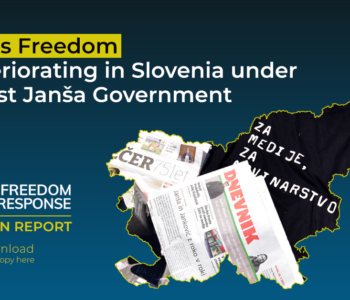
The Slovenian government of Prime Minister Janez Janša is overseeing an increasingly systematic effort to undermine critical media, a coalition of press freedom organisations and journalism groups warn today in a new report.

The report concludes that Slovenia, which assumes the rotating presidency of the EU on July 1, has seen press freedom deteriorate ever since Janša returned to power in March 2020. Since then, the ruling SDS party has embarked on a multipronged campaign to reshape the media landscape in favour of a pro-government narrative, renewing tactics successful during previous administrations and forging ahead with new forms of pressure.

The front line of this campaign is an aggressive attempt to seize greater control of the country’s public service broadcaster and national news agency using a mix of legal and administrative pressure, as well as vicious, often highly personal smears aimed at undermining the integrity and independence of these institutions.

The Slovenian Press Agency (STA), the lifeblood of the media market, has been drained of state funding since the beginning of the year in a calculated effort by the Government Communication Office (UKOM) to subdue the organisation and cement greater control over its financial and managerial operations.

Though the recent announcement that the government will finally pay an advance of €845.000 for 2021 costs is welcome, serious concerns remain over the conditionality of this agreement and its detrimental effects on the independence of the agency. We believe the government is only making this move because of the sustained criticism it has received for its actions and the need to remedy the situation before assuming the EU Presidency.

More broadly, leading government officials, including Janša himself, are stoking the toxicity of public debate by insulting and denigrating journalists – including via official government channels. This inflammatory rhetoric has led to rising self-censorship and an upsurge in threats against the press, both online and offline. Women journalists are particularly targeted with misogynistic and sexist insults.

Behind the scenes, an effort by SDS is underway to limit critical journalism at mainstream media and strengthen a network of partisan outlets linked to the government. Propaganda media are being rewarded with lucrative state advertising contracts, while government officials have sought to pressure editorial offices and reduce challenging coverage at some of the country‘s biggest commercial outlets.

These tactics raise alarm as they reflect elements of the media capture strategy employed by Hungarian leader Viktor Orbán. Moreover, an influx of Hungarian capital linked to Orbán’s Fidesz party is being used to prop up Slovenian pro-government media. Recently, Slovenia’s state-owned telecoms company suspended the sale of a media company after a Hungarian pro-government media outlet was outbid, raising questions about market manipulation and efforts to sell state media assets to SDS‘s political allies in Budapest.

The Janša administration has defended its media policy as necessary to “rebalance” a media landscape it claims is dominated by a historic leftist ideology. Aside from the fact that governments have no business interfering with the editorial lines of media outlets, SDS’ actions and rhetoric do not indicate a genuine interest in fostering greater pluralism but rather in delegitimizing independent media in favour of government-friendly coverage. The depiction of the press as beholden to a political ideology is used to divide the journalistic community down political lines and taint watchdog reporting as biased “opposition journalism”.

While legitimate concerns remain regarding post-independence media ownership concentration and transparency in the Slovenian media market, plans by the ruling SDS party would exacerbate those issues or pose new problems. Legislative proposals to tackle alleged bias at the STA would likewise increase political control over its oversight bodies, rather than lessen it.

While a fragile governing coalition and pushback from civil society and the journalistic community have so far limited the worst of the government’s attempts to erode critical journalism, significant damage has already been caused to the STA and media freedom more widely is once again under sustained threat.

The report follows a two-week online mission to Slovenia carried out by the Media Freedom Rapid Response (MFRR) between 24 May and 2 June 2021. Jointly led by the European Federation of Journalists (EFJ) and the International Press Institute (IPI), it was joined by MFRR members Article 19, the European Centre for Press and Media Freedom, Free Press Unlimited and Osservatorio Balcani e Caucaso Transeuropa. Representatives of Reporters without Borders, European Broadcasting Union, South East Europe Media Organisation and the Public Media Alliance also participated

Library

Italy: Defamation law must be reformed

Italy: Defamation law must be reformed

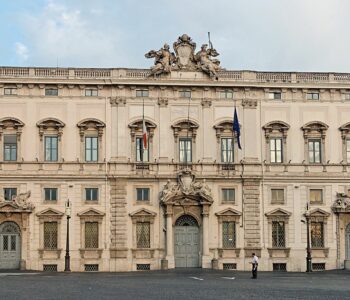
A year after the Constitutional Court ruled on the unconstitutionality of prison sentences in cases of defamation through the press, on 22 June 2021 the Court issued a follow-up decision declaring art. 13 of Law 47/1948 (Press Law) not compliant with the Constitution. The Court has however declared art. 595(3) of the Penal Code, which provides for a sentence between one and six years of prison or the payment of a fine, compliant with the Constitution, but applicable only in cases of “exceptional severity”.

In June 2020, the Constitutional Court invited the Italian Parliament to remove specific provisions declared unconstitutional and promote a wider reform of the defamation framework. However, the Parliament did not meet the deadline set by the Court and failed to legislate on this matter, returning the decision to the judiciary. In its decision on 22 June 2021, in light of the lack of such initiative, the Court renewed its call on Parliament urging the promotion of a reform that could adequately balance the “freedom of expressing one’s own thought and (the) protection of individual reputation”. The lack of parliamentary initiative in pushing for comprehensive reform of the defamation framework in Italy is a long-standing issue that contributes to the erosion of a free and independent press and an increase in SLAPPs against journalists.

Data from Istat (Italian National Statistics Institute) shows that, in 2017 alone, a total of 9,479 proceedings for defamation were initiated against journalists, of which 60% were dismissed after preliminary investigation and 6.6% went to trial. Plaintiffs are often public figures – politicians, businessmen, or individuals involved in organized crime – who start legal proceedings against journalists with an aim to silence them and bury articles that often contain information on  corruption, tax evasion, or mafia collusion.

A reform of defamation laws is urgently needed to stop SLAPPs against journalists, which often lead to self-censorship and discourage newspapers and editors from publishing sensitive or controversial information for fear of incurring lengthy and expensive legal proceedings. The European Commission – aware of the need to counter this phenomenon within the EU – committed itself to promoting measures to counter SLAPPs within the EU block, following a request of an Anti-SLAPPs Coalition composed of 60 organizations in Europe, including the members of the Media Freedom Rapid Response. The European Parliament also recently took action against SLAPPs by promoting an “own-initiative report (INI)”, to be discussed on 28 June 2021, with an aim to push the Commission to adopt legislative measures to address SLAPPs.

The undersigned organisations urge the Italian Parliament to begin comprehensive reform of defamation laws in line with international freedom of expression standards as soon as possible. Such reform should center on the decriminalisation of defamation and set limits within civil law on the amount in damages that can be sought to avoid creating undue obstacles to the journalistic profession. Furthermore, this reform should address specific challenges posed by SLAPPs against journalists within the Italian framework. While the Italian Civil Code includes some provisions aimed at countering SLAPPs – art. 96 provides that those plaintiffs who filed a lawsuit in “bad faith” must compensate the defendant – judges rarely recur to this provision in practice.

We call on the Italian Parliament to prioritise the reform of both criminal and civil defamation laws, drive discussions that will lead to the identification of measures that address Italian issue areas, and establish a framework that will protect journalists from indiscriminate use of the law to silence or discredit.

Cases of criminal defamation and civil lawsuits, such as SLAPPs, can be reported to mappingmediafreedom.org. The Media Freedom Rapid Response (MFRR) also provides financial legal support for journalists, media workers, and media outlets. For further information on legal aid, please visit https://www.mfrr.eu/support/legal-support or contact Flutura Kusari on kusari@ecpmf.eu.

Signed by:

  • ARTICLE 19
  • Federazione Nazionale Stampa Italiana (FNSI)
  • Sindacato Unitario Giornalisti Campania (SUGC)
  • Articolo 21
  • Osservatorio Balcani Caucaso Transeuropa (OBCT)
  • European Federation of Journalists (EFJ)
  • European Centre for Press and Media Freedom (ECPMF)
  • International Press Institute (IPI)

This statement was first published by Article 19 on 23 June 2021

Library

Growing hostility leads to attacks on RTV journalists in…

Growing hostility leads to attacks on RTV journalists in Slovenia

IPI calls on government of Janez Janša to lead the way in reducing insults and threats.

The International Press Institute (IPI) expressed its growing concern about the increasing climate of hostility towards journalists and executives at Slovenia’s public broadcaster Radiotelevizija Slovenija (RTVS). Its statement highlights recent attacks and incidents of harassment and calls on the members of the new government led by Prime Minister Janez Janša to stop its efforts to undermine the integrity, independence and public trust in Slovenia’s public broadcaster, and instead work to defuse tensions.

photo of London Library

MFRR call on the UK Government to act in…

Declining media freedom in the UK

MFRR partners sent this letter to UK Prime Minister, Boris Johnson raising their concerns regarding the decline in press freedom in the UK and attempts of the UK Government to restrict media scrutiny of its policies and discredit critical reporting.

An independent media is vital to hold governments to account, inform the public and share information that strengthens civic debate and the recent actions to restrict access, discredit critical journalism and isolate journalists and media workers highlights a number of distinct threats to the state of press freedom in the UK

UPDATE: On 27th July, the MFRR received a letter from the Direct Communications Unit at 10 Downing Street in relation to the open letter sent on 29th May. Read the UK Government’s response below

Library

Threats against journalists in Northern Ireland must stop

Threats against journalists in Northern Ireland must stop

A number of journalists from Sunday World and Sunday Life were warned of credible threats from dissident loyalists, which included threats of violence against their colleagues and a threat of a car bomb.

Media Freedom Rapid Response (MFRR) partners, press freedom and freedom of expression organisations, journalists’ organisations, journalists and media workers condemn these threats, call for those behind the threats to be brought to justice and increased protections for the journalists to be able to continue their work free from threats of violence.

UPDATE: On 9th June 2020, the MFRR received a response from Naomi Long MLA, the Minister of Justice in the Northern Ireland Executive. Read her response below

Library

Briefing: Latest Media Freedom Violations in Europe during COVID-19

Briefing: Latest Media Freedom Violations in Europe during COVID-19

Several arrests of journalists covering anti-lockdown protests documented in European states

by IPI

Key trends

Arrests and attacks on journalists covering anti-government protests during Covid-19

Across Europe, several journalists have been arrested, detained or charged by police in recent weeks as they were reporting on anti-government/anti-lockdown protests in their countries. On each occasion, the media workers were detained for breaching lockdown and social distancing measures. All were simply there to do their job and report events of public interest for their respective media outlets.

Library

IPI urges inquiry into arrest of investigative journalist in…

IPI urges inquiry into arrest of investigative journalist in Bulgaria

Calls for scrutiny following claims drug charges were fabricated

The International Press Institute (IPI), a global network of editors, media executives and leading journalists for press freedom, today urged Bulgarian authorities to investigate the arrest of Bulgarian freelance journalist Dimiter Petzov following claims the arrest was staged to intimidate him.

Petzov, an award-winning investigative journalist focusing on local corruption in Bulgaria, was arrested on May 2 on charges of illegal drug possession. He was detained for 24 hours after local police officers allegedly found 11.7 grams of ecstasy, 7.2 grams of heroin, 13 grams of amphetamine and 7.2 grams of cannabis in his car, according to news reports.

Petzov has questioned the legitimacy of his arrest and accused the local authorities of framing him. In an interview for dnevnik.bg on May 6, he claimed that his arrest was baseless, carried out without presence of witnesses, and added that he suspected it was related to a story he had previously written. He also denied having obtained drugs or suffering from an addiction.

In 2017, Petzov was awarded the Golden Key award for his contribution to freedom of information. He has also been an associate of the Anti-Corruption Fund in Bulgaria for two years.

Intimidation and interference with the work of independent and investigative journalists is not uncommon in Bulgaria. According to an IPI analysis published earlier this year, critical journalists in Bulgaria have faced legal harassment and smear campaigns in retaliation for their work. In March, IPI reported on the case of a newspaper editor left unconscious after being beaten with metal pipes. In 2018, Petzov himself suffered a broken arm when he attacked at his home by an unknown man armed with a metal pipe.

“We urge Bulgarian authorities to clarify the circumstances related to the arrest of Dimiter Petzov through a speedy and transparent investigation”, IPI Deputy Director Scott Griffen said. “Should the investigation confirm fears that his arrest was staged or manipulated, those responsible must be held to account. The harassment of investigative journalists represents a serious attack on the public’s right to information.”

Library

Journalists and media workers need to be protected when…

Protect journalists and media workers at protests and demonstrations

MFRR partners share a statement condemning the threats and attacks against journalists and media workers when covering demonstrations and protests in Germany, France, Slovenia, Greece, Spain, Poland and Italy. The MFRR calls for increased protection for media freedom across Europe from protestors, unknown 3rd parties and police officers to ensure they are free to continue their work informing the public.

Library

Analysing the impact to media freedom of the COVID-19…

Analysing the impact to media freedom of the COVID-19 Pandemic

The briefing paper, Media Freedom Violations in the EU under COVID-19, drafted by IPI, as part of the MFRR, shows how in a short space of time, several states have implemented emergency laws and restrictions which challenge the ability of journalists to inform the public and hold those in power to account. Read more “Analysing the impact to media freedom of the COVID-19 Pandemic”