Library

Slovakia: Media Capture Monitoring Report 2025

Slovakia: Media Capture Monitoring Report 2025

The International Press Institute (IPI) and the Media and Journalism Research Center (MJRC) today publish a new report examining media capture in Slovakia in 2025 and the country’s compliance with the European Media Freedom Act (EMFA).

28.11.2025

The report – the fifth in a new series of Media Capture Monitoring Reports for 2025 – reviews developments regarding media capture and control in Slovakia over the past year and assesses the country’s compliance with EMFA since the EU Commission’s regulation entered into full force in August 2025.

It concludes that though legislation adopted in 2025 addressed some areas of the EMFA, the regulation has only been partially adopted, and major overhaul of the public broadcaster by the coalition government of Prime Minister Robert Fico directly violated EMFA rules on independent public service broadcasting.


With the explicit political aim of capturing public service broadcasting, the government dissolved the public broadcaster RTVS and established a new entity, STVR, which is controlled exclusively by pro-government appointees. By 2025, these appointees had already implemented measures demonstrating that the direction of reform was toward a less independent and more politically captured broadcaster, in clear violation of the EMFA.


Examining these developments in detail, the report provides recommendations on a variety of measures and policies necessary to address media capture in Slovakia and create a free, pluralistic and democratic media ecosystem, in line with EMFA provisions.


This report is part of a broader series covering seven other EU countries: Bulgaria, Finland, Greece, Hungary, Poland, Romania and Spain.


IPI and MJRC will also publish an overview report, summarising major developments across the EU in the past year. The next reports will be published in the coming weeks


These reports are intended as a vital resource for media rights organizations, civil society groups, policymakers, and advocates dedicated to monitoring and fostering media freedom across the EU.

EXPLORE THE METHODOLOGY
For more information or media inquiries, please contact:
  • Jamie Wiseman, Senior Europe Advocacy Officer – IPI, jwiseman@ipi.media
  • Marius Dragomir, Project Editor – MJRC, mdragomir@journalismresearch.org

This report was coordinated by IPI as part of the Media Freedom Rapid Response (MFRR), a Europe-wide mechanism which tracks, monitors and responds to violations of press and media freedom in EU Member States and Candidate Countries.

Library

Slovakia: Media capture deepens as government tightens grip on…

Slovakia: Media capture deepens as government tightens grip on public and private media


27.06.2025

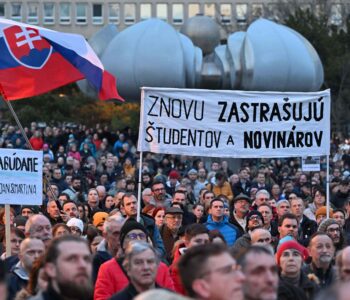
IPI’s global network today raises alarm over Slovakia’s ongoing and steady decline in media freedom. In recent months, the Slovak government has tightened its grip on the media by intensifying its control over the public broadcaster STVR and enacting the restrictive so-called “anti-NGO” law. Slovakia’s leading commercial broadcaster, TV Markíza, has also come under political influence following the departure of its union leaders.


IPI urges the Slovak government to end its undemocratic pressure on independent journalism and to respect the independence of the public broadcaster. Furthermore, we call on the European Union to closely monitor developments on press freedom in Slovakia, and to respond robustly to further threats to free and independent journalism in both public and private media.


In early May, a 7–2 majority of the current public broadcaster STVR’s oversight Council elected Martina Flašíková, the daughter of a political strategist for the ruling Smer party and a close government ally, as director general in a closed-door vote. Journalists and members of the public were excluded from the election process, despite constitutional guarantees of public access to such hearings.


The government’s campaign to take control over public service media began with a 30% budget cut to Radio and Television Slovakia (RTVS) imposed by Parliament at the start of 2024. The Ministry of Culture then pushed through a new media law,which replaced the public broadcaster Radio and Television of Slovakia (RTVS) with a new entity, Slovak Television and Radio (STVR). The bill, approved by the President in June 2024, represented a clear attempt to restrict the editorial independence of the broadcasters.


Under the law, the former public broadcaster RTVS saw its Director General, Luboš Machaj, who was elected by Parliament to serve until 2027, replaced by an interim director nominated by the Speaker of Parliament based on an agreement of the ruling coalition. The RTVS Board was immediately disbanded.


IPI warns that Flašíková’s appointment, which lacked transparency, represents a clear step by the ruling coalition to install a political ally to the management of the country’s public broadcaster, with the aim of exerting greater control over editorial policy. This poses a major threat to the independent functioning and professionalism of STVR moving forward, in clear violation of requirements set out under the upcoming European Media Freedom Act (EMFA).


In May 2025, Viktor Vincze, a well-known Slovak television presenter, announced that he would no longer be anchoring ‘Televízne noviny’, the evening news programme on TV Markíza — the most-watched news show in Slovakia, and was leaving Markiza.


Vincze told IPI that he was forced to resign after management removed him from his anchor role and asked him to move to a new digital channel for many more hours of work, but no more pay. This decision followed months of management pressure on him for his role leading the journalists union formed a year earlier to protect the editorial integrity of the newsroom. Vince said he was taking a case against TV Markiza for constructive dismissal.


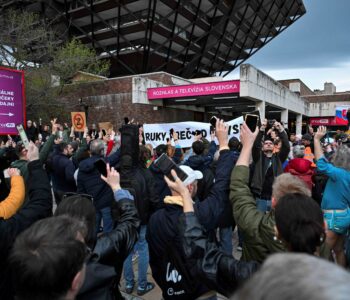
TV Markiza has been under increasing pressure since the formation of the new government in September 2023. In November, Prime Minister Róbert Fico accused the TV station of being part of the “enemy media” and quickly threatened to cut contracts for state advertising in Markíza’s broadcasting.


A few weeks later, the station changed its director of news and introduced tighter editorial procedures for approving news content which led to significant newsroom protests in early 2024. Markiza journalists claimed  that the independence of the newsroom was being curtailed and that political coverage was being stifled in order to appease the government.


With the departure of Vincze and other union members, concerns are growing that Markiza is abandoning its critical watchdog reporting on the ruling coalition.


Finally, Slovakia’s restrictive law requiring NGOs to prepare transparency reports and disclose information related to the management of public funds was passed in April and took effect on June 1. Under the law, non-profit organisations, foundations and associations with an annual income exceeding €35,000 are required to submit such a report.


The law, introduced amid growing hostility toward media and civil society from the government, poses a serious threat due to its restrictive nature, the unnecessary administrative burden it places on NGOs and independent media which operate with an NGO status, and the potential for more repressive amendments in the future.


Though the final text of the bill was watered down in the final legislative phase under pressure from the EU, IPI reiterates its condemnation of the law and calls for its repeal.


The steady erosion of media freedom, alongside the dismantling of democratic freedoms in Slovakia, cannot be ignored. We urge the European Union to ensure the steady erosion of media freedom in Slovakia by the Fico government does not go under the radar, to directly criticise and address the democratic backsliding, and to use all measures to defend journalists’ rights and media freedom. The EU’s response will be pivotal in preserving media pluralism and reversing media capture in the country.


Slovakia is facing not only the effective capture of the public broadcaster but also mounting pressure on private media, in particular, one of the country’s most important news providers, TV Markiza.

This statement by IPI is part of the Media Freedom Rapid Response (MFRR), a Europe-wide mechanism which tracks, monitors and responds to violations of press and media freedom in EU Member States and Candidate Countries.
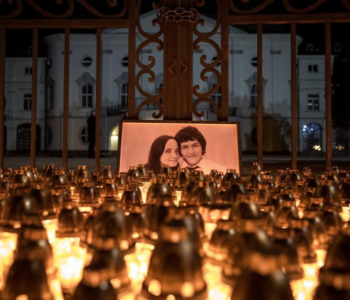
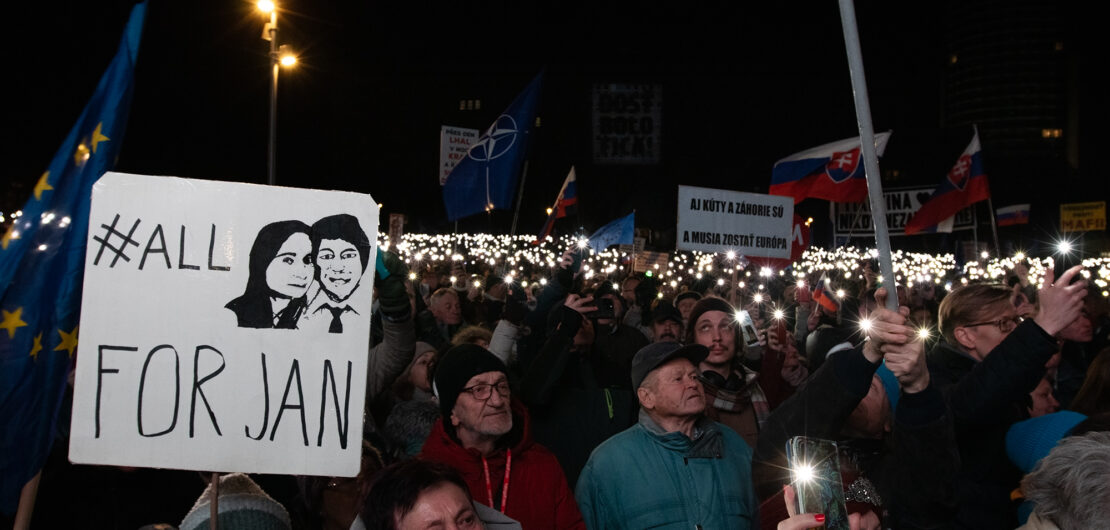
Candles are placed during a march in memory of murdered Slovak journalist Jan Kuciak and his fiancee Martina Kusnirova. Library

Slovakia: Media freedom under threat on seventh anniversary of…

Slovakia: Media freedom under threat on seventh anniversary of Ján Kuciak murder

On the seventh anniversary of the murder of Slovak investigative journalist Ján Kuciak and his fiancée Martina Kušnírová, the partner organisations of the Media Freedom Rapid Response (MFRR) today mark the date with the publication of a new report examining ongoing threats to media freedom and the safety of journalists.

MFRR partners take this opportunity to remember Ján and Martina, renew our call for full justice over their brutal killing, and call on Slovak authorities to ensure that the mastermind behind the assassination is ultimately prosecuted and convicted. Until all those involved in the February 2018 murder are held accountable and the cycle of impunity is finally broken, a dark cloud will continue to hang over the wider climate for press freedom in Slovakia.


On February 21, 2018, Kuciak and Kušnírová were fatally shot at their home outside the capital Bratislava. Kuciak was well known for his reporting on corruption for investigative platform Aktuality.sk. He uncovered alleged corruption and tax fraud schemes involving businessman Marián Kočner and prominent figures with suspected ties to the ruling Smer-SSD and organised crime groups.


Despite the hitmen and intermediaries receiving lengthy prison sentences, Kočner, who was accused of masterminding the crime after threatening the journalist, has been twice found not guilty due to a lack of conclusive evidence. Following Kocner’s second acquittal in May 2023, a second appeal remains underway at the Supreme Court, which our organisations continue to follow closely.


As the report published today underscores, this continued failure to fully resolve the murders remains a stark reminder of the dangers faced by journalists in Slovakia, where media workers continue to be subjected to intimidation, smear campaigns, verbal abuse and legal harassment. More widely, the media landscape in Slovakia is facing a crisis, serving as a critical test case for the European Union’s commitment to safeguarding media freedom and democratic values. 


Representatives of the MFRR partner the International Press Institute (IPI) will be in Bratislava on February 21 to take part in commemoration events for the anniversary. The MFRR continues to stand with the families of Ján Kuciak and Martina Kušnírová, and all those fighting to ensure full justice in this case, now and as long as it takes to secure accountability.

Signed by:

  • International Press Institute (IPI)
  • European Centre for Press and Media Freedom (ECPMF)
  • European Federation of Journalists (EFJ)
  • ARTICLE 19 Europe
  • Osservatorio Balcani Caucaso Transeuropa (OBCT)

This statement was coordinated by the Media Freedom Rapid Response (MFRR), a Europe-wide mechanism which tracks, monitors and responds to violations of press and media freedom in EU Member States, Candidate Countries and Ukraine.

Library

Slovakia: New report highlights growing media freedom crisis

Slovakia: New report highlights growing media freedom crisis

Media freedom in Slovakia is facing a deep crisis, serving as a critical test case for the European Union’s commitment to safeguarding media freedom and democratic values, Media Freedom Rapid Response (MFRR) partner organisations warn today in a new report.

The MFRR report – which can be downloaded here – concludes that since the re-election of populist leader Robert Fico and the formation of a new government in October 2023, the environment for freedom of expression, media pluralism and independent journalism has become increasingly hostile.


Journalists have been subjected to legal harassment, intimidation, smear campaigns and verbal abuse. Meanwhile, the SMER-led coalition government disbanded the public broadcaster (RTVS) replacing it with a new legal entity (STVR) thereby enabling it to replace the leadership and to exercise disproportionate influence over its editorial content.


The actions of the current Slovak government not only jeopardise the country’s media landscape but also pose a significant challenge to EU-wide efforts to protect media freedom and democracy, particularly in light of the newly adopted European Media Freedom Act (EMFA).


Under international and European human rights standards and as a member of the Media Freedom Coalition, the Slovak government must foster a safe and enabling environment for media and journalists. Instead, it became clear to the mission that the current government is chipping away at legal protections for the freedom of the media and fuelling an increasingly hostile environment for journalists.


The report provides a comprehensive analysis of the current threats to media freedom in Slovakia, their implications for EU media policy, and recommendations for urgent action to reverse this troubling trend. It is intended to inform the international community and EU policymakers and serve as a basis for developing targeted interventions to protect and strengthen media independence in Slovakia.


It is based on findings from a fact-finding mission conducted on 25-26 November 2024 by the Media Freedom Rapid Response (MFRR) partners. The mission was led by the International Press Institute (IPI) and joined by ARTICLE 19 Europe, the European Federation of Journalists (EFJ) and the European Center for Press and Media Freedom (ECPMF). Key findings of the report: 

  • Erosion of legal protection and hostile environment: The Slovak government is chipping away at legal protections for media freedom, such as the draft right to reply law, and fuelling an increasingly hostile environment for journalists. The government’s open disdain for independent media, coupled with its promotion of ‘alternative’ outlets known for spreading disinformation, further exacerbates this hostile climate.
  • Continuous impunity for violence against journalists: The continued failure to fully resolve the murders of journalist Ján Kuciak and his fiancée, Martina Kušnírová, remains a stark reminder of the dangers faced by journalists in Slovakia. The government’s decision to disband the Special Prosecutor’s Office significantly reduces the likelihood of achieving full justice in this case, intensifying concerns over the safety of journalists. 
  • Public service media independence under threat: The government’s move to dissolve the public broadcaster RTVS and replace it with a new entity, STVR, is a clear attempt to exert control over public service media and its programming. The new structure allows for greater government influence in appointing the broadcaster’s leadership, potentially compromising its editorial independence.      
  • Undermining independence of media regulator:  The proposal to restructure the media regulator, the Council for Media Services, to concentrate power into the hands of the chair, would undermine its impartiality and strengthen government influence over its decisions. 
  • Media capture: The combination of increased control over the public media and initiatives to undermine regulatory independence, along with threats to weaponize state advertising to punish critical journalism, advances media capture and directly conflicts with key principles of the EMFA.
  • EU responsibility and action: The situation in Slovakia underscores the urgent need for the European Union to take decisive action in enforcing media freedom standards within its member states. The EU’s response to these challenges in Slovakia will be of pivotal importance, potentially setting a precedent for how media freedom violations are addressed across the bloc. Immediate and coordinated efforts are required to support independent journalism, strengthen legal protections, and ensure compliance with the European Media Freedom Act in Slovakia and beyond.


The report was launched by MFRR partners ahead of the seventh anniversary of the murder of Slovak investigative journalist Ján Kuciak and his fiancée Martina Kušnírová on 21 February 2018, which underscores the continued lack of full justice and the wider threats facing media freedom in Slovakia.

Signed by:

  • International Press Institute (IPI)
  • European Centre for Press and Media Freedom (ECPMF)
  • European Federation of Journalists (EFJ)
  • ARTICLE 19 Europe

This statement was coordinated by the Media Freedom Rapid Response (MFRR), a Europe-wide mechanism which tracks, monitors and responds to violations of press and media freedom in EU Member States, Candidate Countries and Ukraine.

Library

Media freedom in Slovakia under threat

Media freedom in Slovakia under threat 

We, the undersigned international press freedom, freedom of expression, and journalists organizations, conducted a solidarity and fact-finding mission to Slovakia, on 25-26 November, to assess the state of press freedom in the country amid a scaling back of democratic freedoms.

The mission was led by the International Press Institute (IPI) and joined by ARTICLE 19 Europe, the European Federation of Journalists (EFJ), and the European Center for Press and Media Freedom (ECPMF).

Mission preliminary findings

Media freedom in Slovakia faces a growing threat, and urgent action is needed to protect it. The Slovak government – a member of the Media Freedom Coalition – has an obligation to foster a safe and enabling environment for media and journalists. Instead, the current government is chipping away at legal protections for the freedom of the media and fueling an increasingly hostile environment for journalists. 


The Slovak government’s actions are not only detrimental to the media landscape but also pose a significant challenge for the European Union, particularly in light of new legislative measures such as the European Media Freedom Act. Upholding international and European standards for freedom of expression in Slovakia is essential to reversing this troubling trend. The situation in Slovakia serves as a crucial test case for the EU’s commitment to safeguarding democratic values and media independence across its member states. Immediate and decisive action is required to restore trust in democratic institutions and ensure that Slovakia can develop into a more robust supporter of media freedom in Europe.

Threats to Safety of Journalists 

Government officials and politicians in Slovakia regularly insult and threaten journalists, creating a hostile environment that damages public trust in the media and places the physical safety of journalists at risk. Prime Minister Fico labelled journalists from major media outlets as “bloodthirsty bastards”, threatening them with new restrictions and suggesting that they face accountability for their reporting. Such verbal attacks have been echoed by other government officials who have accused journalists of inciting violence and contributing to societal unrest. In particular, Andrej Danko, leader of the Slovak National Party, claimed that the media had “blood on their hands” following the horrifying assassination attempt on Prime Minister Fico, insinuating that critical reporting was responsible for creating a dangerous atmosphere.


More broadly, journalists in Slovakia face severe harassment and attacks online. We note that, following the assassination attempt, the authorities promised to crack down on illegal online threats. But our mission heard that while the authorities are tackling threats to politicians, they are failing to address serious harassment of journalists.


The sense of fear in the media community is exacerbated by the ongoing impunity over the murders of journalist Ján Kuciak and his fiancée, Martina Kušnírová, and the government’s disbandment of the Special Prosecutor’s Office responsible for pursuing all those responsible for the crime. As a coalition, we continue to stand in solidarity with Ján and Martina’s families and underscore our commitment to fighting for justice until all those responsible for their murders are held accountable. 


Media Capture

The current media landscape in Slovakia is under significant threat of media capture. Recent steps in this direction include the organization of the public broadcaster to place it under greater state control, and the use of economic pressure against independent media, including threats to weaponize state advertising


We note with concern a government proposal to change the structure of the media regulator, the Media Services Council, from a collective body of nine board members, to a one-person statutory body, appointed by the government. This move would increase government control of the media regulator and therefore would be a move away from the principles of the European Media Freedom Act. 


At the same time, Slovakia remains home to a strong independent media sector and our mission was encouraged by the resilience and solidarity within the journalistic community. However, the situation at the regional level is more worrying as dubious and misinformation sources have begun to fill the information spaces in news deserts.


Legal Threats 

Various legislative proposals that could result in greater government control or pressure on media have been adopted or are currently under consideration in Slovakia. 


These proposals also include planned “foreign agent” legislation. While the bill has been watered down after much criticism, it still poses a risk to media freedom. 


Changes made to the Freedom of Information Law—namely, extending the deadline for responses from 8 to 12 days and introducing a possibility of fees for access to information requests—restrict the right to access information in Slovakia.


We are also concerned about new legislation that would require media – under threat of fines – to publish replies from politicians in response to journalistic content. 


Prime Minister Fico’s SLAPP lawsuit against the editor of Aktuality, Peter Bardy, in which the prime minister is demanding 200,000 euros in response to his photograph being used on a book Bardy wrote about Fico, highlights the risk of the legal system being misused to intimidate government critics. It also illustrates the urgent need for the government to introduce strong anti-SLAPP laws in line with new European standards on SLAPPs. 


Disinformation and attacks on information integrity

Disturbingly, the current government openly shuns independent media – refusing to grant interviews, respond to questions at press conferences or provide information – while instead engaging with and promoting, “alternative” outlets widely seen as spreading disinformation, including pro-Kremlin disinformation, and parroting rhetoric attacking independent media.


This practice damages the ability of journalists to do their work, undermines the public’s right to information and the government’s accountability for their actions. The government’s lack of transparency and dialogue is alarming. We are dismayed that in stark contrast to previous visits to the country, on this trip we were not granted meetings during the mission with any government offices or official representatives of the governing coalition.


MFRR calls on the government to immediately cease the smearing and discrediting of journalists, to guarantee the editorial independence of all media, including public service media, and to withdraw all legislative measures that limit media freedoms.

Signed by:

  • International Press Institute (IPI)
  • European Centre for Press and Media Freedom (ECPMF)
  • ARTICLE 19 Europe
  • The European Federation of Journalists (EFJ)

This statement was coordinated by the Media Freedom Rapid Response (MFRR), a Europe-wide mechanism which tracks, monitors and responds to violations of press and media freedom in EU Member States, Candidate Countries and Ukraine.

Library

As press freedom deteriorates, Media Freedom partners hold advocacy…

As press freedom deteriorates, Media Freedom partners hold advocacy mission to Slovakia 

Mission to support independent media and urge authorities to respect freedom of expression and media freedom

On November 25–26, the Media Freedom Rapid Response (MFRR) partners will conduct a solidarity and fact-finding mission to Slovakia to assess the state of press freedom in the country amid a scaling back of democratic freedoms.


The mission will be led by the International Press Institute (IPI) and joined by ARTICLE 19 Europe, the European Federation of Journalists (EFJ) and the European Center for Press and Media Freedom (ECPMF). 


As the environment for freedom of expression, media pluralism and independent journalism becomes increasingly hostile, the delegation will meet with leading media organizations, press freedom advocates, and political leaders to discuss the key challenges to freedom of expression in the country and explore potential solutions.


The mission will focus on key topics such as media capture, the dissolution of public broadcaster (RTVS), smear campaigns targeting journalists, impunity for crimes against them, and the steps needed to align Slovak legislation with international and European standards. 


As the protection of freedom of expression deteriorates to a critical point, the mission will show solidarity with independent media and urge the authorities in Slovakia to refrain from verbal and legal attacks on the press. Additionally, we remind the Government of its obligation under international law to create an enabling environment where journalists can work freely and without fear of retaliation.


Key areas of concern 

The MFRR partners have consistently expressed deep concern regarding the deterioration of media freedom in Slovakia. The critical challenges include:

  • Attacks on the independence of public service media: In July 2024 the relatively independent public broadcaster, RTVS, was dissolved to be replaced by the new institution, STVR. This included new rules which enabled the government to replace the leadership with their own appointees facilitating the politicization of the STVR.


  • Media capture: The MFRR research shows that Slovakia’s media market is heavily influenced by government and vested interests. There’s clear evidence of an imbalance in the allocation of state advertising funds to media outlets due to a lack of regulation. Additionally, the media landscape remains highly concentrated, with the oligarchic group Penta controlling a significant share of the market. The Slovak government has also pressured private media, including the leading commercial broadcaster, TV Markíza.


  • Legislation and legal measures restricting media freedom and freedom of expression: Since September 2023, the Slovak government has introduced several draft bills that restrict media freedom. These included a draft bill labelling civil society organizations which receive over €5,000 annually in foreign funding as ‘foreign-supported’; the amendment of the media law changing a “right to a correction” and the amendment to the Access to Information Law, allowing officials to charge for “extensive” information requests. 


Prime Minister Robert Fico also recently filed a SLAPP case against Peter Bárdy, editor-in-chief of Aktuality.sk, and Ringier Slovak Media, the publisher of the book Fico – Obsessed with Power, for using Fico’s photo on the cover. 

  • Safety concerns and impunity for crimes against journalists: The lack of justice for the 2018 assassination of Ján Kuciak and his fiancée, Martina Kušnírová, has intensified concerns over the safety of journalists in Slovakia. Until this day, full justice has not yet been served for either the assassination of Kuciak and Kušnírová or for other crimes against journalists such as their massive surveillance by “Kočner’s squad”, a network of individuals paid to supply information to the businessman.


  • Verbal attacks and smear campaigns against journalists: Journalists in Slovakia continue to face both physical and online attacks. These have rapidly intensified since Prime Minister Fico’s re-election in September 2023. The survey, conducted by the Investigative Centre of Ján Kuciak (ICJK) within the project Safe.Journalism.sk in 2023, showed Slovak journalists are most frequently targeted with online and verbal attacks. 


In the first six months of 2024, MFRR documented a total of 28 press freedom violations targeting 43 media-related persons or entities. Government and public officials were the most common (67.9%) source of violations documented, of which most were related to verbal attacks like discrediting, intimidation, and harassment. 


Engagement and advocacy

The MFRR delegation will hold a press conference on November  26, 2024, at 2:30 PM in Bratislava, to present its initial observations and recommendations. An additional press release will be produced shortly after, to further detail the mission’s preliminary findings. Following the mission, the coalition will also disseminate the report based on the mission findings and recommendations. 


For further information about the press conference, contact Teona Sekhniashvili at tsekhniashvili@ipi.media or Ronja Koskinen at rkoskinen@ipi.media

V dôsledku zhoršujúcej sa slobody tlače organizujú partneri pre slobodu médií advokačnú misiu na Slovensko

Misia má za cieľ podporiť nezávislé médiá a naliehať na štátne orgány, aby rešpektovali slobodu prejavu a slobodu médií

V dňoch 25.-26.novembra 2024 partneri projektu ‘Media Freedom Rapid Response’ (MFRR) uskutočnia solidárnu a zisťovaciu misiu na Slovensko s cieľom posúdiť stav slobody tlače a ďalších obmedzovaní slobody prejavu. 


Misiu povedie Medzinárodný tlačový inštitút (IPI) a pridajú sa k nej organizácie ARTICLE 19 Europe, Európska federácia novinárov (EFJ) a Európske centrum pre slobodu tlače a médií (ECPMF).


Keďže prostredie pre slobodu prejavu, pluralitu médií a nezávislú žurnalistiku na Slovensku je čoraz nepriateľskejšie, delegácia sa stretne s poprednými mediálnymi organizáciami, obhajcami slobody tlače a politickými predstaviteľmi, aby prediskutovala kľúčové výzvy pre slobodu prejavu a preskúmala možné riešenia.


Misia sa zameria na témy, ako je napríklad ovládanie médií, zrušenie RTVS, štvavé kampane namierené proti novinárom, beztrestnosť za trestných činov proti novinárom a kroky potrebné na zosúladenie slovenskej legislatívy s medzinárodnými a európskymi normami.


Keďže ochrana slobody prejavu sa zhoršuje na kritickú úroveň, misia prejaví solidaritu s nezávislými médiami a vyzve orgány na Slovensku, aby sa zdržali verbálnych a právnych útokov na ne. Okrem toho pripomenie vláde jej povinnosť vyplývajúcu z medzinárodného práva vytvoriť priaznivé prostredie, v ktorom môžu novinári pracovať slobodne a bez obáv z odvety.


Hlavné problémy v oblasti slobody médií

Partneri MFRR už opakovanie vyjadrili hlboké znepokojenie nad zhoršovaním slobody médií na Slovensku. Za hlavné problémy považujeme:

  • Útoky na nezávislosť verejnoprávnych médií: V júli 2024 bola relatívne nezávislá RTVS zrušená a nahradená novou inštitúciou, STVR. Nový zákon umožnil vláde nahradiť vedenie novej inštitúcia vlastnými nominantmi, čo uľahčilo politizáciu STVR.


  • Ďalšie pokusy o kontrolu médií: Z výskumu MFRR vyplýva, že slovenský mediálny trh je pod silným vplyvom vlády a partikulárnych (komerčných) záujmov. Existujú jasné dôkazy o nerovnováhe v prideľovaní štátnych prostriedkov na reklamu médiám v dôsledku nedostatočnej regulácie v tejto oblasti. Okrem toho mediálne prostredie zostáva vysoko koncentrované, pričom oligarchická skupina Penta kontroluje významný podiel trhu. Slovenská vláda vyvíja tlak aj na súkromné médiá vrátane TV Markíza.


  • Legislatívne a právne opatrenia obmedzujúce slobodu médií a slobodu prejavu: Od septembra 2023 slovenská vláda predložila niekoľko návrhov zákonov, ktoré obmedzujú slobodu médií. Patril medzi ne návrh zákona, ktorý označuje organizácie občianskej spoločnosti, ktoré dostávajú viac ako 5 000 EUR ročne zo zahraničia, ako „podporované zo zahraničia“; novela mediálneho zákona, ktorou sa mení „právo na opravu“ a novela zákona o prístupe k informáciám, ktorá umožňuje štátnym orgánom vyberať poplatky za určité žiadosti o informácie.


Premiér Robert Fico tiež nedávno podal žalobu, tzv. ‘SLAPP’ (strategický súdny spor proti účasti na veciach verejných), proti Petrovi Bárdymu, šéfredaktorovi Aktuality.sk, a vydavateľstvu Ringier Slovak Media, ktoré vydalo knihu Fico – posadnutý mocou, za použitie Ficovej fotografie na obálke.

  • Obavy o bezpečnosť novinárov a beztrestnosť za trestné činy proti nim: Obavy o bezpečnosť novinárov sú zosilnené v dôsledku absencie spravodlivosti v prípade vraždy Jána Kuciaka a jeho snúbenice Martiny Kušnírovej v roku 2018. Do dnešného dňa nebola vyvodená úplná spravodlivosť ani za tieto vraždy, ani za iné trestné činy proti novinárom, ako napríklad ich masívne sledovanie „Kočnerovým komandom“ – sieťou osôb platených za dodávanie informácií podnikateľovi.


  • Slovné útoky a očierňovacie kampane proti novinárom: Novinári na Slovensku naďalej čelia fyzickým aj online útokom. Tie sa rapídne zintenzívnili od znovuzvolenia premiéra Fica v septembri 2023. Prieskum, ktorý v roku 2023 uskutočnilo Investigatívne centrum Jána Kuciaka (ICJK) v rámci projektu Bezpečná žurnalistika.sk, ukázal, že slovenskí novinári sú najčastejším terčom online a verbálnych útokov.


V prvom polroku 2024 MFRR zdokumentovalo celkovo 28 prípadov porušenia slobody tlače, ktorých terčom bolo 43 osôb alebo subjektov súvisiacich s médiami na Slovensku. Najčastejšie – v 67,9 % zdokumentovaných prípadoch – vyšli porušenia zo strany štátnych a verejných činiteľov, pričom vo väčšine išlo o slovné útoky, ako je diskreditácia, zastrašovanie a obťažovanie.


Ako možno kontaktovať delegáciu

Delegácia MFRR usporiada 26. novembra 2024 o 14:30 hod. v Bratislave tlačovú konferenciu, na ktorej predstaví svoje prvé zistenia a odporúčania. 

This statement was coordinated by the Media Freedom Rapid Response (MFRR), a Europe-wide mechanism which tracks, monitors and responds to violations of press and media freedom in EU Member States, Candidate Countries and Ukraine.

Library

Slovakia’s Prime Minister launches SLAPP case against leading investigative…

Slovakia’s Prime Minister launches SLAPP case against leading investigative journalist

Media freedom groups today condemned the legal action taken by the Prime Minister of Slovakia, Robert Fico, against the editor in chief of Aktuality.sk, Peter Bardy, as well Ringier Slovak Media, the publisher of the book, for the use of a photo of Fico on the cover of the book ‘Fico-Obsessed with Power,’ We call on the court to dismiss the case.

Fico is claiming 100.000 euros from Bardy, and another 100.000 euros from the publisher as compensation for non-material damage caused by the choice of cover photo. Fico’s lawyers claim that Fico has the right to decide how his photograph is used. 

The action has all the hallmarks of a SLAPP, or Strategic Lawsuit Against Public Participation, that is used by the powerful to intimidate journalists and end their investigative reporting.  

The book, which charts Fico’s long political career, includes statements by Fico’s colleagues and political opponents. 

Aktuality.sk is one of Slovakia’s leading news media with a reputation for hard hitting investigative journalism. It was also the home of Jan Kuciak before he was murdered in February 2018 following his exposures into corruption in the heart of the Slovak state during Fico’s last tenure as Prime Minister. The killing of Jan Kuciak and his fiancée, Martina Kusnirova, sparked huge public protests, leading to Fico’s eventual resignation. Fico has regularly blamed the media for his departure. He wasted little time in acting against those he described as ‘enemy media’ after returning to power with the 2023 elections.  

“We are convinced that we have not violated the law, which we will defend and explain in court. And we believe in a fair trial,” said editor-in-chief Peter Bárdy. “If someone wanted to intimidate me with this lawsuit, if it was meant to trigger self-censorship in me, it didn’t work. I will continue to do what I have been doing for almost three decades in journalism and together with the editors of Aktuality.sk, but also with many great journalists from other Slovak media, we will point out problems in the state, criticize politicians, heads of institutions and publish verified information in the public interest. Because that is our job,” 

According to our analysis, the lawsuit fulfills key indicators for a SLAPP. There is an imbalance of power between Fico as the claimant and Bárdy as the defendant, considering Fico’s political influence and the lawsuit targets not only the publisher but also Bárdy in his individual capacity. The lawsuit does not object to the content or the veracity of the information in the book, and the damages requested, namely EUR 100,000 from each defendant, are highly excessive.

The Council of Europe and the European Union have introduced new instruments to counter SLAPPs, including the EU Anti-SLAPP Directive which member states should implement and transpose. Instead of intimidating journalists with SLAPP legal actions, Fico and his government should focus on implementing these standards at the national level.

The Media Freedom Rapid Response consortium and its partners will continue to closely monitor the SLAPP case as well as document it on Mapping Media Freedom and the Council of Europe Platform for the Safety of Journalists.

Signed by:

  • International Press Institute (IPI)
  • European Centre for Press and Media Freedom (ECPMF) 
  • Free Press Unlimited (FPU)
  • The European Federation of Journalists (EFJ) 
  • OBC Transeuropa (OBCT)
  • Reporters Without Borders (RSF)
  • Committee to Protect Journalists (CPJ)
  • South East Europe Media Organisation (SEEMO)

This statement was coordinated by the Media Freedom Rapid Response (MFRR), a Europe-wide mechanism which tracks, monitors and responds to violations of press and media freedom in EU Member States, Candidate Countries and Ukraine.

MFRR 3 consortium logos
Library

Media freedom groups call on Slovakia’s Parliament to reject…

Media freedom groups call on Slovakia’s Parliament to reject public broadcasting bill

Critics warn: proposed law could seriously undermine the independence of  public media


Journalists and media freedom groups are urging Slovakia’s MPs to reject the proposed public service broadcasting bill scheduled for parliamentary review next week. Despite recent amendments to the bill, the new structure would lead to the politicisation of the broadcaster in breach of the European Media Freedom Act.

The public broadcasting bill aiming to replace Radio and Television of Slovakia (RTVS) with a new entity, Slovak Television and Radio (STVR), will be discussed by the Parliament next week after its finalisation by the government in May. 


If passed into law, the governing coalition will also remove the current Director-General and supervisory board before the end of their legal mandates. 


The new Director-General will be appointed by the new Board of STVR, which will consist of nine members, five appointed by the Parliament and four by the Ministry of Culture. All their mandates would start at the same time. This would hand the ruling majority effective control over the Board and, therefore, the Director General, leading to the likely rapid politicisation of the new public television and radio channels.


The ruling coalition has persistently accused the public media and its journalists of bias and political activism and has made no secret of its desire to assert control over it through this ‘reform’. 


The initial bill, published in March, provoked a string of protests led by RTVS’s journalists who published a petition expressing fear that the new law will create “a tool for political control of RTVS for any government in power”, adding that “free and independent public media should serve all citizens of Slovakia, not the power ambitions of any parties.” 


Slovakia’s President, Zuzana Čaputová, European Commission Vice-President Věra Jourová, as well as many international organisations also expressed concerns including that the law may breach provisions for independence laid out in the European Media Freedom Act. 


As a result, the government has since withdrawn some of the more vexatious elements of the law, including a provision for a new politically appointed Programme Council to coordinate the programming. 


Despite these modifications the bill still provides for the politicisation of the public broadcaster by the government that would fatally compromise its independence. It is therefore still contrary to the European Media Freedom Act’s provisions on the independence of the public media. 


Moreover, the law has done nothing to secure sufficient, stable and independent funding which is essential to ensure STVR’s independence and fulfilment of its public service mission. In 2023 Slovakia replaced the licence fee model with direct state funding increasing its dependence on the government.


Our organisations have seen how easy it is for governments to undermine the independence of public broadcasters and how serious the effects of such a politicisation can be for society as a whole. 


The tragic shooting of Prime Minister Robert Fico against the background of a polarised society shows that the need for pluralistic and independent public media, that can facilitate debate across the political spectrum in a time of crisis, has never been greater. 

Signed by:

  • International Press Institute (IPI)
  • Committee to Protect Journalists (CPJ)
  • European Broadcasting Union (EBU)
  • European Centre for Press and Media Freedom (ECPMF)
  • European Federation of Journalists (EFJ)
  • Free Press Unlimited (FPU)
  • OBC Transeuropa (OBCT)
  • Reporters Without Borders (RSF)

This statement was coordinated by the Media Freedom Rapid Response (MFRR), a Europe-wide mechanism which tracks, monitors and responds to violations of press and media freedom in EU Member States and Candidate Countries.
Library

Slovakia: Independence of Slovakia’s leading TV news channel must…

Slovakia: Independence of Slovakia’s leading TV news channel must be protected

The undersigned members of the Media Freedom Rapid Response are deeply alarmed by the actions of the Slovak government towards Slovakia’s leading commercial broadcaster, TV Markíza, aimed at silencing its critical journalism. We call on Markíza’s owners, the Central European Media Enterprises (CME), to resist the pressure and guarantee the editorial independence of the newsroom.

TV Markiza has been under pressure from the moment the new government was formed in September 2023. Prime Minister Róbert Fico accused it last November of being part of the “enemy media” and quickly threatened to cut contracts for state advertising, which Markíza broadcasts.


In December, Markíza’s owners, the Prague-based Central European Media Enterprises (CME), replaced Markíza’s long-time news director, Henrich Krejča, with Michal Kratochvíl, transferred from CME’s Czech broadcaster, Nova TV.


On February 28, Markíza staff appealed to the general director, Peter Gažík, claiming Kratochvil was muzzling the news output to reduce political content and avoid confronting the government.


The commercial media outlet, TV Markíza was launched in 1996 and quickly became a key player in the country’s media landscape. Its news programming has been particularly influential, with its coverage often setting the agenda for public discourse. In the summer 2023, SMER, the ruling party, announced that its politicians would not take part in pre-election debates on this TV station, due to “disinformation.” Many politicians of the current Fico-led government boycott the channel and threatened it with cuts to state advertisement, increasing the pressure on the newsroom. Meanwhile, there is growing speculation that CEM is under pressure to sell Markíza.


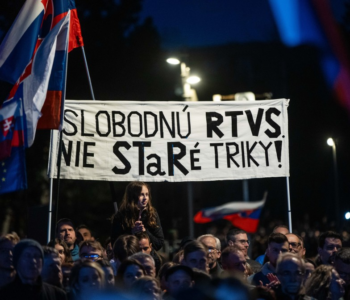
The internal crisis at TV Markíza is taking place at the same time as the government attempts to take control over public service media by dissolving Radio and Television of Slovakia (RTVS) and replacing it with Slovak Television and Radio (STaR).


MFRR partners previously expressed profound concerns over these developments, emphasizing the need to uphold democratic values and protect press freedom in Slovakia. Our previous calls for the withdrawal of the repressive broadcast law and opposition to government interference in public media underscore the gravity of the situation.


We call upon Prime Minister Róbert Fico and his government to cease all attacks, threats, and pressure on independent media, including TV Markíza. Critical media are not the “enemy”. They are a pillar of a democratic society and must be allowed to carry out their watchdog role free from retaliation in any form.


In this critical moment, the organizations of the MFRR stand in solidarity with TV Markíza journalists in their calls to defend the outlet’s independent journalism. We urge TV Markíza’s owners (the Central European Media Enterprises – CME) and management to resist external pressures and guarantee editorial independence in the newsroom. They must act decisively to uphold the public’s right to access diverse and independent sources of information.


Additionally, we call upon Slovak authorities, regulators, and the country’s newly elected president Peter Pellegrini to uphold media freedom, media pluralism, and allow the media to work free from political pressure. The integrity of the upcoming European elections and the credibility of Slovak democracy depend on it. 

Signed by:

  • International Press Institute (IPI)
  • European Centre for Press and Media Freedom (ECPMF)
  • European Federation of Journalists (EFJ)
  • OBC Transeuropa (OBCT)
  • Free Press Unlimited (FPU)
  • ARTICLE 19 Europe

This statement was coordinated by the Media Freedom Rapid Response (MFRR), a Europe-wide mechanism which tracks, monitors and responds to violations of press and media freedom in EU Member States and candidate countries. 

MFRR 3 consortium logos
Library

Call for withdrawal of Slovakia’s repressive broadcast law

Call for withdrawal of Slovakia’s repressive broadcast law

Journalists and media freedom groups call for the urgent withdrawal of a proposed legislation allowing political control over public-service media in Slovakia. The bill threatens independent information, especially before the June European Parliament elections, contradicting the recently voted EU’s Media Freedom Act.

On March 11, the Slovak government announced a plan to dissolve Radio and Television of Slovakia (RTVS) and replace it with the new Slovak Television and Radio (STaR). The Ministry of Culture’s draft law includes drastic changes to the appointment and competence of oversight bodies, which would set up a government control and effectively end the public broadcaster’s independence.


Upon the passing of the law, the ruling majority of Prime Minister Robert Fico will replace the Director General of the public media and the members of its oversight body ahead of the previous legal end of their mandates.


The new Director-General will be appointed by the new Board of STaR, which will consist of seven members, four appointed by the Parliament, three by the Ministry of Culture, effectively handing the governing parties full control over the Board and the appointment of the Director General. The Board also receives the new power of being able to dismiss the Director without having to provide any grounds, although the ruling coalition has since said they will remove this element following criticism.


Moreover, an entirely new institution, the Programme Council, is to be formed in order to coordinate STaR’s programming and ensure its “compliance with the public nature of broadcasting.” Nine out of eleven members of this body will be appointed by Parliament and enable direct political control over editorial policy.


The Act on Slovak Television and Radio (STaR) is being rushed through parliament via an abbreviated inter-ministerial and public consultation procedure until March 19. On March 17 Prime Minister Robert Fico called on the Parliament to approve the law in an accelerated legislative procedure starting in April. The bill could hence be approved before the elections to the European Parliament taking place on 8 June.


Opposition to the government’s power grab over the public broadcaster is mounting. By March 18, over 1,200 RTVS employees and external collaborators had signed a petition urging the withdrawal of the draft law. The following day, almost three hundred Slovak editors and journalists signed a joint statement denouncing the law, and expressing solidarity with RTVS.


Slovak President Zuzana Čaputová joined the critics, saying that the law is likely to violate the principles of free political contest and the prohibition against censorship, as well as being “in direct contradiction with the new European Media Freedom Act” which lays down strict safeguards on the independence of public service media.


The bill also goes against the European Commission’s 2023 Rule of Law Report which called on Slovakia to “enhance the independent governance and editorial independence of public service media.”


We welcome the statements of European Commission Vice-President Věra Jourová expressing her concerns during the European Parliament debate before the adoption of the European Media Freedom Act on March 12, and later stating that it may lead to the end of independent reporting by public media in Slovakia.


The undersigned media freedom organisations condemn the Slovak Television and Radio bill. We are deeply concerned that this bill is designed to enable the political take-over of RTVS and its conversion into a state propaganda outlet in the service of the government.  We call on the Minister of Culture to immediately withdraw the bill.


In a joint open letter, we further call on the institutions of the European Union to urgently address this threat to press freedom at the heart of Europe. The political control of public media threatens the integrity of the upcoming European elections by politicising political coverage of the campaigns and denying the public to independent and pluralistic sources of information.

Signed by:

International Press Institute (IPI)

European Centre for Press and Media Freedom (ECPMF)

European Federation of Journalists (EFJ)

Free Press Unlimited (FPU)

OBC Transeuropa (OBCT)

Reporters Without Borders (RSF)

This statement was coordinated by the Media Freedom Rapid Response (MFRR), a Europe-wide mechanism which tracks, monitors and responds to violations of press and media freedom in EU Member States and candidate countries. 

MFRR 3 consortium logos