Library

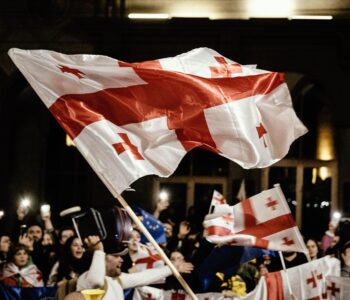
Press freedom in peril ahead of elections in Georgia:…

Press freedom in peril ahead of elections in Georgia: MFRR report on safety of journalists

A new report by MFRR and partners highlights rising threats to press freedom and journalist safety amid increasing polarisation and fear before the 2024 election.

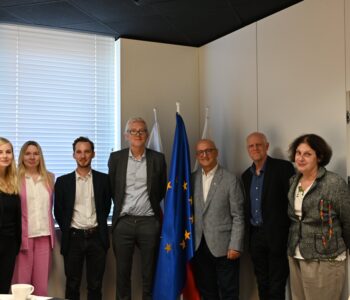
On 1-2 October the Partner Organisations of the Council of Europe’s Platform for the Safety of Partner organisations of the Council of Europe’s Platform for the Safety of Journalists and of the Media Freedom Rapid Response (MFRR), including ARTICLE 19 Europe, Committee to Protect Journalists (CPJ), the European Broadcasting Union (EBU), the European Federation of Journalists (EFJ), the European Centre for Press and Media Freedom (ECPMF), Index on Censorship, the International Press Institute (IPI), the Justice for Journalists Foundation, and Reporters Without Borders (RSF), conducted a fact-finding mission to Georgia.  The aim of the mission was to gather information on Georgia’s implementation of its freedom of expression and media freedom commitments, including in relation to the ongoing election campaign. 


This report presents the findings of the mission. 

During the mission, we have witnessed  the deterioration of press freedom amid rising authoritarianism. It has been made clear to us that a wide range of tools and mechanisms are used to discredit and curtail dissenting voices, including those of independent journalists. 


We want to declare our full support and solidarity with the journalists, press freedom and civil society organisations. We came with concerns about media freedom, but we were appalled by what we heard. 

Library

Mettere a tacere il quarto potere: la deriva democratica…

Report di missione: Mettere a tacere il quarto potere: la deriva democratica dell’Italia

La libertà dei media in Italia è sotto attacco, una deriva caratterizzata da una crescente interferenza politica e molestie legali nei confronti dei giornalisti. In vista delle elezioni europee del 2024, il Media Freedom Rapid Response (MFRR) ha condotto una missione di carattere urgente a Roma per approfondire queste problematiche. Lo scorso luglio, in occasione del lancio del report in inglese, abbiamo presentato le conclusioni nel corso di un webinar dedicato, avanzando una serie di proposte per rafforzare la tutela della libertà dei media in Italia.

La libertà dei media in Italia ha subito un deterioramento continuo negli ultimi anni, sottoposta ad attacchi e violazioni senza precedenti della libertà di stampa e dei media, violazioni spesso avviate da funzionari pubblici nel tentativo di emarginare e mettere a tacere le voci critiche. L’interferenza politica nei media pubblici e l’uso sistematico di intimidazioni legali contro i giornalisti, da parte degli attori politici, hanno tradizionalmente caratterizzato la relazione tra media e politica in Italia. Tuttavia, negli ultimi due anni queste dinamiche hanno raggiunto livelli allarmanti.

In vista delle elezioni europee del 2024, in un contesto in rapido deterioramento, le organizzazioni partner del Media Freedom Rapid Response (MFRR) hanno condotto una missione urgente a Roma, il 16-17 maggio 2024. La missione di advocacy aveva l’obiettivo di avviare un confronto con i rappresentanti istituzionali e politici su tre questioni: l’interferenza politica nel servizio pubblico, le intimidazioni legali di cui sono bersaglio i giornalisti e la potenziale acquisizione dell’AGI, una delle principali agenzie di stampa del Paese.

Questo rapporto riflette i risultati degli incontri tenutisi durante la missione e del continuo monitoraggio del consorzio, offrendo un’analisi esaustiva delle tre criticità identificate dalla delegazione. Valuta l’impatto di diverse misure e proposte di legge introdotte dai decisori italiani, alla luce delle più recenti disposizioni dell’UE volte a garantire l’indipendenza dei media pubblici, a contrastare la concentrazione del mercato, ad affrontare i conflitti di interesse e dotare la magistratura degli strumenti per contrastare le azioni vessatorie. Il rapporto include inoltre raccomandazioni dettagliate per gli attori istituzionali e governativi italiani, delineando i passi necessari per contrastare il declino della libertà dei media e attuare le riforme necessarie.

Il report è disponibile in inglese e italiano. 

MFRR 3 consortium logos
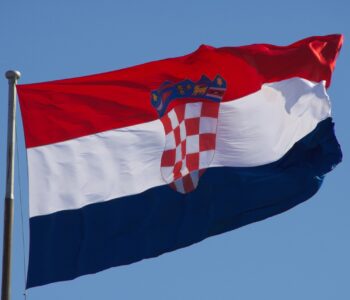
Croatia press freedom mission Library

Croatia: Major challenges ahead to improve media freedom

Croatia: Major challenges ahead to improve media freedom 

The international media freedom mission to Croatia has highlighted several significant concerns regarding media law reform, transparency of state advertising, and the safety of journalists including SLAPPs. While some promising initiatives have been noted, the path is still long ahead for Croatia to ensure a free and independent media landscape. 

The Media Freedom Rapid Response (MFRR) consortium concluded an online fact-finding mission to Croatia. Between 9 and 20 September 2024, the delegation met with the Ministry of Culture and Media, the Ministry of Justice, the Ministry of the Interior, an MP from the political party We Can!, the Agency for Electronic Media, the European Union Representation in Croatia, several associations of publishers, the Croatia Journalists’ Association (HND), the Croatian Journalists Union (TUCJ), editors-in-chief, and journalists from major media outlets as well as academics, lawyers, and civil society actors. Regrettably, the Supreme Court did not reply to our invitation while the judicial academy declined it.  


Media Law reform: Concerns over process  

The current reform of the Media Law has been highly criticised by civil society and public watchdogs, particularly regarding the lack of a consultative process. The previous draft of the law included contested provisions, such as allowing publishers undue influence over editorial lines and politicising the appointment process of members of the Agency for Electronic Media. A new draft is expected in autumn; however this has not yet been communicated to the HND and TUCJ. Regardless, our consortium, together with civil society organisations, HND and TUCJ stands ready to closely monitor the process to ensure its transparency and inclusivity. 


SLAPPs: Ongoing concerns despite government initiatives 

SLAPP cases remain a serious threat to media freedom in Croatia, with high numbers reported despite government promises to address the issue. The Ministry of Culture and Media has established a working group to tackle SLAPPs, but its effectiveness is yet to be determined. A lack of a unified methodology for registering SLAPP cases across government bodies and civil society remains a challenge. A new working group will be formed in October to draft a roadmap for the transposition of the European Anti-SLAPP instruments, and the Ministry of Justice is currently analysing the EU directive on SLAPPs to understand how the transposition may take place in the current legislative framework. However, no clear plans have been outlined for its transposition into national law or any effective measures to address domestic cases. Civil society and watchdogs continue to emphasise the need for greater judicial education on SLAPPs. Numerous cases of SLAPPS have come from the judiciary itself to silence critical reporting. Defamation remains a criminal offence in Croatia, with no plans announced for its decriminalisation despite repeated calls from local stakeholders and international free speech and press freedom organisations. 


Transparency in state advertising and public broadcaster independence 

Transparency in state advertising allocation to media outlets is a major concern, particularly at the local level. Many institutions fail to disclose this information, raising concerns about their influence on editorial independence. Recent calls by the far-right Homeland Movement to end funding for Novosti, the newspaper serving Croatia’s national minorities, have heightened concerns about political pressure and government rollbacks on media freedom. Additionally, the lack of independence of the public broadcaster HRT was a recurring issue raised by multiple stakeholders. These concerns are directly tied to the implementation of the European Media Freedom Act (EMFA). However, state institutions have not shared any concrete plan for its transposition with the delegation. 


Agency for Electronic Media: Risks of politicisation 

The current process for appointing members of the Agency for Electronic Media risks politicisation, as candidates are selected by the government and approved by parliament with a simple majority. Stakeholders have suggested that appointments should require a two-thirds majority to ensure greater independence and reduce political interference. 


Safety of Journalists: Positive steps but more ambition needed 

We commend the recent agreement between the Ministry of the Interior, the Croatian Journalists’ Association (HND), and the Croatian Journalists’ Trade Union, which resulted in two protocols aimed at improving the safety of journalists during public demonstrations and investigating attacks against journalists. However, further rigorous steps are necessary for the protocols to be well implemented at the local level. The protection of the private data of journalists in court cases related to attacks remains another concern.

Additionally, our discussions with stakeholders revealed that politicians, particularly when addressing corruption-related inquiries, often engage in smear campaigns against journalists, especially women. Such rhetoric undermines the role of a free press and discourages critical reporting. 


Access to Information: Persistent challenges 

Journalists continue to face obstacles in accessing information from the Access to Information (ATI) Commissioner, with delays and refusals being common. This hinders their ability to provide timely and accurate reporting on public interest issues. 

The mission to Croatia has made clear that while some positive measures have been announced to address media freedom concerns, significant challenges remain. Civil society, journalists’ associations, and international watchdogs will continue to monitor these issues closely and urge the Croatian government to prioritise media freedom as a cornerstone of democracy. 

The Media Freedom Rapid Response (MFRR) will publish a comprehensive report on its findings in the coming months. We extend our sincere thanks to all the interlocutors who took the time to meet with us and share their insights. The mission was led by ARTICLE 19 Europe, co-led by the European Federation of Journalists (EFJ), and joined by partners from the European Centre for Press and Media Freedom (ECPMF), the International Press Institute (IPI), Free Press Unlimited (FPU), and Osservatorio Balcani Caucaso Transeuropa (OBCT). 

This statement was coordinated by the Media Freedom Rapid Response (MFRR), a Europe-wide mechanism which tracks, monitors and responds to violations of press and media freedom in EU Member States, Candidate Countries and Ukraine.

MFRR 3 consortium logos
Library

More ambitious reform needed to secure media freedom in…

More ambitious reform needed to secure media freedom in Poland

The Media Freedom Rapid Response (MFRR) consortium completed a two-day mission to Poland, 16-17 September, where it held meetings with the Minister of Justice, Adam Bodnar, the Ministry of Culture as well as journalists, publishers, regulators, media law experts. 

The mission focused on measures to reform public service media, to protect journalists from Strategic Lawsuits Against Public Participation (SLAPPs) and proposals to reform the media landscape in line with the European Media Freedom Act (EMFA). 


The meetings discussed the changes within the public service media since the Civic Coalition led government of Donald Tusk used contested legal mechanisms to remove senior figures at the public broadcaster, Telewizja Polska S.A. (TVP), and end the control exercised over it by the former government of the Law and Justice party, PiS.  


The mission welcomed assurances from the Minister of Justice that the government would decriminalize defamation and ensure that the reforms to address SLAPPs will go beyond the minimum scope set by the EU Directive and apply to domestic SLAPP cases as well as cross-border ones. This is particularly significant as nearly all of the SLAPP cases in Poland recorded by the CASE Coalition involve domestic actors only. The Ministry also says it has moved swiftly to withdraw the 37 SLAPP cases that had been launched by the previous cabinet.


The Ministry of Culture has set out a timetable to bring Polish legislation in line with the EMFA. Public consultation on the media law reforms closes on 23 September and the ministry plans to issue a draft law before the end of the year before becoming law by the summer of 2025.The ministry proposes to reform the governance and operations of the national broadcast regulator KRRiT that oversees all broadcast media, and to provide direct state funding based on 0.09% of the annual GDP. 


The government has been criticized in several quarters for appearing to drag its feet in enacting reforms and providing legal and financial certainty to the public broadcaster which has been operating in a state of ‘liquidation’ since the beginning of the year. The delay may, in part, be explained by the need to wait for the presidential elections due in 2025, before which any new reform would likely be vetoed by the current President, Andrzej Duda. 


Other proposals include, improving media ownership transparency, introducing a mechanism for assessing and safe-guarding media pluralism, and ending the abuse of state advertising to reward government allies in the media.  There is also a discussion around ending the direct funding and ownership of media by local governments and to instead establish a public fund to support independent regional media.  


Many commentators called for more ambitious reforms of public media to ensure it is fit for the digital age and can provide impactful public service journalism for all communities and demographics across the country. 


The state of TVP meanwhile is mixed. While it is no longer the propaganda tool of one political party and is providing a much more balanced brand of political coverage, the main news channel, TVP INFO, has lost over 70% of its audience, mostly to the  TV Republika that is supportive of the Law and Justice party. TVP still has much work to do to rebuild its audience and credibility.  


While enormous challenges remain, the overall outlook for Polish media is incomparably better than it was one year ago when MFRR issued its pre-election report, Media Freedom at a Crossroads


The Media Freedom Rapid Response will publish a full report on its findings in October. In the meantime we wish to thank all of the interlocutors who took the time to meet with us. The mission partners included the European Centre for Press and Media Freedom (ECPMF), the International Press Institute (IPI), ARTICLE 19 Europe, the European Federation of Journalists (EFJ) and Free Press Unlimited (FPU).

This statement was coordinated by the Media Freedom Rapid Response (MFRR), a Europe-wide mechanism which tracks, monitors and responds to violations of press and media freedom in EU Member States, Candidate Countries.

MFRR 3 consortium logos
Library

Croatia: International mission to assess media freedom challenges

Croatia: International mission to assess media freedom challenges

On 9 September, the Media Freedom Rapid Response (MFRR) will begin a press freedom mission to Croatia. The delegation will meet online with government representatives, journalists and journalistic associations, civil society, and renowned media experts to discuss the most pressing challenges to media freedom and pluralism in the country.

Between 9 and 20 September 2024, the MFRR partners will conduct an online fact-finding mission  to Croatia with a special focus on the safety of journalists, the long-overdue and much-needed media law reforms, transparency in media ownership and state advertising, the use of SLAPPs and other legal threats (including criminal defamation provisions) against journalists, as well as the implementation of the European Media Freedom Act and anti-SLAPP safeguards.  


The list of key stakeholders includes the Ministry of Culture and Media, the Ministry of Justice, the Ministry of the Interior, the Agency for Electronic Media, the EU Representation in Croatia, several associations of publishers, journalistic associations and trade unions, editors-in-chief and journalists from major media outlets including Faktograf, N1, Novosti, and Telegram, as well as academics, lawyers, and civil society actors. 


The MFRR mission will be led by ARTICLE 19 Europe and co-led by the European Federation of Journalists, in partnership with the Croatian Association of Journalists (HND). The mission will also see the participation of MFRR representatives: the European Centre for Press and Media Freedom, the International Press Institute, Free Press Unlimited and Osservatorio Balcani Caucaso Transeuropa. 


For inquiries, please contact Roberta Taveri, Senior Programme Officer for Media Freedom and Europe at ARTICLE 19 Europe: roberta.taveri@article19.org  

This mission is part of the Media Freedom Rapid Response (MFRR), a Europe-wide mechanism, which tracks, monitors and responds to violations of press and media freedom in EU Member States and candidate countries.  The project is co-funded by the European Commission.

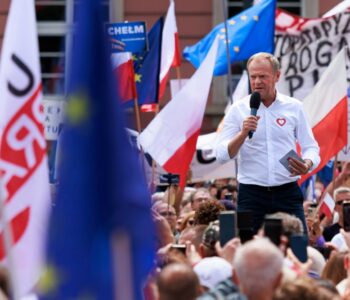
Leader of Civic Platform (PO) and Poland Prime Minister Donald Tusk speaks during a rally on the 'Nowy Targ' square in Wroclaw, Poland, 24 June 2023. EPA-EFE/Tomasz Golla Library

Poland: International advocacy mission to assess media freedom reforms

Poland: International advocacy mission to assess media freedom reforms

On 16 and 17 September, the Media Freedom Rapid Response (MFRR) partners will conduct an international mission to assess the on-going reforms in the media and press freedom in Poland. 

The current mission builds on the 2023 mission by the MFRR ahead of the parliamentary elections, which produced a sobering report highlighting  the media’s economic struggle amid a polarised media landscape, loss of editorial independence by public service media, and frequent use of vexatious lawsuits by the public figures against critical journalists. 


The 2024 mission will be led by the European Centre for Press and Media Freedom and co-led by the International Press Institute. The mission will also see the participation of other MFRR representatives: the European Federation of Journalists, Free Press Unlimited, and ARTICLE 19 Europe. 


The 2024 mission will focus on reforms of the public service broadcasters, draft media legislation, editorial independence, economic sustainability, and media pluralism . It will also examine the government’s preparations to implement the EU’s European Media Freedom Act and Anti-SLAPP Directive.


The MFRR’s interlocutors will include a broad group of media experts and journalists, relevant authorities, and legislators. 


The findings and conclusions will be spelt out in a report, assessing the pace of media reform in Poland and implementation of the EMFA, as well as measures countering SLAPPs. It will include a set of recommendations for decision-makers on upholding media freedom in line with European and international freedom of expression standards. The MFRR team will meet the media to discuss the findings on 17 September at 12 pm at the Pracownia Duży Pokój, 4/6 Warecka Street, 00-040 Warsaw.


For inquiries, please contact Olena Cherniavska, Advocacy Officer/ECPMF: at olena.cherniavska@ecpmf.eu  or +4915164840621 & Katia Mierzejewska, Comms and Media Officer/ARTICLE 19 Europe, at Katia.Mierzejewska@article19.org or on +31620466634

MFRR 3 consortium logos
Croatia press freedom mission Library

Croatia: International fact-finding mission to assess status of press…

Croatia: International fact-finding mission to assess status of press freedom

The Media Freedom Rapid Response (MFRR) partners will conduct an international mission to assess the current state of press freedom and safety of journalists in Croatia. The mission will take place online between 9 and 20 September 2024.

The mission follows the assessment of the persistence of attacks against journalists and fact-checkers in Croatia, as well as the growing challenges related to transparency of media ownership and legal threats against journalists. 


Since January this year, the MFRR recorded 11 alerts involving 2 journalists and nine entities related to the media. The majority of attacks are verbal abuse, with half instigated by high officials, and online threats, including smears and legal incidents. Recently, the MFRR reported an unprecedented physical attack, which is uncommon in Croatia. Further, according to a recent survey conducted by the Croatian Journalists’ Association (Hrvatsko novinarsko društvo – HND) with 21 media outlets in Croatia, at least 752 lawsuits against the media and journalists are currently active, some of which may be categorised as SLAPPs. 


The MFRR mission will be led by ARTICLE 19 Europe and co-led by the European Federation of Journalists, in partnership with HND. The mission will also see the participation of MFRR representatives: the European Centre for Press and Media Freedom, the International Press Institute, Free Press Unlimited and Osservatorio Balcani Caucaso Transeuropa. 


The mission will focus on assessing attacks and legal threats against journalists, new media law plans, the implementation of the EMFA and Anti-SLAPP instruments, and media ownership transparency. It will also address recent Criminal Code amendments that risk undermining journalists’ ability to report on public interest issues, and the need to fully decriminalise defamation to comply with international freedom of expression standards.


These topics will be discussed with a wide group of interlocutors in Croatia, ranging from journalists, media houses, civil society organisations, lawyers and media experts, government officials and regional bodies.


The findings and conclusions will be used to develop a report outlining the current state of press freedom in Croatia, as well as the status of existing initiatives aimed at improving journalists’ safety. It will include a set of recommendations for decision-makers on upholding media freedom in line with European and international freedom of expression standards. 


For inquiries, please contact Roberta Taveri, Senior Programme Officer for Media Freedom and Europe at ARTICLE 19 Europe: roberta.taveri@article19.org 

Signed by:

  •  ARTICLE 19 Europe
  • The European Federation of Journalists (EFJ)
  • International Press Institute (IPI)
  • OBC Transeuropa (OBCT)
  • The European Centre for Press and Media Freedom (ECPMF)

This statement was coordinated by the Media Freedom Rapid Response (MFRR), a Europe-wide mechanism which tracks, monitors and responds to violations of press and media freedom in EU Member States and candidate countries. 

Library

Mission Report – Silencing the Fourth Estate: Italy’s Democratic…

Mission Report: Silencing the Fourth Estate: Italy’s democratic drift

Media freedom in Italy is under threat, with rising political interference and legal harassment of journalists. Ahead of the 2024 EU elections, the Media Freedom Rapid Response (MFRR) conducted an urgent mission to Rome to dive deeper into these issues. Join us on July 29, 2024, for a webinar where we will share our findings and discuss solutions to safeguard Italy’s media freedom.


Available in Italian here

Media freedom in Italy has been steadily declining in recent years, marked by unprecedented attacks and violations often initiated by public officials in the attempt to silence critical voices. Political interference in public media and the systematic use of legal intimidation against journalists by political actors have long defined the media-politics relationship in Italy. However, these dynamics have reached alarming levels over the past two years.


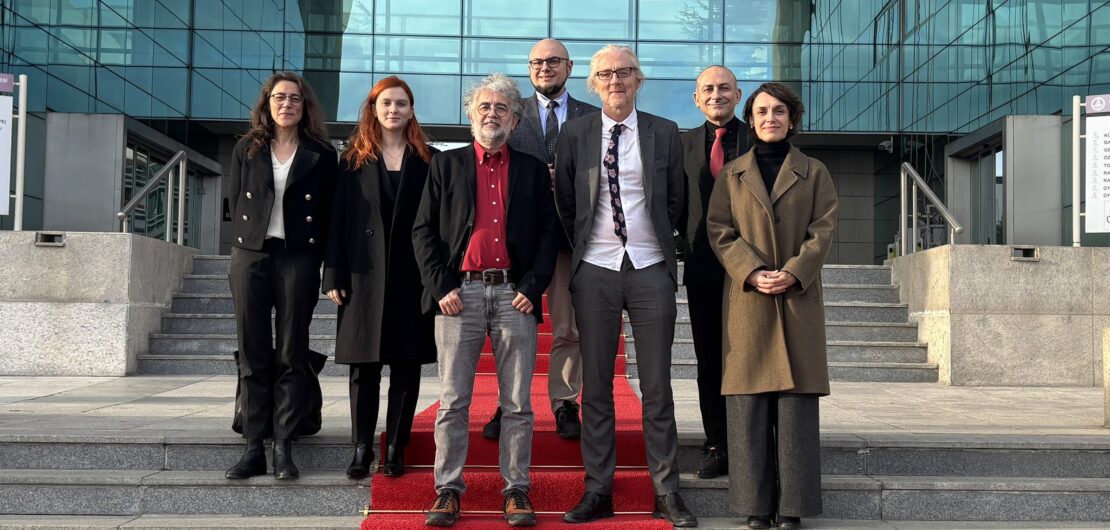
In the lead-up to the 2024 EU elections, amidst a rapidly deteriorating context, the partner organisations of the Media Freedom Rapid Response (MFRR) conducted an urgent mission to Rome, Italy, on May 16-17, 2024. The mission aimed to engage with state representatives, institutions, and political parties on three critical issues: political interference in public media, legal harassment of dissenting journalists, and the potential acquisition of AGI, one of the country’s main news agencies.


This report presents the findings from the mission and MFRR’s ongoing monitoring, offering a comprehensive analysis of the three most urgent issues identified. It evaluates the impact of various measures and bills introduced by Italian decision makers,  in light of the latest EU provisions aimed at ensuring the independence of public media, countering market concentration, addressing conflicts of interest, and equipping the judiciary to handle vexatious lawsuits. The report also provides detailed recommendations for Italian institutional and governmental actors, outlining necessary steps to counter the decline in media freedom and  much needed reforms.

Silenziare il Quarto Potere: La deriva democratica dell’Italia

Negli ultimi anni, in Italia si è assistito ad un costante declino dell libertà dei media, segnato da attacchi e violazioni senza precedenti, spesso iniziati da rappresentanti pubblici nel tentativo di mettere a tacere voci critiche. L’interferenza politica nei media pubblici e l’uso sistematico di intimidazioni legali contro i giornalisti da parte degli attori politici da tempo degfinisco il rapporto tra media e politica in Italia. Tuttavia, negli ultimi due anni queste dinamiche hanno raggiunto livelli allarmanti.

In vista delle elezioni europee del 2024, in un contesto in rapido deterioramento, le organizzazioni partner del Media Freedom Rapid Response (MFRR) hanno condotto una missione urgente a Roma, il 16-17 maggio 2024. La missione di advocacy aveva l’obiettivo di confrontarsi con rappresentanti istituzionali e politici su tre questioni critiche: l’interferenza politica nei media pubblici, le intimidazioni legali nei confronti dei giornalisti critici e la potenziale acquisizione dell’AGI, una delle principali agenzie di stampa del Paese.

Questo rapporto presenta i risultati della missione e del monitoraggio continuo del consorzip MFRR, offrendo un’analisi completa delle tre questioni più urgenti individuate. Valuta l’impatto di diverse misure e proposte di legge introdotte dai decisori italiani, alla luce delle più recenti disposizioni dell’UE volte a garantire l’indipendenza dei media pubblici, a contrastare la concentrazione del mercato, ad affrontare i conflitti di interesse e ad attrezzare la magistratura per gestire le cause vessatorie. Il rapporto fornisce inoltre raccomandazioni dettagliate per gli attori istituzionali e governativi italiani, delineando i passi necessari per contrastare il declino della libertà dei media e le riforme necessarie.

Il report è al momento disponibile in lingua inglese. La versione in italiano sarà disponibile a partire dall’inizio di settembre.

This mission report was coordinated as part of the Media Freedom Rapid Response (MFRR), a Europe-wide mechanism which tracks, monitors and responds to violations of press and media freedom in EU Member States and candidate countries. The MFRR is co-funded by the European Commission.

Event

Silencing the Fourth Estate: Italy’s democratic drift

Silencing the Fourth Estate:

Italy’s Democratic Drift

29 July, 14:00 CET.

On July 29, Osservatorio Balcani Caucaso Transeuropa (OBCT), the European Federation of Journalists (EFJ), and the European Centre for Press and Media Freedom (ECPMF) will host a webinar to mark the publication of the final report following the MFRR mission to Rome. 


Amid unprecedented political interference in public media, widespread use of legal intimidation against dissenting journalists by government officials, a problematic defamation reform put forward by the ruling coalition, and the potential acquisition of AGI by one of Lega’s MPs, the MFRR organised an urgent mission to Italy on May 16 and 17, 2024


Relying on the findings from meetings held during the mission and MFRR’s ongoing monitoring of the situation in the country, the report assesses the deterioration of media freedom in Italy. These challenges, indicative of a tense relationship between media and political actors, undermine independent and critical journalism, generating worrying implications for Italian democracy. The mission observed that the chilling effect resulting from the contraction of freedom of expression and the governments’ attempts to silence the press signal a worrying democratic decline in Italy’s media freedom landscape.


Last May’s MFRR mission to Italy was led by the Osservatorio Balcani e Caucaso Transeuropa (OBCT) and the European Federation of Journalists (EFJ). The mission report was prepared by MFRR partner organisations: ARTICLE 19 Europe; European Centre for Press and Media Freedom (ECPMF); European Federation of Journalists (EFJ); International Press Institute (IPI); Osservatorio Balcani e Caucaso Transeuropa (OBCT). 


The report will be published  in English on July 29, with a translated Italian version to follow in the first week of September.

Moderator

Renate

Renate Schroeder

Director of European Federation of Journalists (EFJ)

Speakers

Alessandra Mancuso

Member of Usigrai

Francesca de Benedetti

Journalist at Domani

Davide Sarsini

Journalist at AGI

Final remarks

Serena Epis

Researcher at Osservatorio Balcani Caucaso Transeuropa (OBCT)

Library

Romania: Super election year calls for press freedom assessment

Romania: Super election year calls for press freedom assessment

29 May 2024


A coalition of media freedom organisations will conduct a mission to Bucharest on 17-18 June 2024 to assess key challenges amid Romania’s super election year. The mission will address political influence on media, legal threats to journalists’ work and their safety, culminating in a conversation with the press.

Romanian translation here.

In Romania, European and local elections in early June will be followed by presidential and parliamentary elections in September and December respectively. In the midst of this super election year, the Media Freedom Rapid Response (MFRR) consortium will undertake a mission to Bucharest on 17-18 June 2024.


The mission will be jointly organised by the International Press Institute (IPI) and the Osservatorio Balcani Caucaso Transeuropa (OBCT), and will be joined by partners from the European Centre for Press and Media Freedom (ECPMF), the European Federation of Journalists (EFJ), and Free Press Unlimited (FPU).


Following its online fact-finding phase involving meetings with media and civil society stakeholders, during the upcoming in-person mission, the MFRR delegation aims to meet with state authorities. The group will discuss with institutional stakeholders developments regarding a set of critical issues, highlighted in the consortium’s recent report on Romania’s media landscape.


First findings: A politically influenced, unsafe media environment

The MFRR consortium has identified the following key issues to tackle:

  • Media capture: The MFRR analysis identified severe political influence over Romanian media. Primarily, an opaque allocation of “media and propaganda” funds from state budgets to political parties foster a compliant and clientelist media environment. Additionally, the consortium noted with concern that the National Audiovisual Council, tasked with regulating media, is under-resourced and lacks political independence.
  • Legal threats: Journalists in Romania face an increasing number of vexatious lawsuits (Strategic Lawsuits Against Public Participation, known as SLAPPs), designed to intimidate and silence voices of dissent. Aside from draining the media’s resources, the MFRR warns about their chilling effect on journalistic freedom.
  • Safety concerns: The consortium has been monitoring a number of prominent cases of physical attacks, online harassment and smear campaigns targeting investigative journalists. Notable cases, such as that of investigative journalist Emilia Șercan, underscore the severity of these threats.

These topics are linked to key pieces of legislation that the European Union has recently adopted. The European Media Freedom Act aims to safeguard media independence and pluralism by tackling media capture, while the Anti-SLAPP Directive provides increased protections for journalists against vexatious lawsuits. Additionally, the European Commission adopted the Recommendation on the protection, safety and empowerment of journalists in September 2021. Two years later, the Council of Europe also launched the five-year Journalists Matter campaign, aiming to promote best practices among government and media stakeholders for improved journalist safety.


Our goals: Assess and address

Particularly during elections, journalists face intense political pressure and scrutiny for potential bias. Furthermore, an overall lack of public confidence is perhaps the biggest challenge Romanian media have to face. Yet, their role as public watchdogs is crucial for a fair electoral process. For this reason, the primary objectives of the upcoming MFRR mission are to:

  • Evaluate the impact of political interference and media capture on journalistic independence, including an evaluation of the effectiveness and independence of media regulatory bodies.
  • Investigate the prevalence and impact of SLAPPs and other forms of legal threats on Romanian journalists.
  • Address the safety and protection concerns of journalists facing threats and harassment.
  • Explore solutions, in dialogue and cooperation with relevant authorities, to support and sustain independent and local journalism in Romania.


Engagement and advocacy

The MFRR delegation will organise a conversation with the press on June 18, 2024, at 2PM in Bucharest, to present its initial observations and recommendations. An additional press release will be produced shortly after, in order to further detail the mission’s findings.


Press registration and contacts

Registration for the press event is open until June 17 at 12.00PM. To join the conversation, please fill out the registration form. To request a meeting with the delegation at a different time, and for more information about the mission, please contact us (stating your full name and media):

Beatrice Chioccioli

Advocacy Officer Europe
International Press Institute (IPI)
bchioccioli@ipi.media

+43 681 103 433 67


Sielke Beata Kelner, PhD

Researcher & Advocacy Officer

OBC Transeuropa (OBCT)

kelner@balcanicaucaso.org

This mission is part of the Media Freedom Rapid Response (MFRR), a Europe-wide mechanism tracking, monitoring, and responding to violations of press and media freedom in EU Member States and candidate countries. The project is co-funded by the European Commission.

România: Anul super electoral impune o evaluare a libertății presei

Misiunea viitoare a consorțiului european pentru libertatea presei va evalua principalele provocări ale presei din România.

O coaliție de organizații pentru libertatea presei va efectua o misiune la București în perioada 17-18 iunie 2024 pentru a evalua principalele provocări în contextul anului super electoral din România. Misiunea va aborda influența politică asupra mass-mediei, amenințările legale la adresa activității jurnaliștilor și a siguranței acestora. O conversație cu presa va încheia activitățile coaliției.


În România, alegerile europene și locale de la începutul lunii iunie vor fi urmate de alegeri prezidențiale și parlamentare în septembrie și, respectiv, decembrie. În mijlocul acestui an super electoral, consorțiul Media Freedom Rapid Response (MFRR) va întreprinde o misiune la București în perioada 17-18 iunie 2024. 


Misiunea va fi organizată în comun de către International Press Institute (IPI) și Osservatorio Balcani Caucaso Transeuropa (OBCT), și va fi însoțită de parteneri de la European Centre for Press and Media Freedom (ECPMF), European Federation of Journalists (EFJ) și Free Press Unlimited (FPU).


Misiunea delegației MFRR – precedată de o documentare online, care a inclus întâlniri cu mass-media și cu parteneri din societatea civilă – urmărește acum să se întâlnească cu autoritățile statului.. Grupul va discuta cu părțile interesate un set de aspecte critice, evidențiate în raportul recent al consorțiului privind peisajul mediatic din România.


Primele constatări: Un mediu mediatic incert și influențat politic

Consorțiul MFRR a identificat următoarele aspecte cheie care vor fi abordate pe parcursul misiunii :

  • Mass-media capturată politic: Analiza MFRR a identificat o influență politică severă asupra mass-mediei românești. În primul rând, o alocare opacă a fondurilor pentru „presă și propagandă” de la bugetul de stat către partidele politice favorizează un mediu jurnalistic conformist și clientelar. Mai mult, consorțiul a observat cu îngrijorare că Consiliul Național al Audiovizualului, care are sarcina de a reglementa mass-media, este lipsit de resurse și de independență politică.
  • Amenințări juridice: Jurnaliștii din România se confruntă cu un număr din ce în ce mai mare de procese vexatorii (procese strategice împotriva participării publice, cunoscute sub numele de SLAPP), menite să intimideze și să reducă la tăcere vocile disidente. Pe lângă faptul că astfel de procese epuizează resursele organizațiilor de presă, MFRR avertizează asupra efectului lor descurajator asupra libertății jurnalistice.
  • Preocupări legate de siguranță: Consorțiul a monitorizat o serie de cazuri proeminente de atacuri fizice, hărțuire online și campanii de defăimare care au vizat jurnaliștii de investigație. Cazuri notabile, precum cel al jurnalistei de investigație Emilia Șercan, subliniază gravitatea acestor amenințări.


Aceste subiecte sunt legate de acte legislative cheie pe care Uniunea Europeană le-a adoptat recent. Legea europeană privind libertatea mass-mediei are ca scop protejarea independenței și pluralismului presei prin abordarea capturării mass-media, în timp ce Directiva anti SLAPP oferă o protecție sporită pentru jurnaliști împotriva proceselor vexatorii. 


În septembrie 2021, Comisia Europeană a adoptat o Recomandare privind protecția, siguranța și capacitarea jurnaliștilor. Doi ani mai târziu, Consiliul Europei a lansat, de asemenea, campania de cinci ani Journalists Matter, care vizează promovarea celor mai bune practici în rândul guvernelor și al părților interesate din domeniul mass-media pentru îmbunătățirea siguranței jurnaliștilor.


Obiectivele noastre: Să evaluăm și să răspundem la probleme

În special în timpul alegerilor, jurnaliștii se confruntă cu o presiune politică intensă și cu o examinare amănunțită a imparțialității presei. Mai mult, lipsa generală de încredere a publicului este poate cea mai mare provocare cu care se confruntă mass-media din România. Cu toate acestea, rolul lor de avertizori publici este esențial pentru un proces electoral corect. Din acest motiv, obiectivele principale ale viitoarei misiuni MFRR sunt următoarele:

  • Să evalueze impactul interferențelor politice și al capturii mediatice asupra independenței jurnalistice, inclusiv să evalueze eficiența și independența organismelor de reglementare a mass-media.
  • Să investigheze prevalența și impactul SLAPPs și a altor forme de amenințări legale asupra jurnaliștilor români.
  • Să abordeze preocupările legate de siguranța și protecția jurnaliștilor, care se confruntă cu amenințări și hărțuiri.
  • Să exploreze soluții, în dialog și cooperare cu autoritățile relevante, pentru a sprijini și susține jurnalismul independent din România.


Implicare și advocacy

Delegația MFRR va organiza o dezbatere cu presa pe 18 iunie 2024, la ora 14:00, la București, pentru a prezenta observațiile și recomandările sale inițiale. Un comunicat de presă va fi publicat la scurt timp după aceea, pentru a detalia în continuare concluziile misiunii.


Informații pentru presă 

Înregistrarea la evenimentul de presă este deschisă până la 17 iunie, ora 24.00. Pentru a participa la dezbatere, vă rugăm să completați formularul de înregistrare.


Pentru a solicita o întâlnire cu delegația la o altă oră și pentru mai multe informații despre misiune, vă rugăm să ne contactați (menționând numele și prenumele dvs. și numele instituției mass-media pe care o reprezentați): 


Beatrice Chioccioli

Ofițer de advocacy pentru Europa

International Press Institute (IPI)

bchioccioli@ipi.media 

+43 681 103 433 67


Sielke Beata Kelner, PhD

Cercetător și ofițer de advocacy

OBC Transeuropa (OBCT)

kelner@balcanicaucaso.org 

Această misiune este parte a MFRR (Media Freedom Rapid Response), un mecanism la nivel european de urmărire, monitorizare și răspuns la încălcările libertății presei și a mass-media în statele membre ale UE și în țările candidate. Proiectul este cofinanțat de Comisia Europeană.