Library

Bulgaria: Media Capture Monitoring Report 2025

Bulgaria: Media Capture Monitoring Report 2025

The International Press Institute (IPI) and the Media and Journalism Research Center (MJRC) today launch the second in a series of Media Capture Monitoring Reports for 2025, examining the state of play in Bulgaria.

14.11.2025

The report reviews developments regarding media capture in the country in 2025 and examines Bulgaria’s compliance with the European Media Freedom Act (EMFA) since the EU Commission’s regulation entered into full force in August.

It concludes that Bulgaria has made no tangible progress since EMFA came into force. Although a cross-ministerial and institutional working group was previously established and made some initial progress, its suspension stalled much needed reforms. While the Ministry of Culture has said a new working group has been formed to implement EMFA reforms to the Radio and Television Act, no information has been provided about plans for wider implementation of any other Articles of EMFA and the timeline for additional reforms remains unclear.


The report provides detailed recommendations on a variety of measures and policies necessary to address media capture in Bulgaria and create a free, pluralistic and democratic media ecosystem, in line with EMFA provisions.

This report is part of a broader series covering seven other EU countries: Finland, Greece, Hungary, Poland, Romania, Slovakia and Spain. IPI and MJRC will also publish an overview report, summarising major developments across the EU in the past year. The next reports will be published over the following weeks.

These reports are intended as a vital resource for media rights organizations, civil society groups, policymakers, and advocates dedicated to monitoring and fostering media freedom across the EU.

EXPLORE THE METHODOLOGY

For more information or media inquiries, please contact:

This report was coordinated by IPI as part of the Media Freedom Rapid Response (MFRR), a Europe-wide mechanism which tracks, monitors and responds to violations of press and media freedom in EU Member States and Candidate Countries.

Allgemein

Report: Fragile media freedom progress in Bulgaria at risk…

Report: Fragile media freedom progress in Bulgaria at risk of backsliding without urgent reform

While Bulgaria has experienced modest progress on media freedom in the last four years, the situation remains undermined by persistent structural, legal and political challenges, with urgent action needed by government and public authorities to push forward both domestic and EU-mandated reforms.

29.10.2025

While Bulgaria has experienced modest progress on media freedom in the last four years, the situation remains undermined by persistent structural, legal and political challenges, with urgent action needed by government and public authorities to push forward both domestic and EU-mandated reforms.


These are the key findings of a media freedom report published today following a three-day joint fact-finding mission to the country between 24-26 September by the partner organisations of the Council of Europe’s Safety of Journalists Platform and the Media Freedom Rapid Response (MFRR).


The full report – Bulgaria: Fragile media freedom progress in Bulgaria at risk of backsliding without urgent reform – is available to download.


It provides an executive summary of the key challenges facing media freedom and pluralism in Bulgaria in 2025. Thematic sections explore the safety of journalists, the Council for Electronic Media and the public broadcaster Bulgarian National Television. Additional sections address legal threats, SLAPPs and defamation, media pluralism and independent journalism, and access to information, public trust in media and disinformation.


The report also provides detailed recommendations to national authorities and government on measures that can be taken to improve the climate for media freedom in Bulgaria, as well as general recommendation to the journalistic profession within the country.


The report was produced following the mission, which was joined by ARTICLE 19 Europe; Association of European Journalists (AEJ); European Broadcasting Union (EBU); European Centre for Press and Media Freedom (ECPMF); European Federation of Journalists (EFJ); International Press Institute (IPI); Reporters Without Borders (RSF); Osservatorio Balcani e Caucaso Transeuropa (OBCT) and Index on Censorship. The local partner was the Association of European Journalists Bulgaria.


During the visit to Sofia, the delegation met with a range of professional media stakeholders, including leading journalists and editors from print, online, broadcast and investigative media, as well as media associations and unions, media experts and civil society. Separate meetings were held with the Bulgarian National Radio and the Bulgarian National Television.


Meetings were also held with the President; Ministry of Justice; Ministry of Interior; Council of Electronic Media (CEM); Office of General Prosecutor; Commission for Personal Data Protection; Central Election Commission and representatives of embassies.

Click here for more information about the Council of Europe’s Safety of Journalists Platform.

This mission was coordinated by the Media Freedom Rapid Response (MFRR), a Europe-wide mechanism which tracks, monitors and responds to violations of press and media freedom in EU Member States and Candidate Countries.

Library

Bulgaria wants to criminalise alleged privacy violations

Bulgaria wants to criminalise alleged privacy violations

On 8 October 2025, Bulgaria’s parliamentary Legal Affairs Committee urgently approved, at first reading, amendments to the Criminal Code introduced by the “There Is Such a People” (ITN) party. The draft law proposes prison sentences and fines for the dissemination of information about a person’s “personal life” without their consent. The European Federation of Journalists (EFJ) and its Bulgarian affiliate AEJ-Bulgaria condemn this disproportionate restriction on journalists’ right to cover private matters that are in the public interest. We demand the outright withdrawal of these provisions, which contravene European legal standards.

09.10.2025

The proposal defines “personal life” broadly, covering personal, family, intimate relations or health status, and criminalises their disclosure through any medium, including print and online publications. The penalties foreseen range from one to six years in prison and fines between 2,000 and 8,000 BGN (approximately 1,000 to 4,000 euros). The proposal also allows the use of special surveillance means, such as wiretaps, for investigating such offences, which are typically reserved for serious crimes.


The bill, submitted on 7 October, was approved by the committee the following day with support from members of the governing majority and opposition parties. Representatives of the Prosecutor’s Office and judiciary were not present due to the extraordinary and accelerated scheduling of the session. Only members of a centrist-liberal opposition bloc opposed the proposal, warning that it risks being used to restrict media freedom and could breach the Constitution and the European Convention on Human Rights.


Adela Katchaounova, co-Chair and Legal Programme Director at the Bulgarian Helsinki Committee commented that the proposal is “aimed at restricting journalists’ freedom of expression.”. According to her, its adoption would violate both the Bulgarian Constitution and the European Convention on Human Rights, placing journalists in a situation that “guarantees comfort for those in power or represents the next stage of an authoritarian state.” She reiterated that “the right of people to learn details of someone’s personal, family, intimate relationships, or even health status can outweigh the right to privacy. (…) Public interest can prevail, and this is not because people like gossip, but because someone’s private life affects the entire society. Therefore, the public has the right to know, and journalists have the right to disseminate information about people who are in government, about politicians, about candidates for public office, etc.”.


“We are outraged by the proposed legal amendments which, if adopted, will open the doors for unprecedented censorship,” added Maria Cheresheva, President of AEJ-Bulgaria, an EFJ affiliate in Bulgaria. “No democratic country would send its journalists to prison for doing their fundamental job: revealing information of high public interest about politicians and other powerful figures. We call on all political parties to take a firm stance against this assault on freedom of expression that would brush off all the progress Bulgaria has made in the recent year in decriminalising defamation.”


“We fully support the interpretation of the Helsinki Committee and our Bulgarian affiliates. We consider this freedom-destroying proposal to be an act of betrayal, especially since we have just participated in a mission on press freedom in Bulgaria that showed signs of openness on the part of the Ministers of the Interior and Justice,” said Ricardo Gutiérrez, EFJ General Secretary. “This reform of the criminal code completely reverses our optimistic impression. We call on the European Union to respond firmly to this clear violation of the rule of law by the Bulgarian authorities.”

This statement was coordinated by EFJ as part of the Media Freedom Rapid Response (MFRR), a Europe-wide mechanism which tracks, monitors and responds to violations of press and media freedom in EU Member States and Candidate Countries.

Allgemein

Bulgaria: Press Freedom Undermined by Political Polarisation and Delayed…

Bulgaria: Press Freedom Undermined by Political Polarisation and Delayed Reforms

Media freedom in Bulgaria faces entrenched challenges in a climate of political polarisation and legislative inertia, with urgent action needed by government and public authorities to push forward both domestic and EU-mandated reforms, a coalition of international press freedom organisations said today.

26.09.2025

Following a three-day mission to Sofia between 24-26 September, the delegation concluded that progress is needed to prevent and prosecute attacks on journalists, resolve the ongoing dispute over the leadership of the public broadcaster, guarantee the independence of the Council for Electronic Media (CEM) and pass anti-SLAPP legislation. Despite the important work of key journalist associations, there is a low level of solidarity within the journalistic profession.


The mission, organised by the Council of Europe’s Safety of Journalists Platform and the Media Freedom Rapid Response (MFRR) also found that Bulgaria is lagging behind in implementing the European Media Freedom Act (EMFA), in force since August this year. A government working group has been suspended, with no indication of when discussions involving all relevant authorities and stakeholders will resume.


The mission did not have the opportunity to discuss the issue with the body in charge of media policies, the Ministry of Culture, since it was the only relevant public authority which refused to meet the delegation, despite repeated requests.


Following the mission, the partner organisations jointly call for greater political will and cross-party support to address deepening institutional paralysis and drive forward much needed reforms under the EMFA, which if properly implemented will help safeguard media freedom, pluralism and independence.


Safety of journalists

Though serious physical attacks on reporters and media workers in Bulgaria remain relatively uncommon, some media stakeholders told the mission that general hostility against the journalistic profession had increased in recent years. The mission called on the authorities to promptly investigate several assaults against media workers recorded on the Safety of Journalists Platform and bring those responsible to justice. Political pressures including intimidation and insults against journalists by politicians remain a cause of concern, even though direct political pressures on journalists have lessened compared to previous years.


The Council of Europe’s Platform for the Safety of Journalists currently has 34 active alerts involving attacks on journalists or threats against media freedom. Physical attacks account for one third of the cases, although their number has also dropped compared to previous years. Threats, including death threats, against journalists remain a serious concern but are too rarely sanctioned by authorities.


The mission notes the low levels of trust by journalists in the law enforcement authorities and prosecutors to secure justice in cases of attacks. Previous cases involving attacks on journalists by police have suffered from delayed justice. Certain stakeholders raised ongoing concerns about politicised investigations by prosecutorial authorities against the media. The mission welcomes the support of the Chief Prosecutor’s Office and the President for proposals to monitor and record serious cases and strengthen provisions within the criminal code to introduce higher sanctions for those convicted of attacking journalists.


Council for Electronic Media and public broadcaster

The mission concludes that the ongoing dispute between the Director General of the Bulgarian National Television and the CEM risks undermining public trust in the public broadcaster and the regulator’s appointment process. Two elections by the CEM have failed to reach a majority on appointing a new Director General, with the incumbent continuing in the role three years past his original mandate, as pointed out by the European Commission’s 2025 Rule of Law Report.


A judicial review into the process is ongoing and a new attempt to appoint a Director General is scheduled to take place on 16 October. The mission organisations call for the process to appoint a new Director General of BNT to be conducted in a fair and transparent manner and for parties involved to act in accordance with the law.


The mission also heard criticism from some stakeholders about the editorial independence of BNT, reflecting concerns raised in the EU Rule of Law Report and the Media Pluralism Monitor. It is essential that EMFA-mandated reforms are implemented to strengthen the broadcaster’s editorial independence, which must be also guaranteed by adequate, sustainable and predictable financial resources.


The delegation concludes that reforms are required to both insulate the Council for Electronic Media from political influence and bolster its operational resources. Multiple stakeholders noted perceived political affiliations of certain council members. The mission supports legislative proposals for reforms to strengthen the independence of all future candidates, in line with the provisions of the EMFA.


However, changes to the makeup or election process for the CEM must be conducted under the principles of independence, legality and pluralism. The healthy functioning of the CEM is vital for the effective regulation of the media ecosystem in Bulgaria. The regulator also requires greater operational resources to carry out its expanded mandate. Proposals to merge the CEM with other regulatory bodies risks disrupting its mandate and weakening its regulatory powers.


Legal threats, SLAPPs and defamation

The legal environment in Bulgaria creates persistent risks for journalists. According to journalists the mission met, there are dozens of active Strategic Lawsuits Against Public Participation (SLAPPs) targeted at media and journalists. Investigative journalists and those probing crime and corruption are among the most targeted by SLAPPs, with major businesses and insurance companies, politicians, and judges among the most common plaintiffs. Many of these cases involve extortionate demands for financial compensation.


The mission welcomes the preparations by the Ministry of Justice for the transposition of the 2024 Anti-SLAPP Directive. However, the organisations also express concern that the focus appears to be solely on the implementation of the EU Directive without equal attention to the Council of Europe Recommendation on SLAPPs. A key concern is that criminal defamation remains a legal tool in Bulgaria and politicians missed the opportunity to fully decriminalise defamation during recent criminal code changes.


Recent amendments lowered the minimum fines for insult and defamation and eliminated the automatic aggravated qualification when the person concerned is a civil servant. The reforms also introduced the possibility of waiving criminal liability and replacing it with administrative sanctions in cases concerning insult or defamation of state officials acting in their official capacity. Nevertheless, the continued criminalisation of defamation remains inconsistent with international freedom of expression standards and continues to allow the strategic use of criminal law against the media and journalists.


Legislation, pluralism and media capture

Repeated cycles of elections and the subsequent disruption of government working groups has resulted in delays to reforms that are badly needed to bring about a healthy media ecosystem in Bulgaria. Though initial work was done to prepare for the implementation of the EMFA, which came into full force in August 2025, the mission learnt that the Ministry of Culture has suspended the process.


Implementation of the EMFA is vital for addressing many of the systemic challenges facing media freedom and pluralism in Bulgaria. The mission concluded that the country suffers from some levels of media capture, with the non-transparency of media ownership, particularly anonymous online media, and the non-transparency of state advertising among most acute concerns. At the local and regional level, the economic dependence of media on advertising from local authorities has exposed them to financial pressures and in many cases weakened editorial independence.


Media pluralism in Bulgaria remains limited and independent journalism faces pressures from many sides, including ownership interference, self-censorship, threats to economic viability of watchdog journalism, and lingering concerns over the independence of major television broadcasters. Though Bulgaria has professional investigative journalists probing crime and corruption, they work in a climate of pressure, including death threats, harassment and vexatious lawsuits.


The legislative climate for access to information is inadequate and continues to face challenges, with journalists facing obstructions stemming from a general culture of opacity from state bodies. Requests for interviews with political leaders are routinely rejected and Freedom of Information (FOI) requests are often either ignored or partially answered. Parliamentary reporters continue to face disproportionate limits on their movement within the new parliament building, limiting scrutiny.


The precarious working conditions of many journalists in Bulgaria, including low pay and weak labour protections, pose further challenges for the profession, undermining the ability of media workers to oppose threats to editorial independence in their newsrooms.


Institutional and regulatory dysfunction, problematic media ownership and political influence have combined to weaken public trust in journalism in Bulgaria, with the country ranking among the lowest in Europe for trust in news, and among the highest levels of news avoidance.


This has created a vacuum in which disinformation can more easily spread, particularly on social media. Despite this clear threat, the government has failed to create a national disinformation strategy, with the work of the multi-stakeholder Bulgarian Coalition Against Disinformation remaining frozen since 2023. It is vital that Bulgaria swiftly designate and empower a national Digital Services Coordinator (DSC) and establish rules for penalties under the Digital Services Act (DSA).


Following the mission, the partner organisation call on the European Commission to closely observe the implementation of the EMFA in Bulgaria, provide concrete and measurable recommendations within the Rule of Law Report, deepen conditionality on EU funds, and to use all tools available to ensure compliance with the EMFA, the anti-SLAPP directive and other European standards, such as the Digital Services Act.


Recommendations

The mission outlines the following recommendations to improve the situation for media freedom in Bulgaria. More detailed recommendations will be provided in the full report to follow.


Safety of journalists

  • Government and political authorities should refrain from and condemn all cases of denigration, vilification, intimidation and threats against journalists, including online attacks
  • The Bulgarian government should join the Safety of Journalists Campaign, establish contact points for journalists in law enforcement and ministerial bodies, and improve horizontal collaboration between ministries on the safety of journalists.
  • Review and improve legislation to strengthen the criminal code with stronger sanctions for those convicted of attacking journalists and create a system for specifically recognising and categorising cases of attacks on the press and media workers.
  • The Bulgarian government should encourage the establishment of, and support the operation of, early-warning and rapid-response mechanisms, such as hotlines, online platforms or 24-hour emergency contact points, by journalists’ organisations or civil society, to ensure that journalists and other media actors have immediate access to protective measures when they are threatened.


CEM and public broadcasters

  • The process by CEM to appoint a new Director General of BNT must be conducted in a fair and transparent manner and all parties involved must act in accordance with the law.
  • The government should implement reforms in line with the EMFA which strengthen the safeguards for editorial and institutional independence of BNT and BNR while also guaranteeing adequate, sustainable and predictable financial resources to both broadcasters.
  • The government should implement reforms in line with the EMFA which insulate the Council for Electronic Media from political influence and interference and strengthen its functional independence, while also providing it with sufficient resources for operational stability.


Strategic Lawsuits Against Public Participation (SLAPPs)

  • The Ministry of Justice should transpose and implement both the EU Directive and the Council of Europe (CoE) Recommendation against SLAPPs, to ensure that both cross-border and domestic SLAPPs are effectively addressed.
  • The government should ensure that the indicators for identifying SLAPPs, as foreseen in the CoE Recommendation, are incorporated into national law to assist judges in recognizing such cases. During the drafting process, the Ministry of Justice should make use of the expertise available from the CoE.
  • Authorities should continue to train judges, prosecutors, lawyers, and police officers on European standards related to media freedom, including defamation, SLAPPs, hate speech, access to information, and the protection of whistleblowers and journalistic sources. This is essential to ensure that court rulings and practices align with the standards of the European Court of Human Rights.
  • The government and the parliament of Bulgaria should fully decriminalise defamation.


Media legislation and EMFA

  • The government should swiftly implement and align domestic legislation with the European Media Freedom Act under a transparent and inclusive process.
  • In addition to reforms to the public service media and media regulators outlined above, the government should implement reforms mandated under the EMFA which require the establishment of a media ownership registry, which must be transparent, functional, up-to-date and easily accessible for journalists and citizens.
  • The government should implement reforms outlined in the EMFA for fair and transparent distribution of public funds and state advertising to the media. Only media companies which have registered in the ownership database and provided up-to-date information about their direct and beneficial ownership should be eligible to receive state advertising.
  • In addition, the government should consider establishing conditions that only media outlets which abide by the Ethical Code of Journalists should be eligible for receiving state advertising, as a means of defunding disinformation.
  • The government should swiftly designate and empower a national Digital Services Coordinator (DSC) and establish rules for penalties under the Digital Services Act (DSA).
  • Media professionals should unite with journalistic associations and other bodies to strengthen solidarity and cooperation within the journalistic profession.


More detailed recommendations will follow in the full report from the mission.
The mission to Sofia was coordinated as part of the Council of Europe’s Safety of Journalists Platform and the Media Freedom Rapid Response (MFRR). The delegation was composed of representatives from ARTICLE 19, Association of European Journalists (AEJ), European Centre for Press and Media Freedom (ECPMF), European Broadcasting Union (EBU), European Federation of Journalists (EFJ), Index on Censorship, International Press Institute (IPI), Reporters Without Borders (RSF) and the Osservatorio Balcani e Caucaso Transeuropa (OBCT).

The delegation met with a range of stakeholders, including leading journalists and editors from print, online and investigative media, as well as media associations and unions, media experts and civil society. Separate meetings were held with the Bulgarian National Radio and the Bulgarian National Television. Meetings were also held with the Bulgarian President; Ministry of Justice; Ministry of Interior; Council of Electronic Media (CEM); Office of General Prosecutor; Commission for Personal Data Protection; Central Election Commission and representatives of embassies.

The mission held a press conference on 26 September in Sofia. A full report is due to be published after the mission and will be shared with all domestic political stakeholders, the Council of Europe, the European Union and international organisations.

Library

Bulgaria: Mission to examine media freedom and independent journalism

Bulgaria: Mission to examine media freedom and independent journalism

Between 24-25 September, the International Press Institute (IPI) will join a coalition of international media freedom and journalist organisations travelling to Bulgaria to conduct a press freedom mission on behalf of the Council of Europe’s Safety of Journalists Platform and the Media Freedom Rapid Response (MFRR).

24.09.2025

The delegation will conduct a series of meetings over two days in the capital Sofia with stakeholders including the Bulgarian President; Ministry of Justice; Ministry of Interior; Council of Electronic Media (CEM); Office of General Prosecutor; Commission for Personal Data Protection; Central Election Commission and representatives from embassies.


Representatives of the participating organisations will also meet with leading journalists and editors from a range of different media organisations in Bulgaria, as well as media associations and unions, media experts, members of civil society organisations and academics. Separate meetings are planned with the Bulgarian National Radio and the Bulgarian National Television.


The aim is to take the pulse of media freedom in the country, examining issues including the safety of journalists, media regulation, public broadcasting, media pluralism, defamation and SLAPPs, media ownership and the reform process required under the European Media Freedom Act (EMFA).


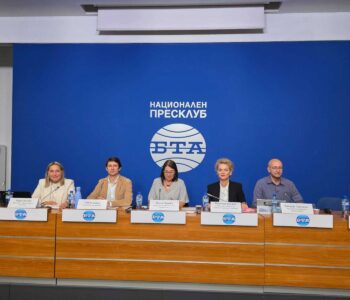
A press briefing to share the initial findings of the mission and present recommendations to safeguard media freedom in Bulgaria will be held from 09.30-11.00 on 26 September at National Press Club of the Bulgarian Press Agency (49 “Tsarigradsko shose” blvd). The event is open to all media and translation services will be provided.


Participants include ARTICLE 19, Association of European Journalists (AEJ), European Centre for Press and Media Freedom (ECPMF), European Broadcasting Union (EBU), European Federation of Journalists (EFJ), Index on Censorship, International Press Institute (IPI), Reporters Without Borders (RSF) and the Osservatorio Balcani e Caucaso Transeuropa (OBCT).


This mission is being organised with support of the Media Freedom Rapid Response (MFRR), a Europe-wide mechanism which tracks, monitors and responds to violations of press and media freedom in EU Member States and Candidate Countries.

Bulgaria Library

Press freedom organizations condemn attacks on journalists during Bulgaria’s…

Press freedom organizations condemn attacks on journalists during Bulgaria’s parliamentary elections 

The undersigned press freedom, freedom of expression and journalists’ organizations strongly condemn the four cases of violence and intimidation against Bulgarian journalists covering the parliamentary elections held on October 27. We demand a thorough and impartial investigation into each incident so that those responsible for the attacks are held accountable, and urge the authorities to ensure a safe environment for journalists. Additionally, we call on all parties to take disciplinary action against any of their members involved in endangering the safety of journalists and media workers.

The MFRR documented four cases of attacks on journalists and camera operators on election day. These incidents included threats and intimidation, obstruction of journalistic activity, and physical violence resulting in injuries.


Among the incidents was an attack on bTV, one of Bulgaria’s largest TV channels, while it covered events at a polling station. Camera operator Petar Kartulev was repeatedly hit by two men, sustaining minor injuries. The perpetrators, who were later detained by the police, were identified as registered supporters of the DPS-New Beginning coalition.


Other cases included the intimidation and barring of Free Europe reporter Damiana Veleva from a polling station, threats and insults directed at BNR correspondent Zdravka Maslyankova, and threats made against journalist Diyana Zhelyazkova by the mayor Ismail Ibryam of Nikola Kozlevo.


It is deeply concerning that members of the press face threats not only from party supporters but also from individuals in positions of authority. We once again urge the authorities in Bulgaria to fulfill their obligation to safeguard the rights and freedoms of all journalists and media workers, and uphold press freedom. 

Signed by:

  • International Press Institute (IPI) 
  • Free Press Unlimited (FPU)
  • European Centre for Press and Media Freedom (ECPMF)
  • European Federation of Journalists (EFJ)
  • OBC Transeuropa (OBCT)

This statement was coordinated by the Media Freedom Rapid Response (MFRR), a Europe-wide mechanism which tracks, monitors and responds to violations of press and media freedom in EU Member States, Candidate Countries and Ukraine.

Library

Bulgaria Minister urged to drop defamation lawsuit

Bulgaria Minister urged to drop defamation lawsuit

The Media Freedom Rapid Response consortium partners criticise the criminal defamation lawsuit filed by Interior Minister Kalin Stoyanov against investigative journalists Atanas Chobanov and Dimitar Stoyanov of the Bureau for Investigative Reporting and Data (BIRD). The undersigned organisations believe that the lawsuit is designed to silence legitimate investigative reporting and should be immediately withdrawn.

The legal action stems from the journalists’ reporting on a property deal which allegedly connected the current Minister of Interior to Martin Bozhanov, an individual known as ‘the Notary’, who was murdered earlier this year following extensive allegations of corruption against him. Kalin Stoyanov has denied the connection.


The Minister is seeking 65.000 Bulgarian lev (33.300 euros) in damages, claiming that the reporting crossed the boundaries of freedom of speech and harmed his dignity and authority.


Why legal action against BIRD threatens investigative journalism

The Association of European Journalists – Bulgaria (AEJ) “is convinced that the lawsuit bears the characteristics of a SLAPP”. This comes amid a worrying trend of using vexatious lawsuits, often known as Strategic Litigation Against Public Participation (SLAPPs), to suppress investigative journalism in Bulgaria and elsewhere.


The undersigned organisations believe that Minister Stoyanov’s lawsuit is an attempt to restrict legitimate media scrutiny and the public’s right to information. It also threatens to obstruct efforts to combat corruption in Bulgaria and ensure transparency within government institutions.


The MFRR consortium emphasises that in a democracy, public officials must expect greater levels of scrutiny, a principle reinforced by judgments of the European Court of Human Rights (ECtHR).


Moreover, Minister Stoyanov’s objection to the use of anonymous sources by BIRD in his claim disregards the essential need to safeguard informants’ anonymity, especially in cases involving risks to their safety. No pressure should be placed on the journalists to expose their sources, whose protection is also guaranteed by the case law of the ECtHR.


Calling for lawsuit’s withdrawal and legislative reform

The undersigned organisations demand the withdrawal of charges against BIRD journalists.


Additionally, we call on the government to accelerate legislative reform to protect journalists against all kinds of vexatious lawsuits. This should include providing for early dismissal of evidently vexatious lawsuits, the provision of costs and other compensation to the victims of SLAPPs. In particular, we urge the government to use the transposition of the European Union’s new Anti-SLAPP Directive as an opportunity to ensure the new protections apply to domestic cases as well as cross-border cases.


We express full solidarity with BIRD and reiterate our commitment to defending press freedom in Bulgaria. We will continue to raise awareness and uphold the integrity of journalism in the country.

Signed by:

  • International Press Institute (IPI)
  • European Centre for Press and Media Freedom (ECPMF)
  • European Federation of Journalists (EFJ)
  • Free Press Unlimited
  • OBC Transeuropa (OBCT)

This statement was coordinated by the Media Freedom Rapid Response (MFRR), a Europe-wide mechanism which tracks, monitors and responds to violations of press and media freedom in EU Member States and candidate countries. 

MFRR 3 consortium logos
Event

Webinar – Assessing the quiet press freedom gains in…

Assessing the quiet press freedom gains in Bulgaria

31 October, 11:00 CEST.

In the last two years, Bulgaria has undergone a subtle yet steady period of improvement in press freedom. Long ranked among the worst countries in the EU for media freedom, the Eastern European country is finally now experiencing an upward trajectory after years of stagnation. After the formation of a coalition government following a protracted political crisis, there is cautious hope amongst the journalistic community that this positive momentum can now be consolidated. However, engrained challenges regarding media ownership, lawsuits and the safety of journalists continue, and recent gains are fragile.


In this webinar organised by the Media Freedom Rapid Response (MFRR), we’ll hear from a leading newspaper editor, a media expert and press freedom advocate, and one of the country’s top media lawyers about the major developments in the last year, to ask about the conditions behind the subtle improvements in the press freedom environment and examine the many outstanding challenges that remain. The MFRR webinar will also look at the impact that the EU Commission’s planned European Media Freedom Act (EMFA) could have in Bulgaria and review the push to legislate against SLAPPs.

Moderator

Jamie Wiseman

Advocacy Officer at International Press Institute (IPI)

Speakers

Antoinette Nikolov

Director of Balkan Free Media Initiative, former journalist at bTV

Alexander Kashumov

Leading media lawyer

Velislava Popova

Editor-in-chief of Dnevnik

Library

Bulgaria: Investigative journalists hit by smears and lawsuits after…

Bulgaria: Investigative journalists hit by smears and lawsuits after corruption revelations

Ahead of World Press Freedom Day on May 3, the undersigned partners of the Media Freedom Rapid Response (MFRR) today raise the alarm about a latest wave of legal pressure exerted against two of Bulgaria’s leading investigative media platforms, BIRD.bg and Bivol.bg, over their recent revelations about alleged crime and corruption.

In recent weeks, journalists from both media have faced attacks and pressure on multiple fronts: a barrage of vexatious defamation lawsuits filed by the associate of a suspected organised crime boss, the deliberate revelation of journalistic source by the Sofia prosecutor’s office, and a discreditation campaign by Bulgaria’s Attorney General Ivan Geshev.


The pressure stems from multiple articles, published separately by the two platforms throughout 2022 and 2023, involving alleged corruption at the border between Bulgaria, Turkey and Greece involving food imports, and separate reports about the alleged bribery of police in the cover-up of a high-profile murder.


Both media’s investigations centre on suspected organised crime boss Christophoros Amanatidis, who allegedly monopolized control over the food imports and truck parking at the EU’s biggest external border crossing, depriving the Bulgarian state of tax revenue. An additional article revealed how Amanatidis also allegedly bribed police to cover up the murder of wanted crypto fraudster Ruja Ignatova in November 2018.


In response, an associate of Amanatidis, Razmig Chakaryan, filed two lawsuits against BIRD journalist Dimitar Stoyanov and three against BIRD editor-in-chief Atanas Tchobanov. A sixth lawsuit was filed against Nikolay Marchenko from Bivol.bg. All six lawsuits are understood to have been filed at the Sofia District Court and each demanded BGN 10,000 (5,130 euros) for alleged defamation and “moral damage”. All lawsuits were brought against the individual journalists, rather than their media outlets.


These lawsuits against BIRD and Bivol are the latest in a wave of SLAPPs targeting watchdog journalism in recent years. BIRD and its journalists are currently facing 10 lawsuits, while Bivol and its reporters are facing four. Both media are partners of the Organized Crime and Corruption Reporting Project (OCCRP).


In a further development, on 7 April 2023 the Sofia City Prosecutor’s Office published a transcript and screenshots of private chat conversations between Stoyanov and one of his sources, who is currently detained on drug-related charges. This was linked to a story that BIRD published on 17 February, which reported that a document found in the safe of a murdered police chief revealed that Amanatidis had bribed the head of the homicide department at the Bulgarian National Police and others to leak sensitive information to him and cover up his criminal activities.


Publication of the conversation came after a press conference held by the Prosecutor’s Office on 16 March 2023, during which Attorney General Ivan Geshev described reporting by journalists as part of an alleged plot to incriminate him and the high-ranking magistrates and police officers. While Geshev did not identify the journalists directly, a screen behind him projected the names of Tchobanov and Stoyanov.


Our organisations are deeply concerned by these interconnected attacks on investigative journalists in Bulgaria. While the full details about the lawsuits has not yet been confirmed, our assessment and that of local media associations is that they clearly represent retaliatory and vexatious legal actions intended to pressure legitimate watchdog reporting. These lawsuits display many of the characteristics of Strategic lawsuits against public participation (SLAPPs). Our organisations stand ready to provide advice and legal support to all three journalists to help fight these lawsuits.


Moreover, the decision by the Sofia City Prosecutor’s Office to publish screenshots of a journalist’s private communications with a source is an unprecedented and deeply alarming violation of source confidentiality. Even if the chats are part of an ongoing criminal probe, the Prosecutor’s Office has a clear responsibility, in line with Bulgarian and European law, not to arbitrarily reveal the journalists’ source, let alone publicly publish screenshots of their conversation. In the course of their investigations, it is standard practice for journalists to communicate with multiple sources if the information they can provide is of public interest.


Attempts by the Attorney General to try and discredit the work of Stoyanov and Tchobanov, both respected investigative journalists, are also highly problematic and should be ceased immediately. We are concerned that the allegations launched against both journalists appear to be aimed at muddying the serious revelations published by the media outlet. In the context of Bulgaria’s already weak landscape for press freedom, these pressures have a clear intimidatory effect on media freedom.


Concerningly, this case is yet another example of the many threats that journalists probing crime and corruption in Bulgaria regularly face in carrying out their public service mission. Ahead of World Press Freedom Day on May 3, our organisations express our solidarity with BIRD.bg and Bivol.bg and their journalists. We have reported these cases to the Council of Europe’s platform for the safety of journalists and Mapping Media Freedom, and will alert relevant European bodies about this case. We will continue to monitor the situation closely and will respond to additional attempts to pressure or silence investigative journalism in Bulgaria.

Signed by:

  • ARTICLE 19 Europe
  • Balkan Free Media Initiative (BFMI)
  • International Press Institute (IPI)
  • European Centre for Press and Media Freedom (ECPMF)
  • Free Press Unlimited (FPU)
  • OBC Transeuropa (OBCT)

This statement was coordinated by the Media Freedom Rapid Response (MFRR), a Europe-wide mechanism which tracks, monitors and responds to violations of press and media freedom in EU Member States and candidate countries.

MFRR 3 consortium logos
Library

Bulgarian far-right party’s ‘foreign agent’ bill sparks media freedom…

Bulgarian far-right party’s ‘foreign agent’ bill sparks media freedom concerns

Press freedom groups raise alarm that law appears intended to target critical media.

The undersigned international media freedom and journalists organisations today raise the alarm over a draft law submitted to Bulgarian parliament by the far-right Vazrazhdane (Revival) party which would introduce a Russian-style “foreign agent” law involving potential sanctions for media outlets that receive funding from abroad.


The draft legislation has been developed by the pro-Russian Vazrazhdane party, which became the fourth largest faction in parliament in the recent elections and is currently in negotiations to form a coalition government. While the passing of the law in the current political climate remains doubtful, it nonetheless represents a serious threat to media freedom which the European Commission should closely monitor.


Although the progress of the bill remains stalled for now, the proposal should set alarm bells ringing given the similarities to Russia’s notorious “Foreign Agents Act”, which has been systematically weaponized over the last decade to block and shut down what remained of the country’s independent media and NGOs. 


Any efforts to implement such laws in the EU should be resolutely opposed due to their potential to seriously undermine media freedom. No EU member state has passed such legislation, though in 2017 Hungary passed a law which applied to foreign funded organisations and NGOs but excluded the press, which was later found to violate EU law by the Court of Justice of the European Union. 


Our organisations fear the adoption of such legislation in Bulgaria could pave the way open for abuse by any government current or future seeking to discredit, stigmatize or defund critical and independent news media. Such a bill would also be highly discriminatory, create a climate of hostility for media investment, and would directly violate EU law.


The draft ‘Law on the Registration of Foreign Agents’ was unveiled by Vazrazhdane on November 2. The law would compel any media outlet which receives over BGN 1,000 (500 euros) a year from a foreign source to register as a “foreign agent” in the Ministry of Justice. Among those to be considered ‘foreign agents’ if designated as such would be a private media outlet’s founders, managers, employees, owners, partners and shareholders.


Individual journalists labelled as ‘foreign agents’ by the Ministry that fail to register would face fines of BGN 1,000 to BGN 5,000. Legal entities, such as media organisations, would face fines of BGN 5,000 to BGN 10,000. These media would also not be permitted to receive money from state funds, such as state advertising revenue. The law would apply to mass media outlets, organisations and NGOs.


As well as applying to money coming from authoritarian states like Russia or China, it would also include grants from EU Member States and the United States. The only exception to the rule would be for funding and grants from the EU Commission itself. 


The timing of this bill also raises major questions about its motive. We note the proposal comes just over a month after Vazrazhdane party chairman Kostadin Kostadinov attempted to expel four private media outlets – Dnevnik, Capital, Club Z and Mediapool – from a press conference and attacked them for being “foreign agents”, drawing condemnation. All four are funded in part by grants from the U.S. but are widely viewed as being professional and independent sources of news in Bulgaria.


Our organisations find it hard to avoid the conclusion therefore that Vazrazhdane’s ‘foreign agent’ bill appears to be retaliatory in nature and targeted predominantly at media critical of the party’s policies. Another target which would be affected by the law is Svobodna Evropa, the Bulgarian arm of Radio Free Europe/Radio Liberty, which is funded by the U.S Congress.


Although the likelihood of this bill ultimately becoming law is questionable, vigilance will be needed. Legitimate concerns have rightly been expressed about the incompatibility of the bill with either EU law or the Bulgarian constitution. Moving forward, it is vital that democratic parties in Bulgaria coalesce in opposition to the bill and ensure it does not progress in parliament.


We urge Vazrazhdane to withdraw the draft bill and to refrain from future attacks on independent media. Our organisations will continue to monitor the situation closely, warn about further developments, and plan to organise an international press freedom mission to Bulgaria early next year to assess the wider climate for media freedom.

Signed by:

  • European Centre for Press and Media Freedom (ECPMF)
  • European Federation of Journalists (EFJ)
  • International Press Institute (IPI)
  • OBC Transeuropa (OBCT)

This statement was coordinated by the Media Freedom Rapid Response (MFRR), a Europe-wide mechanism which tracks, monitors and responds to violations of press and media freedom in EU Member States, Candidate Countries and Ukraine.

MFRR 3 consortium logos