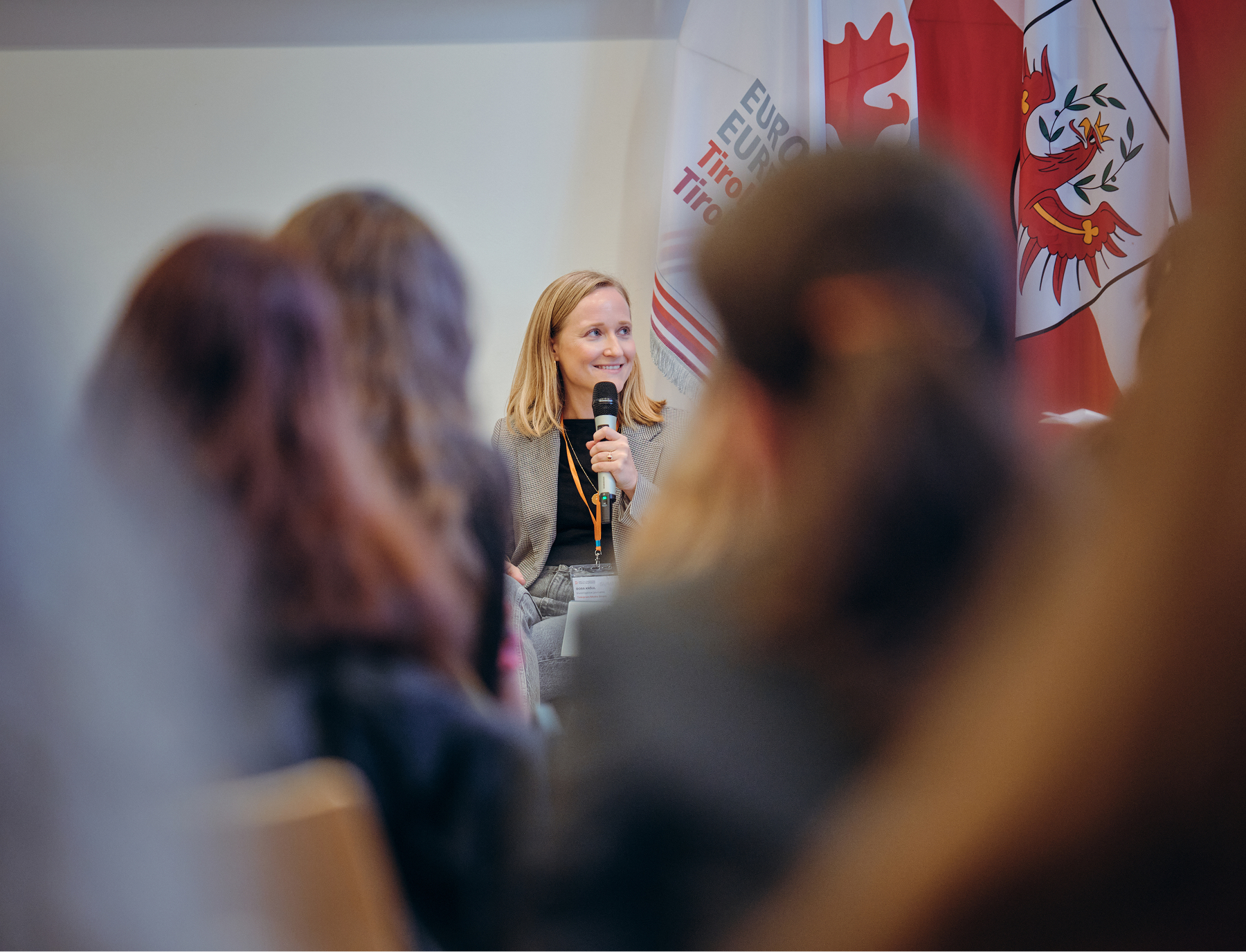
MFRR Summit is Media Freedom Rapid Response Consortium’s flagship annual high-level event. It brings together journalists, media experts, and policymakers to discuss – and look for solutions – to the key challenges facing press and media freedom in Europe today. This year, the discussions will focus on the financial sustainability of journalism, growing threats in the digital space, legal harassment, foreign interference, public service media, information integrity, and gendered dimensions of attacks against journalists. We will explore how independent media can be better protected and strengthened as a cornerstone of democratic resilience and security across Europe.
- 09:00 – 09:30 CETWelcome speech
Moderator
-
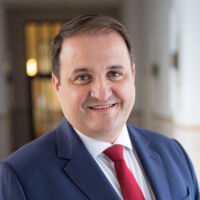
Nathanael Liminski
Head of the State Chancellery of North Rhine-Westphalia, Minister for Federal, European and International Affairs and the Media
Nathanael Liminski, born in Bonn on September 19, 1985, has been Minister for Federal, European, International Affairs and Media of the State of North Rhine-Westphalia since June 29, 2022, and Head of the State Chancellery of the State of North Rhine-Westphalia since June 2017. He has been a member of the State Parliament since November 2025. From 2014 to 2017, Liminski was parliamentary director of the CDU parliamentary group in the state parliament of North Rhine-Westphalia. Previously, he worked as a speech writer and policy officer at the Federal Ministry of the Interior and the Federal Ministry of Defense. From 2010 to 2011, he worked in the Hessian State Chancellery as a speech writer for the Prime Minister of Hesse. Nathanael Liminski studied Medieval and Modern History, Political Science and Public Law at the Rheinische Friedrich-Wilhelms-Universität in Bonn. He is married and has four children.
-

Elena Rodina
MFRR Coordinator at the European Centre for Press and Media Freedom (ECPMF)
Elena Rodina is a press freedom expert specialising in journalists’ safety, creative resistance, and exiled media. She coordinates the Media Freedom Rapid Response (MFRR) consortium at the European Centre for Press and Media Freedom (ECPMF), where she helps drive efforts to monitor violations, support journalists on the ground, and advocate for press freedom across Europe. Elena has worked with international organisations including the Committee to Protect Journalists and Civil Rights Defenders, combining hands-on support and advocacy with scholarly insight. She is a published academic scholar and holds a PhD in Media and Communication from Northwestern University (USA) and is based in Germany.
-
- 09:10 – 09:30 CETOpening Keynote
- 09:30 – 10:30 CETMonetisation of journalism: viability and financial future of media in the digital age
Session will explore how social media and AI extract funding from independent media across Europe, leaving them without independent sources of income. It will explore monetisation practices, data scraping and policy responses to it. It will tackle a need for different approaches, as the idea of journalism is expanding and growing, and different needs for mainstream media, independent media, freelance journalists and innovative digital media start-ups.
Moderator
-
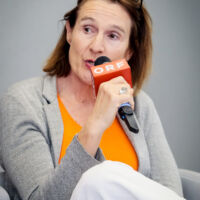
Renate Schroeder
Director of the European Federation of Journalists
Renate Schroeder is the Director of the European Federation of Journalists, In 1993 she joined the International Federation of Journalists (IFJ) and since 2003 she works for the EFJ. Advocacy at EU and Council of Europe level; presentation of EFJ at international meetings, lectures and fact-finding media freedom missions; member of juries of journalistic prizes, project work, communication and assistance in several EFJ expert groups including on freelancers, media literacy and digital journalism, cover her work-load in the small dynamic Brussels office. Additionally, she has been leading the Federation’s debate on the European Media Freedom Act.
Renate studied International Relations and Political Science at Boston University (Bachelor’s Degree in 1988) and in Berlin at the Free University (Masters in 1992). She worked at the Friedrich-Ebert Foundation in Brussels before she joined the EFJ. She is of German nationality and speaks English, French, Italian, German and Spanish (passive).
-
- 10:45 – 11:45 CETPublic media: Challenges and flashpoints across Europe in a post-EMFA Europe
Independent public service broadcasting is facing a fresh surge in pressures across Europe, undermining media freedom and jeopardising the access of citizens to balanced news coverage.
New rules within the European Media Freedom Act (EMFA) were supposed to safeguard journalistic independence and sustainable financing, making these kinds of political pressures a thing of the past. Yet more than a year after EMFA came into full effect, implementation has been patchy and public media across the bloc continue to face political pressure from hostile governments.
In this panel, we’ll examine two key flashpoints in this struggle in Europe – the Czech Republic and Lithuania – and assess the ongoing reform process in Hungary. Experts from journalism, academia and the EU will compare the pressures on public media, discuss strategies for fighting back, assess the impact of EMFA, and discuss what more needs to be done to protect free and independent public media in a post-EMFA landscape.
Moderator
-
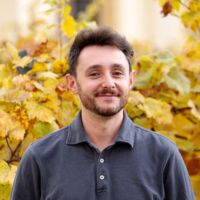
Jamie Wiseman
Senior Europe Advocacy Officer, International Press Institute (IPI)
Jamie Wiseman is a media freedom advocate at the International Press Institute (IPI), a global media freedom organisation based in Vienna. As Senior Europe Advocacy Officer, he heads IPI’s Europe advocacy team and coordinates the organisation’s EU policy work in Brussels. He is specialised on topics such as media capture, impunity for attacks on the press, and spyware attacks on journalists. A former newspaper journalist in the UK, where he grew up, he now helps IPI’s global network of journalists defending media freedom and independent journalism wherever they are threatened.
-
- 13:00 – 14:00 CETThreats from the Net: journalists' minefields in the digital space
MFRR monitoring shows a significant increase of threats and attacks against journalists happening online over recent years, rendering the online environment the most frequent context in which media freedom violations occur. 70% of MFRR-reported cases concern online violence and harassment. Despite the fact that such violations have serious ‘offline’ consequences, the protection of journalists often falls short.
In an era of new technologies, journalism navigates a treacherous digital minefield where newsrooms face emerging threats such as DDoS floods, the invisible traps of spyware, and weaponized cyberbullying.
In this panel we will take stock to what extent journalists have found protection by the Digital Services Act and we will dissect the evolving tactics used to silence voices and compromise safety, to discuss how EU policies and practical defense strategies can forge a path toward resilient, secure reporting and a safer online landscape.
Moderator
-
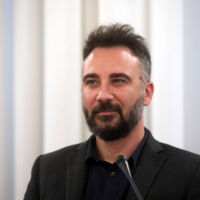
Dimitri Bettoni
Researcher and journalist at the Osservatorio Balcani Caucaso Transeuropa (OBCT)
Dimitri Bettoni is a researcher and journalist at the Italian think tank Osservatorio Balcani Caucaso Transeuropa (OBCT). He holds a PhD in journalism, security and surveillance from the Institute for Future Media, Democracy and Society (FuJo) at Dublin City University, Ireland. He is currently working on the intersection of journalism and the digital world, with a focus on security and human rights. As a journalist, he has worked for international media, focusing on Turkey and neighboring countries. He is also a founding honorary member of the Foreign Media Association, a representative and advocacy organization created by and for international media professionals based in Turkey, and a member of Info.nodes, an Italian nonprofit organization that advocates for an open and just society through research, campaigning and public interest journalism.
-
- 14:15 – 14:45 CETSLAPPs in Europe: Legal Intimidation and Democratic Resilience
Nine years after the murder of Maltese investigative journalist Daphne Caruana Galizia, months after the deadline for the transposition of the EU Anti-SLAPP Directive, journalists across Europe are still grappling with legal harassment as a tool to silence critical reporting. This panel will be addressing a simple question: what have we learned so far, and what actually helps journalists on the ground?
By examining two concrete case studies, Italy and Moldova, the panel will explore how SLAPPs operate in different media and legal environments. It will also explore the differences and incentives influencing how EU member states and candidate countries respond to the EU Anti-SLAPP provisions in practice, and what these responses mean for the resilience of the rule of law in democratic societies.
Moderator
-

Sielke Kelner
Researcher and advocacy officer at Osservatorio Balcani Caucaso Transeuropa (OBCT)
Sielke Kelner is a researcher and advocacy officer at Osservatorio Balcani Caucaso Transeuropa, where she works within the Media Freedom Rapid Response, a Europe-wide consortium addressing violations of media freedom. In parallel, she coordinates Media Advocacy Action for Moldova, a collaborative platform linking Italy, Moldova, and Romania to support Moldova’s alignment with European standards on freedom of information and media pluralism. Sielke also serves as coordinator and spokesperson for CASE Italia, a network of 17 Italian civil society organisations that support public watchdogs targeted by legal harassment (SLAPPs), as part of the Coalition Against SLAPPs in Europe. Before moving into the non-profit sector, she earned a PhD in History from the Geneva Graduate Institute and completed a postdoctoral fellowship at Leiden University.
-
- 14:45 – 15:15 CETThe authoritarian playbook in action: foreign agent laws and shrinking space for independent media
Foreign agent laws and other repressive legislation targeting media funding are increasingly spreading across EU candidate countries and member states. They have the potential not only to create a chilling effect on media communities and obstruct journalists’ work, but also to paralyse their operations and expose media actors to the risk of criminal prosecution.
Focusing on Georgia and Turkey, two of the most far-reaching examples of governments abusing repressive legislation to stigmatise and silence independent media, this panel will explore the impact of foreign agent laws and rhetoric around the term “foreign agent,” on media freedom. It will further examine what the EU’s response should be in the face of such laws.
Moderator
-

Teona Sekhniashvili
Europe Advocacy Officer, International Press Institute (IPI)
Teona Sekhniashvili is the Europe Advocacy Officer at the International Press Institute (IPI), where she monitors and documents attacks on media freedom, supports advocacy efforts in Europe, and coordinates the activities of IPI’s Central and Eastern Europe Independent Media Network. Before joining IPI in 2022, Teona worked as an editor at The Fix Media and held various positions at the Media Institute in Tbilisi and the Friedrich-Ebert-Stiftung South Caucasus Office. She holds a master’s degree in political science from Central European University in Vienna.
-
- 15:30 – 16:00 CETSpecial intervention
Gender and media: a dialogue between two media experts from Ukraine and Romania on how harassment and threats target female journalists differently – and more intensely – than their male colleagues and what we can do to push back.
Speakers
-

Emilia Serkan
Investigative journalist, Senior lecturer Journalism Department University of Bucharest
Emilia Șercan is an investigative journalist, author, and lecturer at the Faculty of Journalism and Communication Studies, University of Bucharest.
For more than a decade, she has been contributing to the independent news outlet PressOne, where she publishes investigative reporting on higher education. To date, she has exposed dozens of plagiarism cases involving the doctoral dissertations of top politicians and other public figures. Her investigations have prompted significant reforms to doctoral studies in Romania.
She has also addressed the issue of academic misconduct in two books published by Humanitas Publishing House: The Doctorate Factory: How the Foundations of a Nation Are Undermined (2017) and The Ponta Case: Reconstructing the Most Infamous Plagiarism Scandal in Romania’s History (2022). Earlier, in 2015, she published her doctoral dissertation – defended at the University of Bucharest in 2013 – under the title The Cult of Secrecy: Mechanisms of Censorship in the Communist Press, published by Polirom Publishing House.
She has been awarded several professional and academic fellowships and has received numerous awards and nominations from prestigious national and international organizations.
-
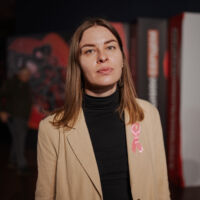
Oleksandra Horchynska
Women in media, Project coordinator
Oleksandra Horchynska, Journalist and Project Coordinator at Women in Media (Ukraine), coordinates projects that are aimed at the female journalists in Ukraine, such as psychological support, media check-in’s, self-support groups, documenting online attacks and others. As a journalist she writes, among other topics, about gender equality, human rights, domestic violence, sexual violence as war crime, inclusion, discrimination, and LGBT+.
-
- 16:15 – 17:15 CET Information integrity and Democratic Resilience: Confronting IMI and transnational repression
Information integrity is growingly under threat across Europe. Under the European Democracy Shield, the EU has committed to “safeguarding the integrity of the information space”. At the same time, repressive governments are expanding propaganda machineries aimed at manipulating public opinion across Europe and target activists and journalists — including those in exile.
This panel will examine the impact of FIMI and transnational repression, highlighting the role of and the impact these have on independent media. Through a conversation with journalists and policymakers from across Europe, the panel will shed light to the importance of supporting a free media environment, ultimately contributing to strengthening democratic resilience.
Moderator
-
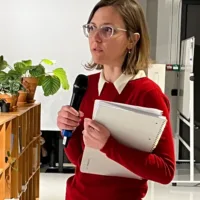
Roberta Taveri
Senior Media Freedom Programme Officer for Europe, ARTICLE 19 Europe
Roberta joined ARTICLE 19 in September 2018 and currently works as Senior Media Freedom Programme Officer for Europe, focusing on South-Eastern Europe and leading on the Media Freedom Rapid Response.
Roberta has worked for over 15 years in the human rights field at international level: she worked with international organisations and civil society in East Africa and Geneva. Before joining ARTICLE 19, Roberta worked in the international department of the Law Society of England and Wales in London. Roberta holds a Master degree in International Law from the School of Oriental and African Studies (SOAS) in London and degrees in Philosophy from the University of Bologna (Italy) and the University of Edinburgh.
-
- 17:15 – 17:30 CETClosing remarks