Monitoring
Monitoring is the backbone of MFRR’s work. Every alert we document captures a real moment when journalism is obstructed, attacked or silenced through legal pressure, harassment, violence, surveillance or censorship. All these cases form a living picture of how press freedom is challenged across Europe, and where journalists face the greatest risks.
The violations are verified and published on Mapping Media Freedom, creating a shared evidence base for journalists, researchers, policymakers and civil society. Our monitoring is also designed to spot patterns early, trigger rapid support, inform advocacy, and ensure that no attack on media freedom goes unnoticed or unchallenged.
Monitoring Briefing
January-June 2026
The first half of 2026 saw a wide variety of attacks on journalists, media outlets and associated individuals across Europe. These included verbal attacks as well as physical assaults, deliberate obstruction of journalistic work, and legal actions all of which challenged or restricted independent reporting.
Between January and June 2026, the Media Freedom Rapid Response (MFRR) documented a total of 736 attacks on 1,174 journalists and other media professionals. By covering all EU member states as well as candidate countries, the briefing offers one of the most comprehensive overviews of media freedom conditions in Europe.
Of particular concern were legislative initiatives in several European countries threatening to further restrict press freedom. Journalistic data, including information on anonymous sources, is also increasingly at risk, especially online.
The report was produced by the European Centre for Press and Media Freedom (ECPMF), the European Federation of Journalists (EFJ), and the International Press Institute (IPI).
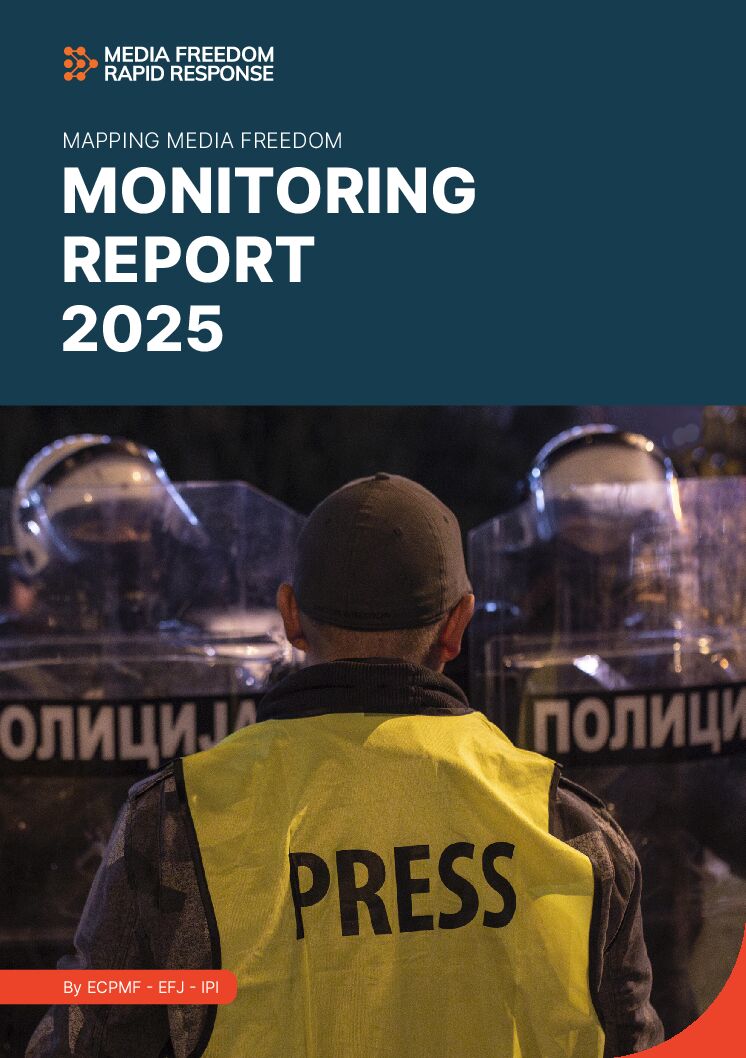
Monitoring Report
2025
Europe’s media freedom landscape faced sustained pressure in 2025, with attacks on journalists, legal harassment, and political interference continuing across the continent. The new MFRR Monitoring Report 2025 documents the scale and patterns of these threats, drawing on verified cases recorded in the Mapping Media Freedom database.
Between January and December 2025, the Media Freedom Rapid Response (MFRR) documented 1,481 press freedom violations affecting 2,377 media-related persons or entities across 36 countries. The report covers all 27 EU Member States as well as nine countries with EU candidate status, offering one of the most comprehensive snapshots of media freedom conditions in Europe.
The report was produced by the European Centre for Press and Media Freedom (ECPMF), the European Federation of Journalists (EFJ), and the International Press Institute (IPI).
Monitoring Report
January-June 2025
The report documents a vast variety of attacks, indicating that media workers in Europe operate in an increasingly hostile environment. The types of attacks documented included verbal attacks – such as death threats and smear campaigns – physical attacks, attacks to property, legal incidents, and interference with reporting work.
Media workers faced threats in different contexts – including private and professional environments. Attacks online were the most common, a trend that continues from previous reports.
A particular focus is put on the phenomenon of foreign agent laws and disinformation narratives about foreign media funding that have become a significant threat to independent media in Europe. Media outlets and workers in Georgia, Hungary, Bosnia and Herzegovina, Bulgaria, and Slovakia faced accusations of foreign funding, or were targeted by laws compromising media freedom.
The report was produced by the European Centre for Press and Media Freedom (ECPMF), the European Federation of Journalists (EFJ), and the International Press Institute (IPI).
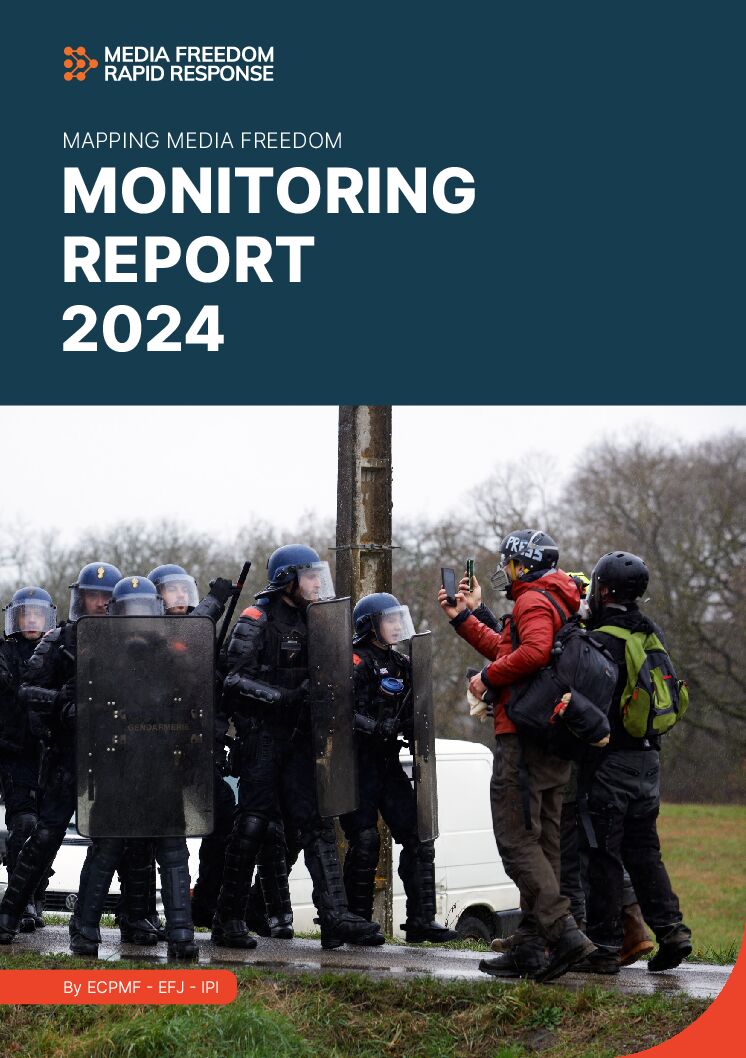
Monitoring Report
2024
The annual Monitoring Report analyses the press freedom situation in 35 European countries, including the 27 EU Member States and nine countries with EU candidate status. Between January and December 2024, Mapping Media Freedom documented 1,548 press freedom violations targeting 2,567 media-related persons or entities.
Smear campaigns, websites disguised as legitimate news outlets, and obstruction and attacks during reporting are just a few of the major issues media workers faced in 2024. Journalists also faced verbal attacks, physical assault, attacks against property, censorship and legal threats. Especially worrying is the continuous rise of online attacks including online harassment, death threats, hacking, DDoS attacks, and spoofing.
The report was produced by the European Centre for Press and Media Freedom (ECPMF), the European Federation of Journalists (EFJ), and the International Press Institute (IPI).
Monitoring Report
January-June 2024
This Monitoring Report explores in detail the 756 media freedom violations recorded by the MFRR partners in the first half of 2024. These violations affected 1,212 media-related persons or entities. 474 of these alerts were recorded in EU Member States while 282 took place in candidate countries.
As well as providing a general overview of media freedom violations across EU Member States and candidate countries, the report includes three thematic chapters delving into anti-media laws, spoofing, and elections. The report also includes a deep dive into the state of media freedom – as told through Mapping Media Freedom data – in the following countries: Albania, Croatia, France, Georgia, Germany, Hungary, Italy, Serbia, Slovakia, and Ukraine. An overview of the three thematic chapters can be found below.
The report was produced by the European Centre for Press and Media Freedom (ECPMF), the European Federation of Journalists (EFJ), and the International Press Institute (IPI).
Monitoring Report
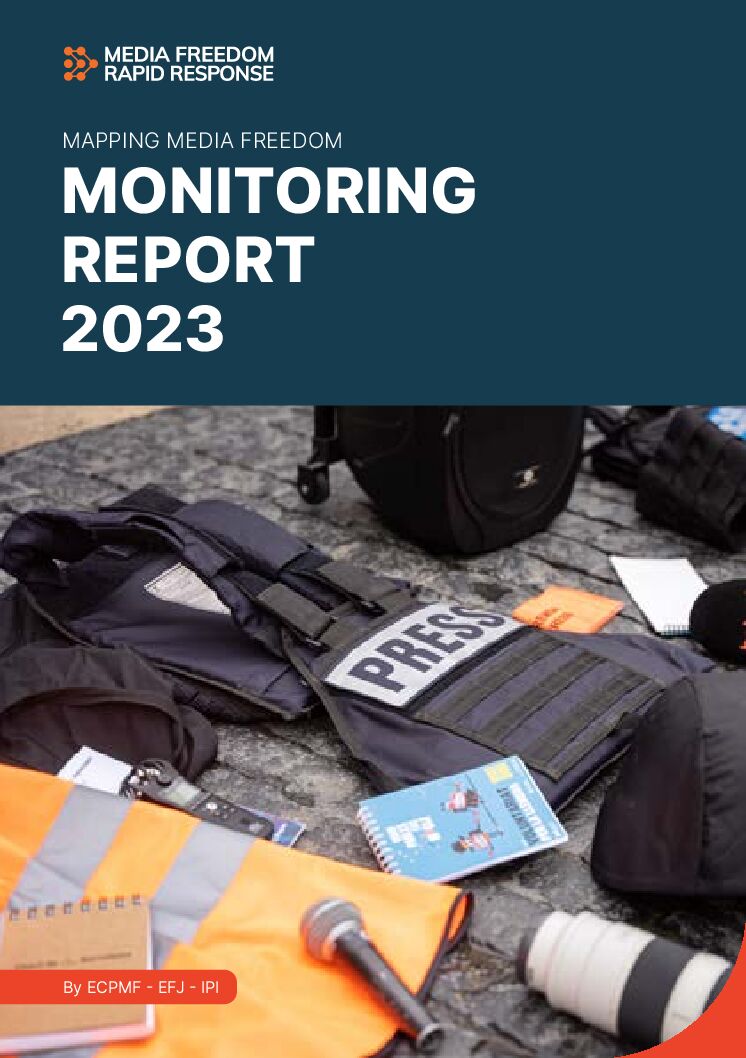
2023
Throughout 2023, the Media Freedom Rapid Response (MFRR) recorded 1,117 media freedom violations in EU Member States and candidate countries, involving 1,620 individuals or media outlets. 602 alerts were recorded in the EU, while 515 were registered in candidate countries.
In the EU, the main source of attacks remained private individuals (almost 33% of cases), worryingly followed by public officials (17.9%) and police and state security (12.6%). Three media workers were murdered – two in Ukraine and one in Albania. 149 media freedom violations were recorded in Ukraine, a slight increase on last year’s 147 alerts. The MFRR started monitoring Ukraine immediately after the full-scale invasion in 2022. 20.6% of all incidents in the EU involved some kind of physical attack. A considerable number of incidents included cases involving attacks to property (17.4%) and censorship (15.9%).
The report was produced by the European Centre for Press and Media Freedom (ECPMF), the European Federation of Journalists (EFJ), and the International Press Institute (IPI).
Monitoring Report
January-June 2023
From January to June 2023, the MFRR partners recorded 575 media freedom violations in European Union Member States and candidate countries, involving 844 individuals or media outlets. 307 of those took place in EU Member States, while 268 occurred in candidate countries.
In the EU the most common type of attacks were verbal attacks (35.8%) such as insults and discrediting of journalists, to which this report dedicates one of its thematic chapters. Legal attacks were the second most prominent category (24.8%), followed by physical attacks (21.2%), attacks on property (16.9%), and censorship (14.3%).
The current monitoring report offers an overview of the media freedom situation across the EU and candidate countries in the first half of 2023 and it starts with a thematic chapter on the crackdown on independent media in Turkey amidst devastating earthquakes and national elections that took place at the beginning of the year, followed by a chapter on the war in Ukraine and its repercussions on media freedom.
The report was produced by the European Centre for Press and Media Freedom (ECPMF), the European Federation of Journalists (EFJ), and the International Press Institute (IPI).
Monitoring Report
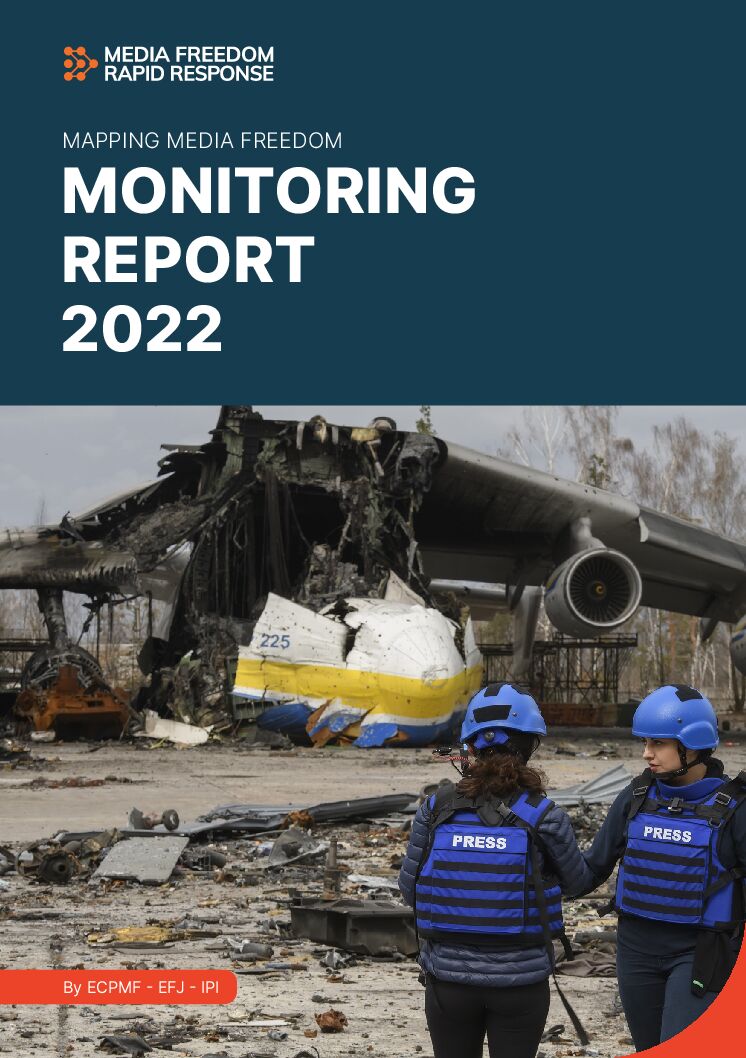
2022
In 2022, the Media Freedom Rapid Response (MFRR) recorded 813 media freedom violations in EU Member States and candidate countries involving 1,339 individuals or media outlets. 415 alerts were recorded in the EU, while 398 were registered in candidate countries. 10 journalists were murdered: nine in Ukraine and one in Turkey.
The current monitoring report offers an overview of the media freedom situation across the EU and candidate countries in 2022, and it starts with a thematic chapter on the war in Ukraine and its repercussions on media freedom. The MFRR started monitoring the country immediately after the full-scale Russian invasion started in late February, and it recorded 140 media freedom violations. In the EU, the main type of incidents were verbal attacks (42.4% of all alerts), followed by legal attacks (27.2%), to which this report dedicates an extensive chapter on the year that the European Commission put forward a proposal for an EU anti-SLAPP directive.
The report was produced by the European Centre for Press and Media Freedom (ECPMF), the European Federation of Journalists (EFJ), and the International Press Institute (IPI).
Monitoring Report
January-June 2022
The report includes a visual analysis of the data compiled for Mapping Media Freedom, which collects and visualises all press freedom violations in the European Union Member States and candidate countries. Although Moldova and Ukraine received candidate country status on 23 June, alerts from these countries are not included in the 6 month analysis. However, given the severe impact Russia’s invasion has had on journalist safety and media freedom, the report includes a dedicated chapter focusing on Ukraine.
In the first six months of the year, 311 media freedom violations were recorded in 29 countries. These involve 552 persons or entities related to media, including journalists, media companies, family members, journalists sources, and NGOs fighting for press freedom.
Among these attacks was the murder of Güngör Arslan, Managing Editor of the Turkish newspaper Ses Kocaeli.
The report was produced by the European Centre for Press and Media Freedom (ECPMF), the European Federation of Journalists (EFJ), and the International Press Institute (IPI).
Monitoring Report
2021
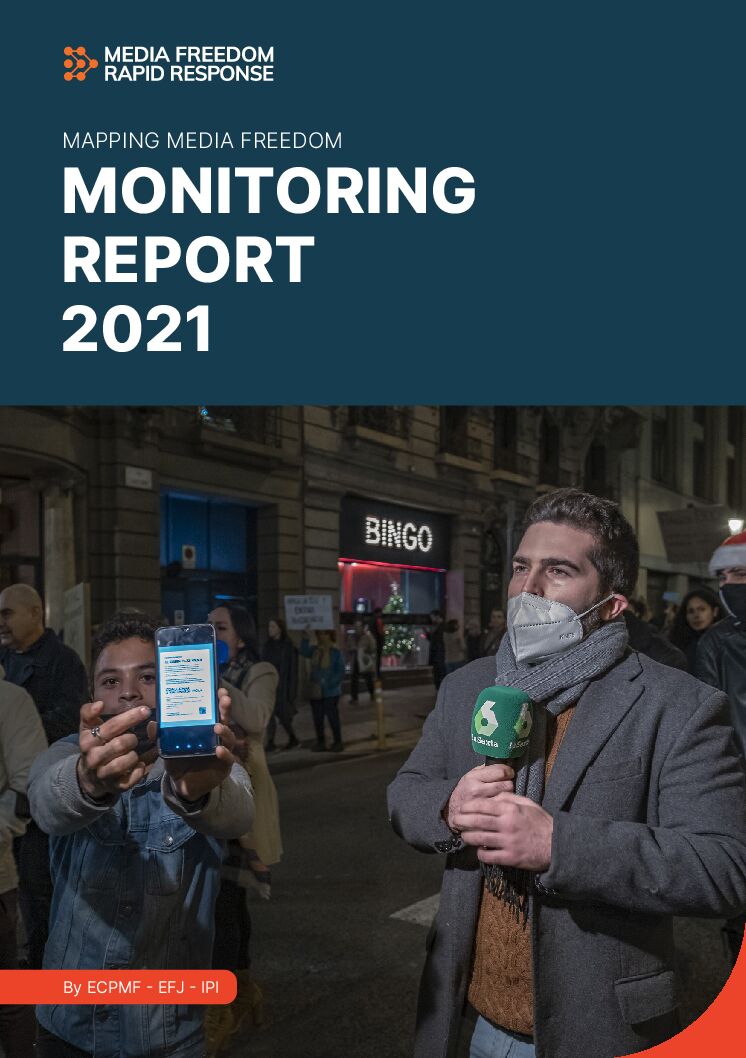
Partners of the Media Freedom Rapid Response (MFRR) have published the latest MFRR Monitoring Report, outlining the state of media freedom throughout all EU member states, candidate countries, and the United Kingdom in 2021.
The report includes a visual analysis of the data compiled for Mapping Media Freedom, which collects and visualises all press freedom violations recorded by the MFRR monitoring partners. Before delving into country-specific analyses, the report highlights media freedom violations linked to COVID-19 and online/digital attacks, two categories that feature prominently throughout the 2021 report. The report closes with a list of positive developments for media freedom in the previous year.
The report was produced by the European Centre for Press and Media Freedom (ECPMF), the European Federation of Journalists (EFJ), and the International Press Institute (IPI).
Monitoring Report
January-June 2021
January 2021 marked the start to the second year of the Covid-19 pandemic. While many countries had previously signaled that strict lockdowns and emergency legislation would no longer be necessary, most European states welcomed the new year with more coronavirus cases than ever before and with severely restrictive measures.
On a positive note, in this period the first vaccines arrived in most European countries but with them also started anti-vaccine protests which have continued throughout 2021.
It also proved that the consequences of the pandemic were now affecting many areas of society, shaping political discourses, radicalising some anti-lockdown movements, and threatening press and media freedom in most countries.
The report was produced by the European Centre for Press and Media Freedom (ECPMF), the European Federation of Journalists (EFJ), and the International Press Institute (IPI).
Monitoring Briefing
January-June 2026
Monitoring Report
2025
Monitoring Report
January-June 2025
Monitoring Report
2024
Monitoring Report
January-June 2024
Monitoring Report
2023
Monitoring Report
January-June 2023
Monitoring Report
2022
Monitoring Report
January-June 2022
Monitoring Report
2021
Monitoring Report
January-June 2021